Telephone/WhatsApp: +86-13950097655 E-mail: eric@justsuntrucks.com
Please Choose Your Language

- All
- Product Name
- Product Keyword
- Product Model
- Product Summary
- Product Description
- Multi Field Search
Views: 0 Author: Site Editor Publish Time: 2026-09-30 Origin: Site
High fuel volatility and severe driver shortages constantly challenge modern logistics operators. Fleet managers must rigorously evaluate heavy-duty assets based on overall lifecycle efficiency and daily operational reliability, rather than simply focusing on upfront acquisition costs. The Foton Auman EST-A (Energy Super Truck) represents a highly strategic joint-venture engineering approach. It successfully combines a robust Cummins powertrain and an advanced ZF transmission architecture. This global collaboration brings premium European and American components to a more accessible commercial platform.
For procurement teams currently finalizing their vehicle shortlists, this comprehensive guide breaks down the verifiable specifications and practical realities of this vehicle. We will examine the exact integration risks and performance capabilities you can expect when deploying the EST-A Tractor Truck in rigorous long-haul applications. You will learn how to maximize asset utilization while maintaining strict compliance across diverse regional routes and demanding operational schedules.
Powertrain Integration: Combines Cummins ISG engines (up to 560HP) with ZF TraXon automated transmissions for optimized torque delivery.
Configuration Match: The 6x4 tractor head format is engineered specifically for high-capacity long-haul logistics and cold-chain operations.
Efficiency Claims vs. Reality: Aerodynamic cab design and intelligent shifting logic support fuel reduction, but actual ROI depends heavily on driver training and route topography.
Risk Factors: Fleet adoption requires verifying local dealer service capabilities and parts availability for proprietary electrical systems.
Fleet expansion in low-margin logistics requires careful financial planning. Operations managers must balance initial capital expenditure against the predictability of ongoing operational expenses. Buying the cheapest truck often leads to catastrophic maintenance bills down the road. Conversely, overspending on premium brands ties up vital capital. You need assets delivering reliable uptime without breaking budget constraints.
The Foton Auman EST-A positions itself as a compelling Tier-1 alternative. It utilizes globally recognized OEM components. You will find Cummins engines, ZF transmissions, and WABCO braking systems inside this vehicle. These premium parts sit within a highly cost-effective, mass-produced chassis. This specific strategy reduces the initial financial barrier significantly. It achieves this without sacrificing core mechanical reliability.
Procurement teams must define success criteria carefully before purchasing. You should measure return on investment (ROI) timelines based on verifiable fuel consumption data. Maintenance intervals and driver retention metrics also play huge roles in fleet profitability. If a truck breaks down frequently, affordable upfront pricing loses its advantage instantly. Fleets need assets they can trust on rigorous cross-country schedules.
Best Practice for Procurement: Always request operational data from similar fleets in your region before committing to a bulk purchase. Real-world route topography changes fuel consumption drastically. Test a single unit on your most demanding route first.
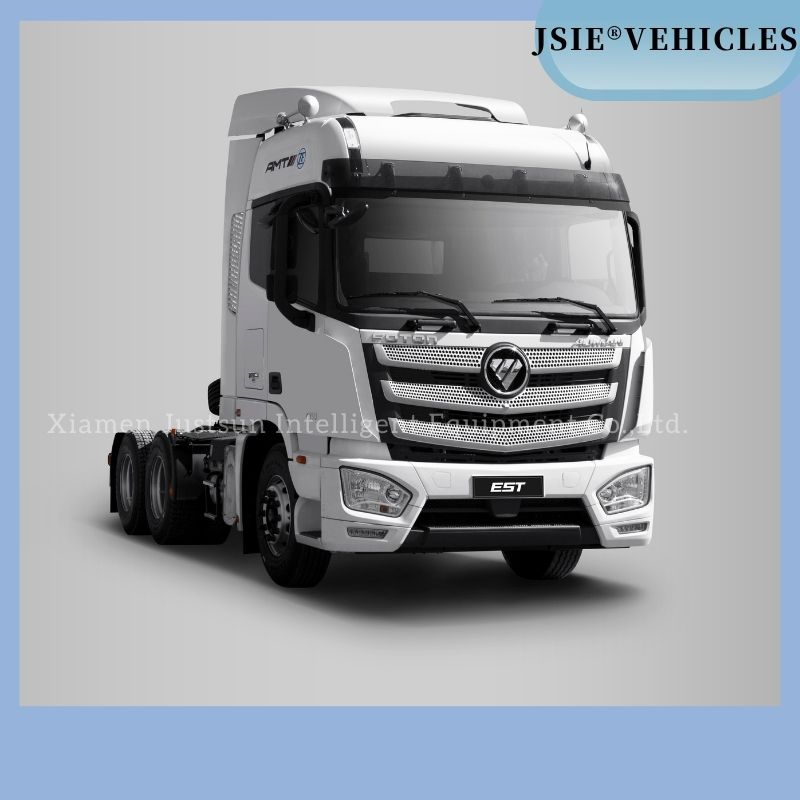
Let us look closely at the Cummins ISG engine series. Analysis of the 11L, 12L, and 13L displacements shows impressive engineering capabilities. We focus heavily on torque curves at low RPMs. High-load initial acceleration requires massive low-end power to get heavy trailers moving efficiently. The 560HP tractor truck delivers this necessary torque seamlessly. Drivers spend less time struggling in lower gears on steep inclines.
Next, we evaluate the transmission architecture. Foton uses the ZF TraXon Automated Manual Transmission (AMT). Predictive shifting software reads engine load and throttle position constantly. This intelligent logic reduces mechanical wear significantly across the driveline. It prevents premature clutch replacements caused by poor driver habits. Fleet operators see fewer transmission-related breakdowns over the entire vehicle lifespan.
Braking and retardation systems ensure vital safety on steep declines. The engine valve brake, known industry-wide as the iBrake, provides massive stopping power. It works seamlessly alongside optional hydraulic retarders. Together, they extend standard brake pad life on demanding mountainous routes. Drivers maintain much better control without overheating traditional friction brakes during long descents.
Practical Scenario: When navigating the steep grades of regional mountain passes, a driver relying solely on service brakes risks catastrophic brake fade. The integrated iBrake system absorbs the downhill momentum. This keeps service brakes cool and ready for sudden emergency stops.
Displacement (Liters) | Max Horsepower Range | Ideal Fleet Application | Fuel Efficiency Focus |
|---|---|---|---|
11L | Up to 430 HP | Regional distribution, flat terrain | Maximum fuel economy for lighter loads |
12L | 460 - 490 HP | Mixed terrain, standard long-haul | Balanced power-to-weight ratio |
13L | 510 - 560 HP | Mountainous routes, max payload | High torque for severe duty cycles |
We must break down the traction and load distribution engineering thoroughly. The 6x4 tractor head configuration maximizes wheel grip and trailer stability. Drive-axle ratios directly dictate your daily performance. A faster numerical ratio improves highway cruising speeds and saves fuel on flat roads. A slower numerical ratio increases gradeability for mountainous terrain. You must choose the correct axle ratio based on your specific freight routes.
Suspension choices also dictate operational flexibility heavily. Standard multi-leaf spring setups offer rugged, dependable durability. They handle rough regional roads quite well. However, you might prefer the optional Electronically Controlled Air Suspension (ECAS). ECAS protects highly fragile cargo from harsh road vibrations. It also greatly improves drop-and-hook efficiency at busy distribution centers by easily adjusting fifth-wheel height.
Durability metrics remain absolutely critical for commercial buyers. Engineers balance frame tensile strength against modern weight reduction measures. A lightweight tare weight naturally improves your legal payload capacity. Yet, the vehicle must always maintain true heavy duty tractor truck structural integrity over rough roads. Foton incorporates high-strength steel alloys to achieve this delicate physical balance without adding unnecessary dead weight.
Common Mistake: Specifying a fast highway axle ratio for a fleet operating primarily in mountainous regions. This mismatch causes excessive gear shifting, burns more fuel, and places severe strain on the driveline components.
Component Category | Standard Specification | Optional Fleet Upgrades |
|---|---|---|
Rear Suspension | Multi-leaf steel springs | ECAS (Air Suspension) for fragile cargo |
Frame Material | Standard high-tensile steel | Reinforced double-channel (severe duty) |
Axle Setup | Standard reduction axles | Hub-reduction for specialized traction |
Cab comfort directly impacts driver turnover rates in today's market. A modern truck must provide excellent operational ergonomics. We see standard air-suspended seating introduced specifically to reduce driver fatigue. Advanced NVH (Noise, Vibration, and Harshness) insulation keeps the cabin incredibly quiet at highway speeds. Generous sleeper cab dimensions give drivers proper, restful sleep. Comfortable, well-rested drivers tend to stay with your fleet much longer.
Active safety systems protect your substantial capital investment. We must objectively evaluate the Advanced Driver Assistance Systems (ADAS) available on this platform. These technologies actively prevent expensive accidents and reduce insurance premiums.
Lane Departure Warning Systems (LDWS): Cameras read road markings constantly. They alert distracted operators immediately if the truck drifts out of its lane.
Advanced Emergency Braking Systems (AEBS): Radar sensors monitor traffic ahead. They apply maximum braking force automatically to mitigate severe rear-end collisions.
Electronic Stability Program (ESP): Sensors detect lateral acceleration. They apply individual wheel brakes to prevent dangerous rollovers during sudden evasive maneuvers.
Compliance standards dictate exactly where you can operate legally. The EST-A architecture meets stringent Euro V and Euro VI emission standards. Operators must monitor Diesel Exhaust Fluid (DEF) consumption rates carefully. You also need to plan for Diesel Particulate Filter (DPF) maintenance realities. Ignoring mandatory DPF cleaning schedules leads directly to costly engine derating and forced downtime.
Fleet adoption always carries inherent operational risks. You must assess potential downtime scenarios very carefully. We strongly recommend auditing regional dealership service capabilities firsthand. Check their specific service tier levels before executing bulk vehicle acquisitions. Parts availability for proprietary electrical systems often causes unexpected maintenance bottlenecks. A Cummins engine part is easy to find. A Foton-specific dashboard sensor might require regional ordering.
Telematics integration provides crucial oversight for management teams. The proprietary fleet management system captures vital daily performance data. We must understand how it integrates with third-party ERP platforms. Existing mixed-fleet tracking software needs seamless API data feeds. Fleet managers cannot waste time logging into five different dashboards just to monitor overall asset health.
We developed a shortlisting logic to help procurement teams make informed decisions based on vehicle capabilities:
Who should buy: Long-haul dry van operators benefit immensely from aerodynamic efficiency. Cross-border logistics and cold-chain fleets leverage the highly reliable Cummins power delivery.
Who should pilot first: Fleets transitioning from older European trucks to Asian-assembled platforms. A pilot unit helps mechanics adjust to new diagnostic tools and service protocols.
Who should pass: Ultra-heavy vocational transport operations need entirely different vehicle specs. Off-road logging environments require highly specialized chassis structures built beyond this standard highway design.
What to watch out for: Do not assume your current third-party telematics hardware will plug directly into the CAN bus network without an adapter harness. Always verify API compatibility with your IT department prior to delivery.
The Foton Auman EST-A Tractor Truck delivers a highly competitive operational lifecycle value on paper. It achieves this primarily through smart Tier-1 component sourcing. By blending a Cummins engine with a ZF transmission, operators get proven mechanical reliability. However, long-term fleet viability remains heavily contingent on local aftermarket support. You must ensure regional dealers carry sufficient proprietary cab and chassis components.
We recommend a highly cautious integration approach. You should initiate a single-unit pilot program first. Alternatively, request a dealer-led route efficiency simulation based entirely on your specific fleet routing data. Validate fuel economy claims on your hardest routes before committing your capital expenditure budget to a fleet-wide replacement strategy.
A: The Cummins ISG engine generally supports oil change intervals up to 100,000 km. This depends heavily on oil grade quality and actual operating conditions. Severe-duty cycles, such as mountainous routes or constant heavy loads, strictly require shortened, adjusted maintenance schedules to prevent premature engine wear.
A: Yes, it can handle hazardous materials provided you specify ADR compliance capabilities during ordering. You must explicitly request mandatory electrical isolation switches. You also need specific forward-facing exhaust routing options to meet strict international Hazmat transport regulations safely.
A: Power-to-weight ratios dictate this outcome. The 560HP often yields better fuel economy on highly mountainous terrains because it requires significantly less downshifting. Conversely, the 460HP variant excels on flat, weight-limited runs where massive low-end torque remains unnecessary.
A: While Cummins engine components and ZF transmission parts remain globally accessible through independent heavy-duty suppliers, Foton-specific parts pose challenges. Specialized cab panels, chassis modules, and proprietary electrical sensors absolutely require an established, verified local OEM distributor to avoid prolonged vehicle downtime.