Telephone/WhatsApp: +86-13950097655 E-mail: eric@justsuntrucks.com
Please Choose Your Language

- All
- Product Name
- Product Keyword
- Product Model
- Product Summary
- Product Description
- Multi Field Search
Views: 0 Author: Site Editor Publish Time: 2026-09-24 Origin: Site
Fleet managers constantly seek reliable prime movers for high-tonnage logistics. Procurement officers face intense pressure to optimize every vehicle purchase. The right vehicle choice drives long-term profitability across your entire operation. You must carefully balance upfront capital expenditure against long-term mechanical reliability. Selecting an inappropriate truck configuration often leads to severe operational downtime. Poorly matched vehicles struggle under heavy payloads and destroy profit margins.
The Sinotruk HOWO 6×4 configuration offers a globally deployed standard for heavy hauling. It bridges the gap beautifully between premium European models and extreme budget alternatives. This guide thoroughly evaluates technical specifications, operational viability, application matching, and procurement risks. You will discover exactly how to specify this truck for maximum efficiency. We provide actionable insights to support your final purchasing decision.
The HOWO 6×4 configuration provides an optimal balance of traction and payload capacity for Gross Combination Weights (GCW) between 40 to 60 tons.
Standard powertrain configurations, notably the 380HP tractor truck variant, prioritize mechanical reliability and parts availability over complex electronic systems.
Primary applications include long-haul flatbed towing, fuel tankers, and construction material transport (tipper trailers).
Evaluating TCO requires accounting for Sinotruk's accessible aftermarket parts network against slightly higher fuel consumption rates compared to Tier-1 European competitors.
The 6×4 drive system explicitly powers two rear axles simultaneously. This mechanical layout maximizes traction across severely compromised road conditions. You gain superior grip on steep gradients and slippery unpaved sites. A standard 6×4 Tractor Truck utilizes a double-layer reinforced frame. The 8+8mm high-strength steel chassis effectively resists severe torsion under maximum load. Operators typically choose reinforced multi-leaf springs for rugged environments. Optional air suspension suits delicate cargo transport on paved highways. Fifth-wheel weight ratings easily accommodate standard 50-ton SAE kingpins. This ensures broad compatibility across diverse trailer fleets.
Driver retention relies heavily on comfortable workspace environments. Sinotruk offers multiple cab designs to match varying route lengths. The HW76 standard sleeper cab serves regional distribution perfectly. It includes a single bunk for mandatory rest periods. The HW79 high-roof variant accommodates long-haul logistics. It provides dual bunks and significantly greater standing room. Operators appreciate the standard air-suspended seats. These seats absorb harsh chassis vibrations on rough terrain. High-capacity HVAC systems ensure reliable cooling across extreme climates like the Middle East or Sub-Saharan Africa. Wide windshields and optimized mirror placement eliminate dangerous blind spots.
Heavy payloads demand exceptional stopping power. The HOWO platform integrates robust safety mechanisms directly into the chassis. Operators rely on standard pneumatic dual-circuit braking systems. This redundant design ensures partial braking ability if one airline fails.
Standard pneumatic dual-circuit braking ensures mechanical redundancy.
Anti-lock Braking Systems (ABS) prevent trailer jackknifing during emergency stops.
Exhaust Valve Braking (EVB) severely reduces service brake wear on long descents.
Automatic slack adjusters maintain consistent brake shoe contact.
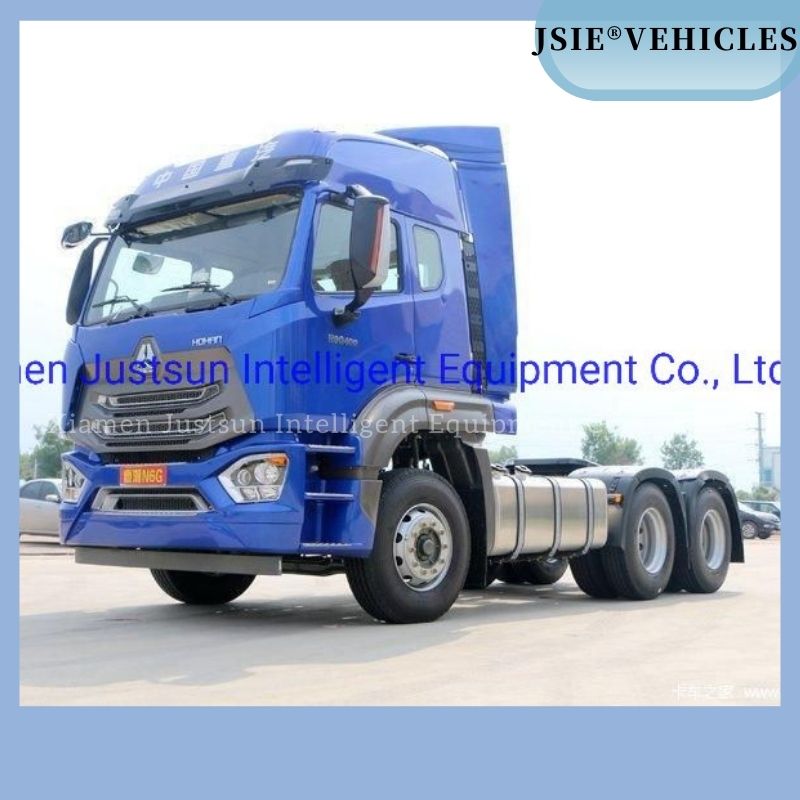
The heart of any prime mover lies in its engine architecture. Sinotruk relies on the proven WD615, D10, and D12 engine series. Many fleets consider the 380HP tractor truck specification the ultimate sweet spot. This output perfectly balances adequate torque against reasonable fuel burn. The engine delivers peak torque rapidly at low RPMs. This flat torque curve prevents excessive downshifting on minor hills. Mechanical injection systems appeal to markets suffering from poor fuel quality. Common-rail fuel injection handles strict emission requirements. Regional regulations dictate the final configuration. Buyers can specify anywhere from Euro II for deregulated zones up to Euro V compliance.
Table 1: Engine Specification Comparison
Engine Series | Displacement | Target Application | Fuel System Type |
|---|---|---|---|
WD615 Series | 9.7 Liters | Rugged off-road hauling | Mechanical Injection |
D10 Series | 9.7 Liters | Mixed regional transit | Common Rail |
D12 Series | 11.6 Liters | Long-haul heavy highway | Advanced Common Rail |
Power delivery requires a robust, clearly defined transmission. Most HOWO configurations utilize the heavy-duty HW19710 manual transmission. This gearbox offers ten forward speeds and two reverse gears. A wide gear spread accommodates both slow-speed maneuvering and highway cruising. Selecting the correct rear axle ratio drastically impacts daily performance. A 3.73 axle ratio favors high-speed highway cruising. Conversely, a 4.8 or higher ratio multiplies torque effectively for steep gradients. Fleet managers must match these ratios precisely to their intended route topography.
Long-haul operations require sufficient onboard energy reserves. The standard configuration includes a 400L aluminum fuel tank. Aluminum resists internal corrosion entirely. It also reduces empty vehicle weight compared to steel alternatives. A fully loaded 40-ton combination typically burns around 35 to 40 liters per 100 kilometers. This consumption rate yields a practical driving range approaching 1,000 kilometers between fill-ups. Optional dual-tank setups extend this range for transcontinental routes.
A well-configured heavy duty tractor truck excels on open highways. Fleets frequently pair these units with 40ft skeletal trailers. They transport shipping containers seamlessly between deep-water ports and inland hubs. The dual-drive axles maintain excellent high-speed stability. Box trailers carrying consumer goods also benefit from the rigid chassis design. While not as aerodynamic as premium European models, the HOWO retains highway speeds consistently. Proper driver training ensures the transmission stays in the optimal fuel-efficiency RPM band.
Harsh environments highlight the true capability of the chassis. Operators frequently pair a Sinotruk HOWO tractor head alongside heavy-duty tipper trailers. These combinations transport crushed stone, sand, and mining aggregates. The 6×4 layout shines brightest on unpaved site roads. A standard 4×2 model often spins its wheels in deep mud. The dual-driven rear axles push the heavy payload through deep ruts easily. Reinforced suspension components absorb massive impact loads during excavator loading.
Transporting hazardous liquids requires immense structural stability. Fuel tankers and chemical trailers possess a high center of gravity. Fluid movement inside the tank creates dangerous lateral forces during cornering. The HOWO chassis resists this torsional twisting effectively. Cement bulkers also pair well with this prime mover. Power Take-Off (PTO) units attach directly to the HW19710 transmission. These PTOs drive the essential air compressors required for discharging dry bulk cement.
Operational profitability requires keeping the wheels turning. Fleet managers must adhere to strict maintenance intervals. Harsh operating conditions accelerate component wear significantly. Dusty mining sites demand oil changes every 10,000 to 15,000 kilometers. Operators must inspect air filters daily to prevent engine dusting. The mechanical simplicity of the HOWO platform allows basic mechanics to perform routine servicing quickly. This reduces workshop downtime compared to trucks requiring advanced computer diagnostic tools.
The primary advantage of the Sinotruk ecosystem is global parts penetration. OEM and aftermarket components remain readily available across developing markets. You rarely wait weeks for a specialized sensor to arrive from overseas. However, fleets must exercise caution regarding counterfeit parts. Fake oil filters and substandard fuel injectors destroy engine blocks rapidly. Always source critical engine components directly from authorized distributors. Routine belts, brake shoes, and air lines swap out cheaply and quickly.
Procurement teams love the competitive initial purchase price. You can often purchase two HOWO prime movers for the price of one premium alternative. However, fleets must manage operational costs aggressively. The boxy cab design creates more aerodynamic drag than streamlined competitors. Fleet managers must install telematics systems to monitor driver behavior. Training drivers to avoid aggressive acceleration saves thousands of liters annually. You trade slight fuel efficiency losses for massive savings in capital expenditure.
You cannot purchase a generic truck and expect optimal results. You must define your exact operational parameters first. Match engine horsepower directly to your average payload weight. A 371HP engine handles flat coastal routes perfectly. Heavy timber hauling in mountainous regions demands the 420HP upgrade. Select axle ratios matching your route topography exactly. A mismatched 6×4 tractor head truck will either burn excessive fuel on highways or fail to climb steep hills.
International logistics require strict regulatory compliance. Verify your local emission tier regulations before ordering. Importing a Euro II engine into a Euro V mandated zone results in immediate customs rejection. You must also specify the correct driving orientation. Right-hand drive (RHD) and Left-hand drive (LHD) variants exist from the factory. Never attempt aftermarket steering conversions. These conversions compromise steering geometry and invalidate factory warranties.
Secondary market exporters often promise unrealistic discounts. You must evaluate suppliers strictly to protect your investment. Follow these specific verification steps:
Verify the distributor holds official authorization documents from the Sinotruk factory.
Request comprehensive warranty terms covering major powertrain components explicitly.
Demand a complete Pre-Delivery Inspection (PDI) report before finalizing final payment.
Confirm local availability for consumable spare parts like filters, belts, and brake shoes.
Ask for references from local fleets operating similar equipment in your region.
The HOWO 6×4 configuration remains a highly pragmatic, utility-focused choice for ambitious fleets. It prioritizes upfront cost control, heavy-duty mechanical reliability, and ease of maintenance. You avoid the excessive downtime associated with overly complex electronic management systems. The dual-drive rear axles ensure maximum traction across any challenging logistics environment. Your operational profitability relies on matching the exact engine and gearing specifications to your route demands.
We recommend fleet buyers define their exact payload weights immediately. Map your primary route gradients to determine the ideal axle ratios. Contact verified suppliers to request targeted specification sheets and comprehensive operational cost estimates. A data-driven procurement strategy guarantees maximum return on your heavy hauling investment.
A: A standard HOWO 6×4 configuration comfortably handles a Gross Combination Weight (GCW) between 40 to 60 tons. Specialized versions featuring reinforced axles and higher horsepower engines can tow upwards of 70 tons under restricted speeds and rugged off-road conditions.
A: Fuel consumption heavily depends on road conditions and driver behavior. Under a full 40-ton payload on standard highways, the 380HP engine typically consumes between 35 to 40 liters per 100 kilometers. Steeper gradients and heavy city traffic will increase this burn rate significantly.
A: The 6×4 layout offers two driven rear axles. This effectively doubles the traction contact area. It easily outperforms the 4×2 on unpaved roads and steep inclines. However, the 4×2 consumes slightly less fuel and suits lighter regional highway distribution much better.
A: Yes. You can specify standard fifth wheels to match international SAE measurements. Factories supply either 2-inch (50mm) or 3.5-inch (90mm) kingpin receivers. This ensures seamless coupling across all standard European and North American trailer designs.
A: Depending on regional regulations, manufacturers configure the engines differently. Older markets often request Euro II engines for their mechanical simplicity and high tolerance to poor fuel. Modern units achieve Euro V compliance using advanced common-rail injection and selective catalytic reduction systems.