Telephone/WhatsApp: +86-13950097655 E-mail: eric@justsuntrucks.com
Please Choose Your Language

- All
- Product Name
- Product Keyword
- Product Model
- Product Summary
- Product Description
- Multi Field Search
Views: 0 Author: Site Editor Publish Time: 2025-10-16 Origin: Site
Dump trucks have long been an integral part of the construction, mining, and manufacturing industries, but their role in waste management systems is equally important. In modern society, waste management plays a critical role in maintaining public health, environmental sustainability, and urban development. Dump trucks, as a key element in this process, provide the essential service of transporting waste materials from collection points to disposal or recycling centers.
From household waste to industrial debris, dump trucks ensure that waste is effectively removed from our communities and workplaces. As technology advances, the capabilities of dump trucks continue to improve, making them even more vital to efficient waste management operations.
This article explores the ways in which dump trucks contribute to waste management systems, the different types of dump trucks suited for waste hauling, and the technological advancements that are enhancing their efficiency. By understanding how dump trucks function within waste management, businesses and municipalities can better appreciate their role in sustainable and effective waste disposal.
The primary function of dump trucks in waste management systems is the collection, transportation, and disposal of waste. They play a vital role in ensuring that waste is removed from homes, construction sites, factories, and other facilities and is transported to designated landfills or recycling plants.
In waste management, the first step is the collection of waste materials from various sources. Waste can include everything from household trash to construction debris, scrap metal, and industrial by-products. Dump trucks are used to gather this waste and transport it to transfer stations or recycling facilities.
Municipal Waste Collection: For cities and towns, municipal waste collection is typically performed using specialized dump trucks. These trucks are designed to collect residential, commercial, and industrial waste. They may be equipped with compaction mechanisms to increase the amount of waste they can carry, ensuring fewer trips to waste processing centers.
Construction and Demolition Waste: Construction and demolition projects generate significant amounts of debris, including scrap metal, concrete, wood, and other materials. Dump trucks are frequently used at these job sites to move large volumes of waste quickly and efficiently.
Hazardous Waste: Specialized dump trucks are also used for the transportation of hazardous waste, such as chemicals or toxic materials. These trucks are equipped with secure, sealed beds to prevent leaks and ensure that hazardous materials are transported safely.
Once waste is collected, dump trucks transport it to a landfill, incineration facility, or recycling plant. In many cases, dump trucks serve as the first point of contact in the waste management chain, ensuring that waste moves from the collection point to the appropriate treatment or disposal site.
Transfer Stations: In large cities or densely populated areas, transfer stations may be used to temporarily store waste before it is transported to a larger disposal site. Dump trucks are essential for moving waste from these stations to landfills or other treatment facilities.
Recycling Facilities: Many dump trucks are also used to transport recyclable materials such as paper, plastics, and metals to specialized recycling plants. These trucks help facilitate the recycling process, which is critical for reducing the amount of waste that ends up in landfills.
The type of dump truck used in a waste management system depends on several factors, including the type of waste being transported, the distance to the disposal site, and the local infrastructure. Different dump trucks are designed for specific waste handling needs.
Standard dump trucks, with their simple open-box beds and hydraulic lift systems, are the most commonly used vehicles in waste collection and transportation. These trucks can be used to transport general waste, construction debris, and other bulk materials.
Best for: General waste collection, construction debris, and urban waste management.
Capacity: Typically ranges from 10 to 15 cubic yards, although some can carry larger loads depending on the design.
Benefits: Easy to use, versatile, and capable of transporting a wide range of waste materials.
Compactor dump trucks, equipped with a compaction system, are specially designed for waste management. The compaction system enables these trucks to reduce the volume of waste, allowing them to carry larger amounts of material in fewer trips.
Best for: Urban waste collection, especially in densely populated areas where space is limited.
Capacity: Larger capacity due to the compaction mechanism.
Benefits: Increased capacity and fewer trips needed, reducing fuel consumption and improving operational efficiency.
Side dump trucks are often used in waste management because of their ability to unload materials quickly and efficiently from the side. This makes them ideal for areas with limited space for rear dumping, such as narrow streets or urban environments.
Best for: Urban areas, or construction and demolition sites with limited space for rear dumping.
Capacity: Similar to standard dump trucks, but designed for side unloading.
Benefits: Ideal for tight spaces, fast unloading, and more efficient handling of bulk waste.
Articulated dump trucks are larger, heavy-duty vehicles designed for more challenging environments. Their articulated design allows them to navigate rough terrain with greater stability and ease. These trucks are often used for large-scale waste disposal in mining, quarrying, and large construction projects.
Best for: Large construction projects, mining, and waste disposal in rough or uneven terrain.
Capacity: These trucks can carry much larger payloads, often in the range of 20-30 tons.
Benefits: Greater stability on uneven terrain and higher payload capacity.
Transfer dump trucks are designed to transport large volumes of waste from one location to another. They feature a truck that can load and unload materials into an attached trailer, which allows for a greater volume of waste to be moved in a single trip.
Best for: Large-scale waste collection and transportation, particularly when materials need to be transferred from one location to another.
Capacity: Higher payload capacity than standard dump trucks.
Benefits: Improved efficiency for large-scale operations and fewer trips required.
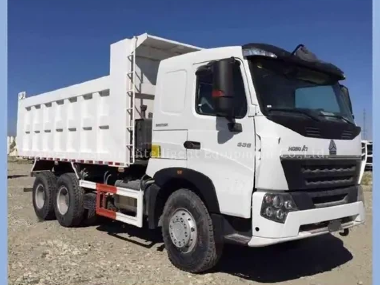
As waste management systems have become more sophisticated, dump trucks have also evolved to incorporate advanced technologies that increase efficiency, safety, and sustainability. These technological advancements are helping waste management companies better handle waste and reduce environmental impacts.
Modern dump trucks are equipped with GPS technology and fleet management systems, allowing waste management companies to track the location of their vehicles, optimize routes, and monitor performance in real time.
Route Optimization: GPS helps reduce fuel consumption by allowing companies to plan the most efficient routes for their trucks.
Tracking and Monitoring: Fleet management systems allow companies to monitor truck performance, driver behavior, and maintenance schedules to reduce downtime and improve operational efficiency.
As the world shifts toward more sustainable practices, hybrid and electric dump trucks are becoming more popular in waste management. These trucks help reduce emissions, lower operating costs, and improve fuel efficiency.
Hybrid Trucks: These trucks use a combination of an internal combustion engine and electric power to improve fuel efficiency and reduce emissions.
Electric Dump Trucks: Fully electric dump trucks are ideal for waste collection in urban areas, as they produce zero emissions and offer quiet operation, which is particularly valuable in residential areas.
Automated dump trucks are also starting to make their way into the waste management sector. These trucks use autonomous driving systems to navigate and operate without direct human intervention.
Benefits: Reduced labor costs, improved safety, and enhanced operational efficiency.
Challenges: High initial investment, and the technology is still in the early stages of deployment in waste management.
The use of dump trucks in waste management offers a variety of benefits that enhance the efficiency and effectiveness of the entire waste disposal process.
Dump trucks increase the speed and efficiency of waste collection and transportation. By automating the loading and unloading processes, these trucks help to streamline the flow of materials, reducing the time and labor required to complete the job.
Modern dump trucks are designed with environmental considerations in mind. From hybrid models to advanced emission control systems, these vehicles are contributing to reducing the carbon footprint of waste management operations. The use of electric dump trucks is expected to further improve the sustainability of the industry.
By improving efficiency, reducing fuel consumption, and optimizing routes, dump trucks can help waste management companies reduce costs. Additionally, features such as compaction systems and larger payload capacities allow trucks to carry more material per trip, reducing the number of trips and saving on operational expenses.
Dump trucks play a vital role in the efficient and effective management of waste. By transporting materials quickly, safely, and economically, they ensure that waste is removed from homes, businesses, and construction sites, and is disposed of or recycled properly. Technological advancements are continually enhancing their capabilities, making them even more efficient and environmentally friendly.
For businesses looking to improve their waste management processes, understanding the various types of dump trucks available and how they contribute to overall efficiency is key. Whether it’s through compaction systems, autonomous technology, or sustainable designs, dump trucks remain a critical component of modern waste management systems.
At Xiamen Justsun Intelligent Equipment Co., Ltd., we specialize in providing high-quality dump trucks and intelligent waste management solutions. Our advanced products are designed to optimize your waste handling processes, reduce costs, and improve sustainability. Let us help you revolutionize your waste management operations with cutting-edge technology and reliable equipment.