Telephone/WhatsApp: +86-13950097655 E-mail: eric@justsuntrucks.com
Please Choose Your Language

- All
- Product Name
- Product Keyword
- Product Model
- Product Summary
- Product Description
- Multi Field Search
Views: 0 Author: Site Editor Publish Time: 2025-10-16 Origin: Site
Dump trucks have been an essential part of the construction, mining, and transportation industries for many years. These powerful machines are used for transporting bulk materials like dirt, gravel, sand, and debris from one location to another, often across challenging terrains. The evolution of dump trucks from their early manual designs to the modern, highly advanced machines of today represents a fascinating journey of innovation and technological advancement.
From hand-driven carts to sophisticated hydraulic-powered trucks, the history of dump trucks is a testament to the growing demand for efficiency, power, and safety in heavy-duty machinery. In this article, we’ll take a closer look at how dump trucks have evolved over the years and explore the major milestones that have shaped their development.
The origin of the dump truck dates back to the late 19th century. In the early days, these vehicles were rudimentary and operated on basic mechanical principles. Before the invention of the dump truck, transporting bulk materials was a labor-intensive process. Horse-drawn carts and wagons were the primary means of moving materials, and unloading them required manual labor.
In the 1800s, horse-drawn carts were widely used for transporting construction materials, including gravel, sand, and dirt. These carts had a flat bed where materials were piled on top. To unload the materials, workers had to manually shovel or tilt the cart. While this method worked, it was time-consuming and physically demanding, especially for larger construction projects.
The lack of mechanical unloading systems meant that construction projects were slower, and labor costs were higher. The need for a more efficient system became clear, particularly as the construction industry grew in size and complexity.
The first significant step toward the modern dump truck came with the invention of the motorized dump truck. In the early 1900s, Gravel King, a company founded by businessman and inventor Hugh E. Johnson, developed one of the first motorized dump trucks. These trucks were equipped with a manual dump bed that required the driver or a worker to tilt the bed to dump the load. The hydraulic system, as we know it today, had not yet been invented.
While these trucks still relied on manual labor for unloading, the motorized engine made transporting materials faster and more efficient. The increased use of motorized vehicles reduced the reliance on animal power, allowing for greater speeds and a larger volume of materials to be transported.
As the demand for more advanced and efficient vehicles grew, the development of hydraulic systems marked a turning point in the evolution of dump trucks. Hydraulic technology provided a reliable, powerful, and efficient means of lifting and tilting the dump bed without the need for manual labor.
By the 1930s, hydraulic systems began to replace the earlier manual lifting systems. This technology allowed the dump bed to be raised and tilted with the push of a button, making unloading materials much quicker and easier. Hydraulic dump trucks also became more versatile, capable of handling larger loads and offering better control over unloading.
The hydraulic power system allowed operators to load and unload the truck with precision, reducing the time it took to complete tasks. Additionally, hydraulic technology enabled the trucks to handle heavier and more challenging materials, making them suitable for a wider range of construction and mining applications.
As hydraulic systems evolved, so did the design of the dump bed. The introduction of steel beds replaced the earlier wooden ones, making the trucks stronger and more durable. These steel beds were more resistant to the wear and tear caused by heavy-duty materials, and they could support larger payloads.
The bed design also improved with the addition of tailgates and dumping mechanisms that allowed for better control when unloading. These innovations made the trucks more reliable and capable of handling a greater variety of materials in different environments.
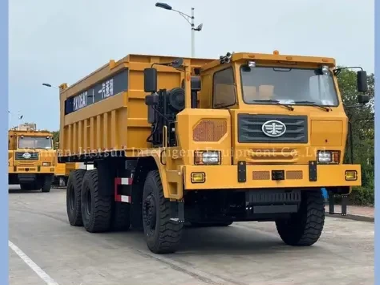
In the latter half of the 20th century, the development of automation and safety features in dump trucks revolutionized the industry. Modern dump trucks became not only more efficient but also safer and more comfortable for operators.
With advancements in technology and control systems, dump trucks began to incorporate automated features. Electronic systems that controlled the dump bed lifting and lowering were introduced, making the process more seamless and reducing the margin for human error. These systems also improved precision when unloading materials in tight spaces or on uneven ground.
Automated systems allowed operators to focus more on navigation and load distribution while the truck’s internal systems took care of the lifting and unloading processes. This advancement reduced the physical demands on drivers and enhanced the overall efficiency of the truck.
As dump trucks became larger and more powerful, safety features became an essential aspect of their design. The introduction of seat belts, rollover protection, and better visibility in the driver’s cabin significantly improved operator safety. Dump trucks were also equipped with enhanced braking systems, including air brakes and hydraulic brakes, to reduce the risk of accidents when carrying heavy loads.
Additionally, advancements in truck suspension systems ensured a smoother ride, even when the truck was loaded with heavy materials. These improvements reduced strain on the truck’s components, extending its lifespan and enhancing safety on the job site.
By the late 20th century, environmental awareness had become an important factor in the development of dump trucks. Manufacturers began focusing on reducing emissions and improving fuel efficiency in response to increasing environmental regulations. Innovations such as diesel-electric hybrid systems and low-emission engines became more prevalent, allowing dump trucks to operate more sustainably while meeting environmental standards.
Today’s dump trucks are powerful machines that combine state-of-the-art technology, advanced hydraulics, and superior safety features. Modern dump trucks are designed to handle a wide variety of materials in diverse working environments, from urban construction sites to remote mining locations.
The modern dump truck has evolved to carry significantly larger payloads compared to earlier models. Today’s trucks can transport up to 40 tons of material at a time, with specialized models capable of carrying even larger loads. Enhanced engines, combined with advanced suspension systems, allow modern dump trucks to carry these heavy loads with ease, improving efficiency on large-scale projects.
Modern dump trucks are also equipped with telematics systems, which allow for remote monitoring of various operational aspects such as fuel efficiency, engine performance, and location. These systems provide valuable data that can be used to optimize truck performance, reduce maintenance costs, and increase uptime.
Some advanced models even feature autonomous driving technology, which allows the dump truck to operate with minimal human intervention. While fully autonomous dump trucks are still in the early stages of development, they have the potential to further improve safety and efficiency on construction sites and in mining operations.
Looking toward the future, electric and hybrid dump trucks are expected to become more common, driven by the need for sustainability in the construction and mining industries. These vehicles are expected to offer significant reductions in fuel consumption and emissions, providing a more eco-friendly alternative to traditional diesel-powered models.
Electric dump trucks are already being tested in mining operations, and hybrid models are beginning to emerge in commercial applications. These trucks combine the benefits of electric motors and traditional engines, offering the best of both worlds: the power of a combustion engine with the efficiency and sustainability of electric technology.
The evolution of dump trucks from simple manual carts to the sophisticated machines of today has transformed the construction and mining industries. These trucks have become essential tools that drive efficiency, safety, and productivity on job sites across the world. As technology continues to advance, we can expect dump trucks to become even more powerful, efficient, and environmentally friendly, playing a key role in shaping the future of construction and material handling.
From the early days of horse-drawn carts to the rise of autonomous vehicles, the dump truck has proven to be an invaluable asset to industries that rely on bulk material transportation. The innovations that have shaped these machines over the years demonstrate the importance of engineering and technology in meeting the ever-growing demands of modern industry.