Telephone/WhatsApp: +86-13950097655 E-mail: eric@justsuntrucks.com
Please Choose Your Language

- All
- Product Name
- Product Keyword
- Product Model
- Product Summary
- Product Description
- Multi Field Search
Views: 0 Author: Site Editor Publish Time: 2026-07-28 Origin: Site
Have you ever looked at a commercial truck on the highway and wondered about its structural design? It often seems visually counter-intuitive when massive cargo units have their wheels clustered at the extreme rear rather than centered underneath. For owner-operators and fleet managers, axle placement is never just an aesthetic choice. It represents a strict calculation. You must constantly balance payload maximization, rigid regulatory compliance, and overall vehicle stability. If you place the wheels incorrectly, you risk severe safety issues and face hefty fines. This guide breaks down the core engineering principles of truck design. You will learn about crucial legal frameworks like the Bridge Formula and how they dictate road safety. We will also explore the daily operational trade-offs of different wheel configurations. By understanding these mechanical rules, buyers and operators can confidently evaluate their equipment setups.
Weight Transfer: Rearward axle placement strategically transfers a specific percentage of the payload weight (kingpin weight) to the tractor’s drive axles, ensuring vital traction.
Regulatory Compliance: Federal bridge laws mandate that heavy loads be spread over a longer wheelbase to prevent infrastructure damage.
Maneuverability vs. Stability: While rear axles provide superior highway stability and prevent trailer sway, they require advanced driver calculation for turning radiuses (off-tracking).
Adaptive Solutions: Most modern North American semi trailers utilize sliding tandem axles, allowing operators to adjust the wheelbase dynamically for varying loads and municipal restrictions.
You can understand the basic physics of a cargo unit by viewing it as a simple lever. When you move the wheels further to the rear, you force more weight forward onto the pivot point. In trucking, this pivot point is the kingpin. The kingpin connects directly to the tractor's fifth wheel. This weight transfer is entirely intentional. It ensures the whole vehicle operates safely.
The tractor desperately needs this transferred weight. Without sufficient downward force pushing onto the tractor's drive tires, the truck loses vital traction. This becomes incredibly dangerous during adverse weather. Rain, snow, and ice require heavy pressure on the drive wheels to maintain grip. Steep grades also demand high traction. If the drive tires lack weight, they will spin uselessly on uphill climbs.
Fleet managers carefully calculate the ideal kingpin-to-axle ratio. They do this when evaluating semi trailers for purchase. The goal is achieving a perfectly balanced load limit. You want up to 34,000 pounds on the rear tandem group. At the same time, you need a safe steering axle weight of around 12,000 pounds. Proper placement guarantees this distribution.
Improper weight distribution causes immediate hazards on the road. Operators must watch out for these dangerous scenarios:
Tail-heavy loads: When wheels sit too far forward, the rear overhang acts like a pendulum.
Severe sway: A tail-heavy unit will whip violently at highway speeds.
Loss of steering control: Excessive rear weight can literally lift the tractor's steer tires off the pavement.
Suspension damage: Overloaded rear sections quickly degrade air ride components and leaf springs.
Axle Group | Standard Target Weight (lbs) | Primary Function |
|---|---|---|
Steer Axle (Tractor) | 12,000 | Directional control and cab stability |
Drive Axles (Tractor) | 34,000 | Traction, acceleration, and braking force |
Tandem Axles (Trailer) | 34,000 | Payload support and rear braking |
Federal law dictates exactly how fleets must configure their equipment. The Federal Highway Administration (FHWA) enforces the Bridge Gross Weight Formula. This legal framework dictates the maximum allowable weight for any commercial vehicle. It calculates limits based on two factors. It counts the number of axles. It also measures the exact distance between them.
We have this law primarily for infrastructure protection. A fully loaded truck weighs up to 80,000 pounds. If you concentrate that weight in a small area, the localized stress collapses small bridges. It also destroys highway pavement exponentially faster. By spreading 80,000 pounds over a 50-foot wheelbase, the formula prevents this catastrophic stress. A longer wheelbase protects public infrastructure.
Weigh stations enforce this operational reality strictly. Every single semi trailer must meet gross weight limits. They must also pass specific axle-group limits. You cannot simply have 80,000 pounds total. You must ensure no single tandem group exceeds 34,000 pounds. Officers use embedded road scales to verify these measurements instantly.
Compliance serves as a massive decision-stage factor for businesses. Non-compliance impacts the bottom line immediately. Fleets face several costly consequences if they fail scale inspections:
Heavy scale fines: Tickets scale up quickly based on the overweight margin.
Forced load-reworking: Drivers must physically move cargo to balance the load before leaving the scale.
Delivery delays: Reworking loads destroys tight delivery schedules.
Out-of-Service (OOS) violations: Severe infractions force the truck off the road completely, hurting the carrier's safety score.
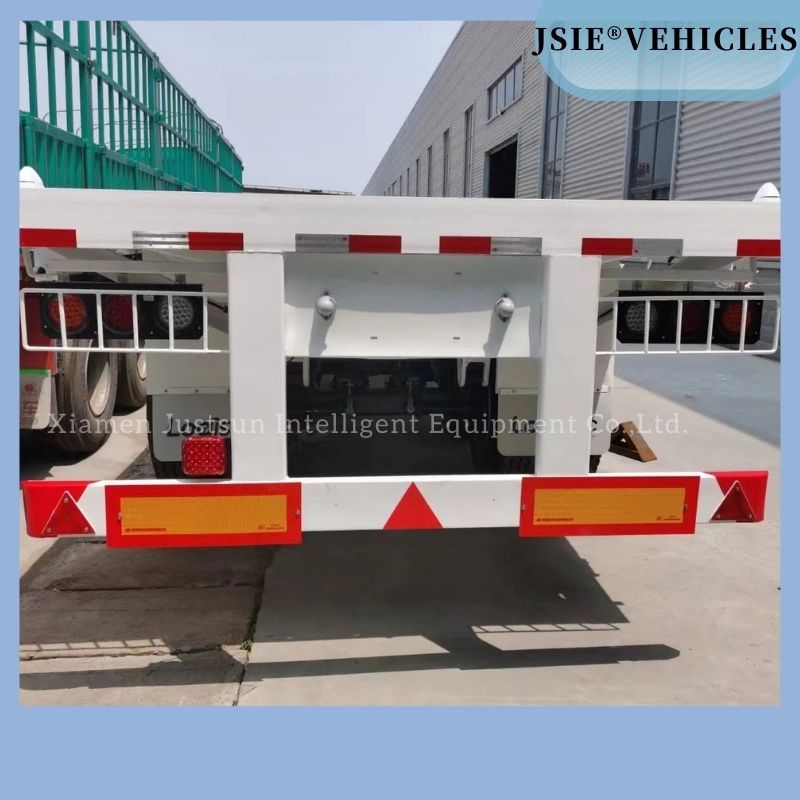
Placing wheels at the extreme rear creates a distinct mechanical reality. We call this the off-tracking phenomenon. During a turn, the rear wheels do not follow the path of the front wheels. Instead, they cut the corner sharply. The further back the wheels sit, the more extreme this shortcut becomes. Drivers must swing very wide into adjacent lanes to safely execute right-hand turns.
This creates an obvious urban maneuverability penalty. City drivers constantly battle tight intersections, narrow streets, and passenger vehicles. However, we contrast this urban penalty with a massive highway advantage. Rearward placement significantly boosts high-speed stability. It essentially eliminates the dangerous "whip" effect. When traveling at 70 mph, a long wheelbase tracks straight and true.
This stability protects fragile freight from side-to-side forces. It also drastically reduces driver fatigue. Drivers do not have to constantly fight the steering wheel to keep the unit centered. The equipment naturally wants to travel in a straight line.
Logistics planners evaluate these trade-offs daily. Route realities dictate equipment choices. Cross-country long hauls benefit immensely from rearward setups. The stability provides safety across thousands of highway miles. Conversely, urban last-mile deliveries demand completely different tools. Planners often specify shorter equipment or specialized configurations for navigating tight city grids safely.
Placement Configuration | Highway Stability | Urban Maneuverability | Ideal Application |
|---|---|---|---|
Extreme Rear Placement | Excellent (Minimal Sway) | Poor (High Off-tracking) | Interstate Long Haul |
Forward/Central Placement | Moderate (Prone to Whip) | Excellent (Tight Turns) | City Deliveries & Ag Transport |
Engineers developed a brilliant hardware solution for North American operators. Most modern dry vans and refrigerated units utilize sliding tandem axles. We commonly call them sliders. This system features locking pins and long sliding rails. These rails run underneath the cargo floor. The mechanism allows the entire rear suspension group to move forward or backward along the frame.
Drivers adjust this semi-trailer mechanism frequently based on specific operational scenarios. Adjusting the wheelbase solves immediate weight and routing problems.
Sliding Back: Drivers slide the tandems backward to shift weight off the tractor drives and onto the rear suspension. You do this to avoid overweight steer or drive tires. Moving them backward also maximizes the wheelbase. This ensures you comply with maximum bridge laws on open interstate highways.
Sliding Forward: Drivers slide the tandems forward to shift weight onto the tractor. You do this to tighten the turning radius. A shorter wheelbase navigates city grids much easier. You also slide forward to comply with specific state laws. California enforces a strict 40-foot rule. You cannot exceed 40 feet from the kingpin to the center of the rear axle group in California.
You must maintain the sliding mechanism properly. If you neglect the rails, they will seize up completely. Routine maintenance prevents frustrating delays. Follow these steps to keep the system operational:
Clean the slide rails regularly to remove corrosive road salt and mud.
Apply heavy-duty grease to the locking pins and slider pads.
Inspect the air lines connected to the release mechanism for winter freezing issues.
Cycle the locking pins weekly to ensure they retract and deploy fully.
Truck design varies wildly depending on geographic location. The North American model relies heavily on long conventional tractors. These feature large protruding hoods and spacious sleeper cabs. Our cargo units utilize exceptionally long wheelbases and rearward suspensions. This design philosophy is tailored specifically for our vast interstate highway systems. We prioritize long-distance stability and massive payload capacity over tight turning ability.
We see a stark contrast when looking at the European model. UK and European designs feature centralized suspensions. They frequently use tridems, placing three axles tightly grouped near the middle of the chassis. Furthermore, European operators rely on cab-over-engine (COE) tractors. These flat-nosed trucks eliminate the front hood entirely.
This distinct difference exists purely because of regional infrastructure. European infrastructure features narrower roads, ancient city layouts, and countless tight roundabouts. A 70-foot North American setup simply cannot physically navigate a medieval British town. Europe demands a drastically smaller turning radius. Therefore, their engineers happily compromise on high-speed stability to gain maneuverability.
Buyers need this vital procurement insight. Importing design philosophies rarely works in commercial trucking. Conflicting regional regulations destroy imported efficiencies. North American bridge laws heavily penalize centralized tridems. Conversely, European length restrictions make North American conventional hoods illegal. You must align your equipment specs precisely with local infrastructure limitations.
Semi trailer axle placement represents a non-negotiable intersection of physics, engineering, and law. You cannot simply place wheels wherever they look best. Physics demands proper weight transfer for tire traction. Engineering requires a long wheelbase for high-speed stability. Legal frameworks use bridge formulas to prevent infrastructure collapse. Moving the wheels backward satisfies all three rigid requirements for highway transport.
Fleet operators must turn this knowledge into action. Take these next steps to protect your operations:
Audit your current payload distribution practices to eliminate overweight fines.
Ensure your drivers receive practical training on sliding adjustments and locking pin safety.
Verify your specific equipment setups align legally with every single state your routes cross.
Implement strict preventative maintenance schedules for sliding rail systems to avoid costly seizing.
A: Yes. Most standard dry van and refrigerated trailers in North America feature sliding tandem axles. This system allows the driver to change the wheelbase on the fly. You slide them to balance weight distribution or to improve the turning radius for city driving.
A: The trailer becomes dangerously tail-heavy, which acts as a pendulum. This leads to severe trailer sway at highway speeds. It also reduces crucial traction on the tractor's drive tires and can overload the rear suspension components.
A: Under US federal regulations, the maximum legal weight on a tandem axle group (two consecutive axles) is 34,000 pounds. You can only carry this weight provided the vehicle also meets the overall Bridge Formula requirements for total gross weight.
A: California law restricts the distance from the kingpin to the center of the rear axle to a maximum of 40 feet for 53-foot trailers. This ensures long vehicles can safely navigate the state's specific intersection designs and tight highway ramps without causing severe off-tracking hazards.