Telephone/WhatsApp: +86-13950097655 E-mail: eric@justsuntrucks.com
Please Choose Your Language

- All
- Product Name
- Product Keyword
- Product Model
- Product Summary
- Product Description
- Multi Field Search
Views: 0 Author: Site Editor Publish Time: 2026-07-30 Origin: Site
Understanding the mechanics of a commercial braking system is critical. Drivers, fleet managers, and procurement officers all depend on this knowledge. They must balance daily highway safety and strict Department of Transportation (DOT) compliance. Passenger vehicles typically use light-duty hydraulic brakes. Heavy-duty freight requires a completely different mechanical approach. Compressed air remains the absolute industry standard for commercial transport. This article serves as a technical evaluation guide. We will help you spec the right braking components for your fleet. You will learn how to avoid common maintenance bottlenecks. Ultimately, this knowledge ensures maximum equipment uptime and reliable road safety.
Failsafe Design: Semi-trailer air brakes use a dual-system architecture (service and emergency) that defaults to a locked, stopped position if air pressure is lost, preventing catastrophic brake failure.
Key Components: Reliable stopping power relies on a seamless sequence between the tractor's compressor, air reservoirs, gladhands, relay valves, and the trailer's brake chambers.
Procurement Choice: Choosing between air disc brakes (ADB) and traditional drum brakes directly impacts upfront costs, stopping distance, and long-term maintenance overhead for semi trailers.
Compliance Dependency: Improperly adjusted air brakes (specifically slack adjusters) are a leading cause of DOT out-of-service violations, making system selection and maintenance protocols a core business risk.
Heavy freight demands massive physical stopping power. You also need highly scalable connections between interchangeable tractors and trailers. Standard hydraulic fluid simply cannot meet these heavy-duty demands. You cannot easily disconnect hydraulic lines in the field. Doing so introduces dangerous air bubbles into the fluid. It also causes messy fluid loss during every single trailer swap.
The compressed air solution solves this decoupling problem entirely. Air systems allow infinite, safe coupling. Drivers can attach and detach lines quickly via specialized gladhands. The system naturally represses ambient air. It pulls from the atmosphere, pressurizes it, and exhausts it safely. This keeps daily operations clean and highly efficient.
A properly designed system meets specific operational success criteria. It delivers consistent deceleration across various cargo weights. It strictly meets Federal Motor Carrier Safety Administration (FMCSA) stopping distance regulations. It simplifies roadside maintenance for technicians. Operators rely entirely on this standardization. A heavy semi trailer requires predictable, reliable mechanical force. Compressed air delivers exactly this consistency every single trip.
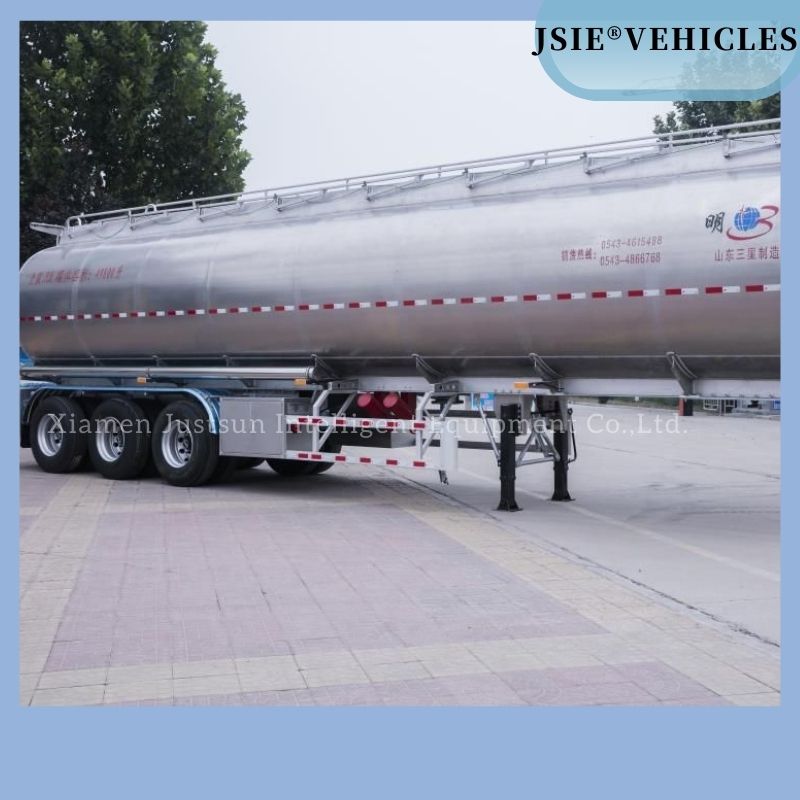
Understanding a commercial braking system requires breaking it down into distinct physical categories. Reliable stopping power relies on a seamless sequence of mechanical events. Let us examine the fundamental components from front to back.
The entire process begins at the engine-mounted compressor. This compressor pumps air into the system constantly while the engine runs. A specialized governor regulates this pressure strictly. It ensures air tanks maintain optimal operational levels. The primary and secondary air tanks store this compressed energy. They act as the foundational power source for the entire braking sequence.
Power must transfer seamlessly from the tractor to the trailer. This happens through highly specific external linkage points.
Gladhands: These are the critical connection points between vehicles. They are distinctively color-coded for safety and ease of use. Blue gladhands manage the service or control lines. Red gladhands handle the emergency or supply lines.
Tractor Protection Valve: This valve acts as a vital safety barrier. It protects the tractor's air supply. If a trailer unexpectedly breaks away, this valve seals the lines shut immediately. The tractor retains its independent braking capability.
The back half of the system transforms stored air into physical stopping friction. This requires several key mechanisms working together.
Relay Valves: These valves speed up application and release times. They are absolutely crucial on a long semi-trailer. They prevent dangerous jackknifing scenarios by ensuring instantaneous, simultaneous brake application across all rear axles.
Brake Chambers: These circular metal housings sit directly near the wheels. They convert air pressure into direct mechanical force. The air pushes against an internal rubber diaphragm. This extends the metal pushrod outward violently.
Slack Adjusters: This mechanical link connects the pushrod to the brake camshaft. It automatically compensates for brake lining wear over time. Modern fleets rely heavily on automatic slack adjusters for ongoing highway compliance.
Table 1: System Components and Primary Functions
Component Name | Physical Location | Primary Mechanical Function |
|---|---|---|
Air Compressor | Tractor Engine | Generates pressurized air for the entire system network. |
Gladhands | Trailer Front Wall | Connects air lines securely between the tractor and trailer. |
Relay Valve | Trailer Axle Area | Accelerates air delivery to prevent dangerous brake lag. |
Brake Chamber | Wheel End | Converts pneumatic pressure into a physical mechanical push. |
Commercial air brakes utilize a highly engineered dual-system architecture. This mechanical redundancy ensures maximum safety under heavy loads. We split these functions into service brakes and spring brakes.
Service brakes handle everyday operational stopping. The driver presses the foot pedal inside the cab. This action sends regulated air through the blue control line. The air travels rapidly through relay valves directly into the wheel brake chambers. The pressure pushes the diaphragm and pushrod. This forces the brake shoes against the drum. The vehicle slows down smoothly. Releasing the pedal exhausts the trapped air. The brakes disengage instantly.
Spring brakes operate on an entirely different mechanical philosophy. They rely exclusively on the failsafe principle.
The natural resting state of a commercial trailer brake is fully locked. A massive, heavy mechanical spring holds the brakes closed. Air pressure is absolutely required to release these brakes. You do not use air to apply the parking brake. You use air to hold the heavy spring back.
This design is vital for terrifying emergency scenarios. Imagine a catastrophic air leak occurs on the highway. Line pressure drops rapidly. The pneumatic system cannot hold the heavy springs back anymore. The springs automatically expand outward. They deploy the brakes fully across the axles. This stops the vehicle safely without any driver intervention. It prevents a massive runaway truck disaster.
Procurement choices directly impact fleet performance and safety. Choosing between modern air disc brakes and traditional drum brakes is a major decision. It dictates stopping distance and maintenance overhead for modern semi trailers.
Drum brakes have dominated the commercial trucking industry for decades. They use an S-cam mechanism to push brake shoes outward against a spinning metal drum.
Pros: They feature a significantly lower initial acquisition price. The industry knows them intimately. Replacement parts are available universally at virtually any truck stop across the country.
Cons: They are highly susceptible to brake fade. Steep mountain downgrades generate massive friction heat. This heat causes the drum to expand away from the shoe. They also carry heavier physical weight. Routine inspection times take much longer for technicians.
Air disc brakes represent the modern evolution of stopping technology. They clamp brake pads against a spinning metal rotor, similar to a standard passenger car.
Pros: ADBs offer dramatically shorter stopping distances. Drivers often describe a smooth, car-like braking feel. They virtually eliminate brake fade during heavy mountain use. Pad replacement is significantly faster for shop technicians. Built-in self-adjusting mechanisms drastically reduce out-of-service compliance risks.
Cons: They demand a noticeably higher upfront financial investment when ordering new equipment. Technicians require specific, updated training to service them properly.
Evaluate your routes carefully before making a purchase. Mountainous topography heavily favors ADBs due to extreme fade resistance. Flat regional routes might easily justify traditional drums. Consider your cargo sensitivity next. Fragile loads benefit immensely from the smooth, linear application of disc brakes. Finally, assess your equipment lifecycle. Fleets holding trailers for extended periods often prefer ADBs due to reduced maintenance intervals.
Chart: Brake Performance Comparison Index
Evaluation Metric | Traditional Drum Brakes | Air Disc Brakes (ADB) |
|---|---|---|
Stopping Distance | Standard FMCSA limit | Noticeably shorter |
Brake Fade Risk | High (on steep downgrades) | Virtually zero |
Routine Maintenance Speed | Slower (requires heavy drum removal) | Faster (quick pad swap design) |
Even the best engineering requires rigorous daily upkeep. Preventive maintenance realities dictate daily fleet operations. Neglect leads directly to catastrophic failure on the road.
Moisture is the primary enemy of pneumatic systems. Air compressors naturally generate heavy condensation. You must drain air tanks daily to prevent moisture buildup. Water inside the lines causes massive internal damage. It freezes solidly during harsh winter months. Ice blocks the air flow and destroys delicate internal valves. Routine draining prevents this completely.
Technicians must also inspect physical external connections constantly. Air lines commonly suffer from severe chafing against metal frames. Gladhand seals, known universally as grommets, degrade rapidly under UV light and physical wear. A worn rubber grommet creates a massive air leak instantly.
DOT Level 1 inspections heavily target commercial braking systems. The national statistics are sobering. Over 25% of vehicle out-of-service violations originate from brake-related defects. Improperly adjusted slack adjusters represent the vast majority of these specific failures. Modern fleets implement strict inspection protocols to avoid these costly roadside shutdowns. Choosing highly reliable components is a core operational risk strategy.
Modern commercial trailers integrate highly advanced safety technologies. Anti-lock Braking Systems (ABS) prevent dangerous wheel lockup during aggressive emergency stops. Roll-stability systems automatically apply brakes to prevent tipping on sharp highway curves. You must understand one critical fact. These advanced computers rely entirely on a healthy foundational air brake system. A failing relay valve renders an expensive ABS system completely useless. The mechanical foundation must remain structurally perfect.
The physics behind commercial air brakes appear surprisingly straightforward. Compressed air moves a pushrod to create friction. However, the operational implications for fleet safety are truly massive. A well-maintained system guarantees consistent stopping power. It protects drivers and valuable cargo alike.
We encourage buyers to take action immediately. Audit your current fleet brake maintenance history. Evaluate the precise performance difference between ADB and Drum options for your next equipment order. Consult with a reputable trailer dealer or manufacturer. They can help match exact brake specifications to your daily operational needs. Smart component choices keep trucks on the road safely and efficiently.
A: The system relies on a failsafe design. If air pressure drops below roughly 60 PSI, warning alarms sound in the cab. If pressure plummets further to between 20 and 45 PSI, the emergency spring brakes deploy automatically. The heavy mechanical springs expand, locking the brakes and bringing the trailer to a safe, controlled stop.
A: Lifespan varies heavily based on route topography, load weight, and driver behavior. Traditional drum brake shoes typically last between 250,000 and 300,000 miles in highway applications. Mountain routes or heavy urban driving will significantly reduce this lifespan. Air disc brake pads generally offer longer replacement intervals.
A: Yes, you can mix them safely. However, proper system spec'ing is vital. Disc brakes naturally engage slightly faster than drum brakes. Improperly matched systems can cause brake timing imbalances, leading the tractor to do more of the stopping work. Technicians must ensure pneumatic timing is perfectly synchronized.
A: The hissing sound is a completely normal, healthy system function. It usually occurs when the air dryer purges collected moisture from the system. It also happens when the driver releases the brake pedal, and the exhaust valves rapidly vent the trapped, pressurized air out into the atmosphere.