Telephone/WhatsApp: +86-13950097655 E-mail: eric@justsuntrucks.com
Please Choose Your Language

- All
- Product Name
- Product Keyword
- Product Model
- Product Summary
- Product Description
- Multi Field Search
Views: 0 Author: Site Editor Publish Time: 2026-08-30 Origin: Site
When you ask about fuel capacity in commercial hauling, you are actually asking two distinct questions. Are you measuring the diesel powering the semi-truck for driving, or are you measuring the bulk liquid freight hauled as cargo? We must clearly separate the tractor’s driving fuel from the trailer’s cargo payload. Miscalculating these capacities creates massive operational bottlenecks. Overestimating legal payload limits leads to inefficient routing and hefty weigh-station fines. Underestimating them wastes valuable cargo space and kills your route profitability. Fleet managers and owner-operators need exact figures to make smart equipment choices. In this guide, you will learn the exact gallon limits for both onboard fuel tanks and bulk liquid transport. We will explore how fuel weight directly dictates cargo payload maximums. Finally, you will discover how to match your equipment configurations to your specific route demands for maximum efficiency.
Onboard Fuel Tanks: Standard heavy-duty tractors hold between 120 and 300 gallons of diesel (across dual tanks), though usability is capped at ~95% to allow for thermal expansion.
Tanker Freight Capacity: A standard liquid tanker semi trailer holds between 7,000 and 9,000 gallons of fuel, strictly limited by the DOT 80,000-lb gross vehicle weight rating (GVWR).
Weight vs. Range Tradeoff: Every extra gallon of onboard fuel adds roughly 7 pounds of dead weight, directly reducing the maximum legal freight a semi-trailer can carry.
Efficiency Drivers: Selecting the right semi trailers based on aerodynamic design and weight distribution is critical to maximizing MPG and overall fleet profitability.
The transportation industry often uses terms interchangeably. This creates ambiguity. Before analyzing fleet efficiency, we must define the metric clearly. A tractor’s onboard fuel tank holds the diesel consumed during operation. Conversely, a tanker payload represents the revenue-generating liquid hauled behind the tractor. Understanding this distinction prevents costly planning errors.
Modern heavy-duty tractors utilize distinct tank configurations. You will typically find single or dual saddle tanks mounted on the sides of the chassis. Most manufacturers use cylindrical aluminum tanks for optimal strength and weight savings. Some older models feature rectangular designs, but cylindrical shapes handle internal pressure far better.
Standard capacity ranges vary widely based on the truck's purpose. Day cabs usually carry a single 100-gallon tank. Long-haul sleeper cabs typically run dual tanks. You might see twin 100-gallon, twin 120-gallon, or even twin 150-gallon setups. However, implementation reality dictates a harsh limitation. The "useable capacity" is always lower than the "rated capacity." Industry standards and physics require a 95% fill limit. Diesel fuel expands significantly in warm weather. If you fill a tank to 100% capacity, thermal expansion will force fuel out of the breather tube. This creates safety hazards and environmental violations. Therefore, a 300-gallon system truly only offers about 285 gallons of usable driving fuel.
When shifting focus to the cargo itself, the numbers scale massively. Standardized petroleum transport models are engineering marvels. When spec'ing semi trailers for bulk liquid transport, baseline gallon capacities typically range from 7,000 to 9,000 gallons. These volumes depend heavily on the specific gravity of the product hauled.
Internal baffling plays a huge role in total liquid volume. Tankers rarely feature a single hollow cavern. They utilize internal baffles or multi-compartment designs. Baffles are steel or aluminum bulkheads featuring large holes. They allow liquid to flow but severely disrupt the forward and backward surge of heavy fuel during braking. Multi-compartment tanks allow a single driver to haul premium gasoline, regular gasoline, and diesel simultaneously. These physical dividers add dead weight to the trailer. Consequently, this structural weight slightly reduces the total gallon volume you can legally haul.
Fleet operators must frame equipment purchases around business realities. Evaluating tanker specifications requires balancing daily route requirements against target return on investment (ROI). You cannot simply buy the largest tank available. The math dictates your profitability.
Federal law severely restricts interstate commerce weights. The Department of Transportation (DOT) enforces a strict 80,000-pound Gross Vehicle Weight Rating (GVWR) on interstate highways. Calculating your maximum payload yield requires a simple formula. You add the tractor weight, the empty trailer weight, and the fuel freight weight together. They cannot exceed 80,000 pounds.
Consider a standard long-haul tractor weighing roughly 18,000 pounds. Add an empty petroleum tanker weighing 10,000 pounds. You now have 28,000 pounds of fixed equipment weight. This leaves exactly 52,000 pounds for your revenue-generating cargo. Here, specific gravity becomes your defining metric. Diesel weighs approximately 7 pounds per gallon. Gasoline is lighter, weighing roughly 6 pounds per gallon.
This explains why a 10,000-gallon tanker might be entirely illegal to fill to capacity on federal highways. If you fill a 10,000-gallon tank with diesel, the cargo alone weighs 70,000 pounds. Adding the 28,000-pound equipment weight equals 98,000 pounds. You would incur massive fines at the first weigh station. Therefore, you must size your semi trailer exactly to the legal weight limit of your heaviest intended product.
Material selection heavily influences your payload economics. Manufacturers primarily construct fuel tankers from aluminum or stainless steel. Each material offers distinct operational advantages.
Material Type | Empty Weight | Payload Capacity (Gallons) | Upfront Cost | Primary Use Case |
|---|---|---|---|---|
Aluminum | Lighter (~9,500 lbs) | Higher (~8,500+ gal) | Premium / High | Standard Gasoline & Diesel |
Stainless Steel | Heavier (~11,500 lbs) | Lower (~7,500+ gal) | Moderate | Corrosive Chemicals & Heavy Oils |
You must weigh the higher upfront cost of aluminum against the long-term ROI. Aluminum dramatically reduces the empty weight of the unit. This allows you to legally add hundreds of extra gallons per trip. Over thousands of deliveries, this increased capacity generates substantial extra revenue.
Understanding payload limits is only half the battle. You must also optimize the tractor’s operational range. Carrying too much driving fuel hurts your bottom line just as much as carrying too little.
Predicting route efficiency requires basic math. Use this formula: (Usable Fuel Capacity × Average MPG) = Maximum Operating Range. A modern aerodynamic truck might achieve 7 miles per gallon. If it carries 200 usable gallons, its maximum range is 1,400 miles before refueling. This dictates where drivers stop, rest, and purchase fuel.
Fleet operators must configure tanks based on dispatch realities. Follow these core strategies:
Analyze typical route lengths: Regional trucks returning to a home terminal daily do not need maximum fuel capacity.
Match tanks to application: Spec'ing massive 300-gallon tanks for local routes is a flawed strategy. It forces the truck to haul unnecessary dead weight all day.
Leverage strategic purchasing: Optimized tank sizing allows long-haul drivers to buy fuel in states bearing lower fuel taxes. They can safely bypass high-tax states without running dry.
Weigh the hidden costs of carrying maximum fuel. Every gallon of diesel weighs 7 pounds. If you equip a truck hauling heavy flatbed cargo with an extra 100 gallons of unnecessary diesel, you add 700 pounds of dead weight. This 700 pounds directly displaces revenue-generating cargo. You might have to leave a paying pallet on the dock simply because your fuel tanks are too large. Proper sizing eliminates this wasted payload potential.
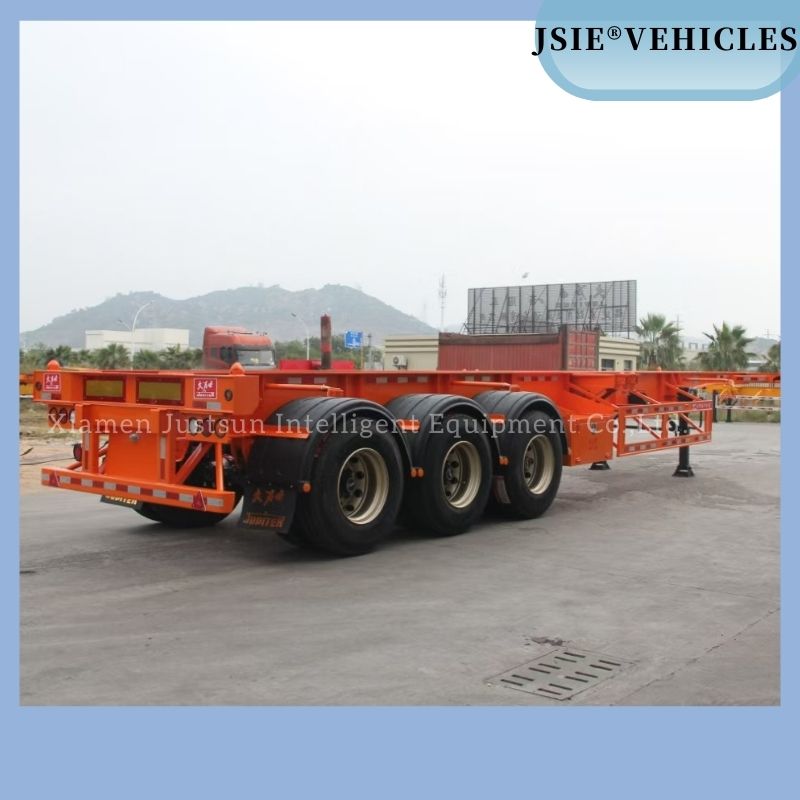
Maximizing range does not always mean adding larger tanks. You can upgrade fleet equipment to maximize the mileage yielded from a single tank of fuel. Reducing aerodynamic drag directly improves your bottom line.
Tractors push the air, but trailers create massive drag. Upgrading aerodynamic packages on your units is highly effective. You should evaluate side skirts, tail fairings, and tractor-trailer gap reducers. Skirts prevent turbulent air from rolling underneath the trailer and hitting the rear axles. Tail fairings smooth the chaotic wake of air leaving the rear doors.
Evidence-based outcomes strongly support these investments. Proper aerodynamics on a standard semi-trailer can yield a 4% to 7% improvement in fuel efficiency. At 100,000 miles per year, a 5% improvement saves thousands of gallons of diesel annually per truck.
Beyond slicing through the air, you must reduce friction and mass. Spec'ing lightweight trailer components offsets fuel weight and keeps you compliant. Consider switching to wide-base single tires. Replacing traditional dual tires saves roughly 400 pounds per vehicle. Use aluminum wheels instead of steel. Install composite flooring in dry vans. Every pound saved on the equipment is a pound added to your revenue payload.
Acquiring new equipment requires a rigid decision framework. Do not buy off the lot without running the numbers. You must align your fleet's typical routes, average payload weight, and fuel strategy with your acquisition.
Never compromise on federal regulations. When shortlisting equipment, verify all DOT certifications immediately. If you plan on hauling bulk fuel, ensure absolute FMCSA compliance for hazardous materials. Modern liquid transports must feature rollover stability systems (RSC). These electronic safeguards monitor lateral acceleration and automatically apply brakes to prevent catastrophic tank rollovers.
Before signing any purchase agreements, conduct a comprehensive financial lifetime audit. Evaluate the upfront capital expense against the projected route profitability. Analyze how much fuel your tractors actually need. Calculate exactly how many gallons your tanks can legally hold under the 80,000-pound limit. A rigorous audit ensures you select the perfect specifications for your specialized hauling needs.
The "ideal capacity" is never a static number. Whether you are sizing the tractor's fuel tanks or the trailer's liquid payload, capacity is always a calculated compromise. You must balance maximum operating range against strict legal weight limits. We have seen how carrying unnecessary diesel limits your cargo potential. We have also explored how specific gravity dictates the true maximum volume of a tanker trailer. Always reiterate the importance of matching equipment specifications to specific operational realities. Regional routes require vastly different setups than cross-country heavy hauls. Do not leave your efficiency to chance. Consult with a dedicated fleet specialist today, browse specialized tanker inventory, or use an internal ROI calculator to finalize the most profitable trailer configuration for your business.
A: A heavy-duty semi-truck can typically travel between 1,000 and 1,500 miles on a single fill-up. This calculation assumes dual tanks providing 150 to 250 usable gallons of diesel. At an average fuel efficiency of 6 to 8 miles per gallon, a fully fueled long-haul truck enjoys a massive operational range.
A: GVWR limits prevent the use of endlessly large fuel tanks. The federal weight limit is 80,000 pounds. Every extra gallon of diesel adds about 7 pounds of dead weight to the truck. Carrying unnecessary fuel directly displaces revenue-generating payload, resulting in diminishing returns for fleet operators.
A: A standard liquid fuel tanker usually features 3 to 5 internal compartments. This multi-product hauling capability allows operators to transport premium unleaded gasoline, regular unleaded, and diesel fuel in a single delivery trip. The internal bulkheads separate the liquids and reduce dangerous forward liquid surge during braking.
A: Yes, trailer weight heavily affects fuel mileage. There is a direct correlation between gross vehicle weight and MPG. A heavier trailer requires more engine torque to accelerate and maintain speed. Additionally, a poorly designed, heavy trailer creates higher aerodynamic drag and rolling resistance, drastically increasing the tractor's fuel burn rate.