Telephone/WhatsApp: +86-13950097655 E-mail: eric@justsuntrucks.com
Please Choose Your Language

- All
- Product Name
- Product Keyword
- Product Model
- Product Summary
- Product Description
- Multi Field Search
Views: 0 Author: Site Editor Publish Time: 2026-09-01 Origin: Site
A damaged commercial asset creates immediate business friction. Fleets lose revenue every hour it sits idle. You also face mounting liability risks and severe supply chain bottlenecks.
Subjective visual checks often miss deep structural compromises. These oversights easily lead to strict DOT violations or catastrophic failures on the highway. Ignoring hidden stress points endangers your drivers and destroys your profit margins.
We will provide an evidence-based framework for evaluating damage severity. You will learn how to document claims effectively and streamline insurance approvals. Ultimately, this guide helps you make the critical "repair vs. replace" decision confidently.
Immediate triage must prioritize DOT compliance and structural integrity over cosmetic appearance.
Frame, suspension, and kingpin damage require professional, non-destructive testing to uncover hidden stress fractures.
The "repair vs. replace" decision should be driven by the Actual Cash Value (ACV) of the trailer relative to the repair cost plus projected downtime.
Proper documentation (timestamped photos, driver reports) is non-negotiable for swift insurance approvals and internal policy compliance.
Separating out-of-service (OOS) conditions from cosmetic damage defines your immediate response. A scraped side panel looks bad but allows an asset to safely finish a route. Conversely, a twisted frame demands immediate grounding. Fleet managers must evaluate every semi trailer objectively. You cannot rely on driver guesswork when public safety hangs in the balance.
You must quickly identify visual and operational red flags. Air leaks require instant attention. Check the glad hands and brake chambers. Listen for hissing air systems. A compromised brake line or an ABS warning fault instantly disqualifies the vehicle from legal operation. These systems directly govern stopping power. They leave zero room for error.
Next, inspect the main structure. Look for visible twisting or sagging in the frame rails. A sagging frame usually indicates yielded metal. It means the load-bearing capacity has failed. You should also check the cargo containment systems. Compromised door seals threaten temperature-controlled freight. Roof tears invite water intrusion. Water damage ruins cargo and triggers expensive customer claims.
Compliance considerations heavily influence triage. DOT safety regulations dictate immediate grounding for specific structural anomalies. The Commercial Vehicle Safety Alliance (CVSA) issues strict out-of-service criteria. Operating a structurally compromised vehicle introduces severe liability. If a flagged trailer causes an accident, your company faces negligent maintenance lawsuits. Always prioritize regulatory compliance over completing a single delivery.
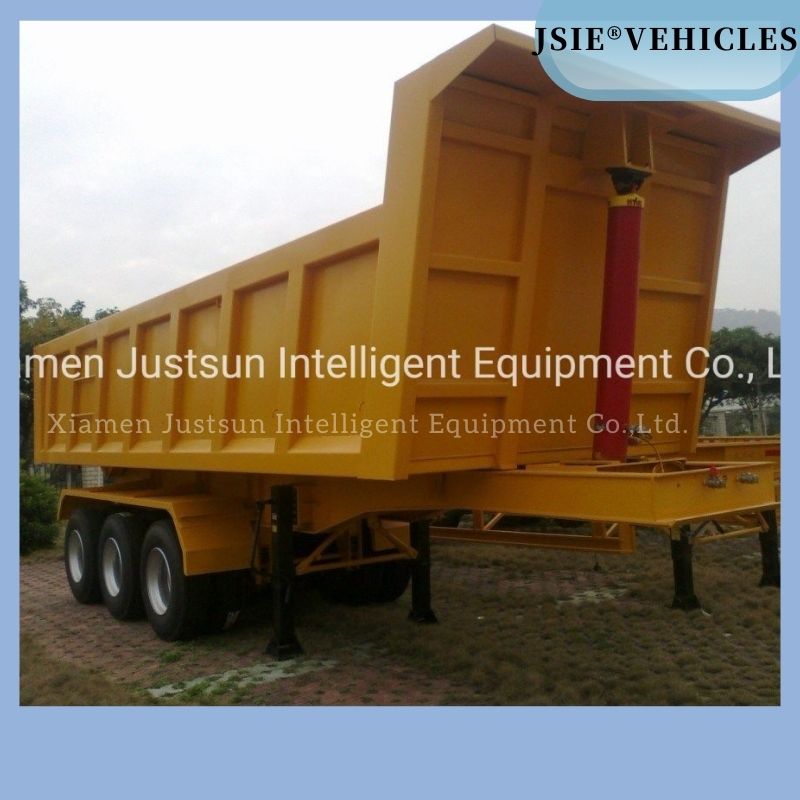
You must scrutinize the undercarriage meticulously. Start by searching for micro-cracks around crossmembers. Examine the kingpin assemblies and landing gear mounts closely. These zones endure extreme stress during coupling and decoupling. Even microscopic fissures expand rapidly under heavy payloads.
Assess the entire chassis for metal fatigue and stress fracturing. This step becomes vital if the unit experienced a rollover or heavy impact. Standard visual checks fail here. Professionals often use magnetic particle inspection or dye penetrant testing. These non-destructive methods reveal hidden fractures inside the steel or aluminum components.
A damaged suspension destroys handling and safety. Check the overall wheel alignment first. Inspect the air spring integrity for abrasions or slow leaks. Examine the trailing arms for bends or fresh rust spots near welds. Rust often highlights newly exposed metal from a recent crack.
Suspension misalignment causes severe cascading failures. It triggers accelerated tire wear, commonly known as scrubbing. This friction builds excessive heat. Heat leads to tire blowouts on the highway. A compromised semi-trailer suspension also causes unpredictable tracking. It poses a massive handling hazard for the driver during evasive maneuvers.
Cargo protection relies entirely on the outer envelope. Identify any puncture wounds along the sidewalls. Look for ripped aluminum or composite panels. Inspect the top structure for damaged roof bows. A broken roof bow sags and collects water, eventually leading to a complete roof collapse under snow loads.
Evaluate the interior flooring systematically. Look for fork-truck punch-throughs. Forklifts exert massive pinpoint pressure during loading. Wood or aluminum floors can splinter or buckle. Check underneath for crossmember separation. Separated crossmembers compromise the entire load-bearing capacity. They render the vehicle unsafe for heavy pallets.
You must base the repair vs. replace decision on hard financial data. Emotional attachments to specific assets waste money. Evaluate the situation using distinct features-to-outcomes dimensions.
First, apply the 75% Rule. Calculate the repair estimate against the Actual Cash Value (ACV) of the asset. If the repair costs exceed 70-75% of the ACV, replacement is generally the financially sound choice. Pushing beyond this threshold risks negative equity. You spend more saving the asset than it is actually worth in the current market.
Downtime costs heavily influence this calculation. You must calculate the daily revenue lost while the unit sits in a shop. Waiting for specialized OEM parts often takes weeks. Add these lost revenue figures directly to the repair estimate. A cheaper repair suddenly becomes the worst financial choice if it demands three months of shop time.
Long-term asset integrity matters immensely. Assess if a major structural weld will permanently reduce the payload capacity. Welded frames sometimes lose their original flexibility. This rigidity can shorten the asset's lifecycle. You must decide if a patched frame serves your high-mileage routes safely.
Always maintain transparent assumptions during evaluations. Minor panel patches and door realignments represent high-ROI repairs. They cost little and restore full functionality quickly. Conversely, compromised main beams carry hidden long-term risks. They often require ongoing realignments and specialized monitoring.
Damage Type | Business Impact | Recommended Fleet Action |
|---|---|---|
Cosmetic Scrapes & Minor Dents | Low. No cargo or safety risks. | Schedule repair during routine PM. Do not ground. |
Torn Roof or Door Seal | Medium. Risk of cargo water damage. | Ground temporarily. High-ROI patch repair required. |
Bent Crossmembers (Minor) | Medium. Reduced floor capacity. | Evaluate ACV. Usually cost-effective to replace sections. |
Twisted Main Frame / Kingpin | Critical. OOS violation. Severe liability. | Likely total loss. Apply 75% Rule. Consider replacement. |
Implementation realities dictate how smoothly claims process. Insurance companies frequently delay or deny claims due to poor initial documentation. Drivers and fleet managers often fail to capture the immediate aftermath accurately. You need standardized processes to protect your financial interests.
Follow a strict documentation checklist for every incident:
Capture high-resolution, timestamped photos of the damage. Shoot from multiple angles. Include wide shots for context and macro shots for detail.
Document the DOT bumper, lighting assemblies, and the license plate.
Collect the driver’s initial incident report immediately. Map this report against your internal company policy.
Obtain third-party professional estimates. Ensure they itemize parts, labor, and the expected turnaround time.
Thorough documentation acts as your primary risk mitigation tool. Keeping an organized paper trail protects the fleet against disputed liability. Multi-vehicle incidents frequently involve finger-pointing. When you manage a fleet of semi trailers, objective evidence wins claim disputes. It ensures swift insurance payouts and maintains internal policy compliance.
Applying strict shortlisting logic saves fleets time and money. Not all heavy-duty diesel shops are equipped for major bodywork. Standard mechanics cannot handle complex structural fabrication. You need specialized collision centers.
Evaluate shops using key vetting criteria:
Capabilities: They must have access to frame-straightening bays. They need heavy-duty alignment racks designed specifically for commercial lengths. Ensure they employ certified aluminum and steel welders (e.g., AWS D1.2 certification for aluminum).
Certifications: Look for OEM-certified technicians. Request proof of specialized training. DOT inspection certification is mandatory for anyone returning a grounded vehicle to service.
Turnaround & Parts Availability: Ask about their supply chain. They must demonstrate the ability to source specific OEM parts rapidly. Fast parts sourcing minimizes your fleet downtime drastically.
Your next-step actions should be clear. Request an itemized, verifiable estimate from the shortlisted shop. Establish a firm timeline for expected completion before signing any work orders. Hold the vendor accountable for delays.
Accurate damage assessment protects both the fleet's bottom line and public safety. Ignoring minor cracks inevitably leads to catastrophic highway failures. You must shift from subjective driver walk-arounds to standardized, documented evaluation frameworks. Use data, non-destructive testing, and the 75% ACV rule to guide your choices.
Train your drivers to spot out-of-service conditions instantly. Enforce strict photo documentation policies for every incident. Never allow a compromised frame back on the road without professional clearance.
Take action today. Consult with a certified commercial collision or repair center for a definitive diagnostic before authorizing heavy structural fixes. Prioritize expertise over convenience to ensure your fleet remains safe, compliant, and profitable.
A: A total loss is typically declared when repair estimates exceed 70-75% of the asset's Actual Cash Value (ACV). Severe twisting, widespread metal fatigue, or structural yielding near the kingpin usually pushes repair costs beyond this financial threshold, making replacement necessary.
A: It depends on the severity. Minor scrapes are legal. However, if the roof damage compromises structural bows, threatens to detach while driving, or allows water intrusion that exceeds weight limits, it violates DOT safety regulations and must be placed out of service.
A: Rear-end collisions frequently cause hidden damage to the DOT underride guard, suspension alignment, and the rear crossmembers. You may also find micro-fractures along the trailing arms and buckling in the floorboards that visual inspections easily miss.
A: A professional structural estimate usually takes 24 to 48 hours. The facility must conduct non-destructive testing, measure frame alignment, and source pricing for heavy-duty OEM parts to provide an accurate, itemized breakdown.