Telephone/WhatsApp: +86-13950097655 E-mail: eric@justsuntrucks.com
Please Choose Your Language

- All
- Product Name
- Product Keyword
- Product Model
- Product Summary
- Product Description
- Multi Field Search
Views: 0 Author: Site Editor Publish Time: 2026-08-26 Origin: Site
Transporting heavy steel coils carries catastrophic risks for heavy-haul fleets. A shifting load easily crushes truck cabs, destroys transport equipment, and triggers severe penalties. Securing these massive cylinders is an exact science dictated by strict physics. A single miscalculation in chain routing or equipment selection puts lives in immediate danger. It also leads to failed Department of Transportation (DOT) inspections and massive liability claims. We must prioritize absolute compliance and reliable securement gear on every single dispatch.
This guide delivers a rigorous framework for evaluating your current securement methods. You will learn how to select appropriate heavy-haul equipment for high-stakes transport operations. We will examine mandatory Federal Motor Carrier Safety Administration (FMCSA) standards in detail. Furthermore, you will discover how to execute safe, compliant chaining strategies tailored to specific load orientations. Fleet managers and operators can use this blueprint to eliminate guesswork and standardize safety.
Regulatory Baseline: Legal securement requires the aggregate Working Load Limit (WLL) of all tie-downs to equal at least 50% of the coil’s total weight.
Orientation Dictates Strategy: Securing a coil "suicide" (eye crosswise), "shotgun" (eye lengthwise), or "eye-to-the-sky" requires distinct chain routing and dunnage setups.
Friction is Non-Negotiable: Coil racks and hardwood dunnage must be supported by certified friction mats to prevent base sliding.
Equipment Quality Limits Liability: Downgrading to unmarked chains or cheap edge protectors exponentially increases the risk of DOT out-of-service violations and liability claims.
Safe transport begins with a clear understanding of load physics and regulatory math. You cannot rely on intuition when moving tens of thousands of pounds of concentrated steel. Understanding how to calculate aggregate limits ensures legal compliance and physical safety.
Calculating the aggregate Working Load Limit forms the foundation of all securement strategies. You must sum the WLL of each active tie-down used to secure the load. The final aggregate number must equal at least 50% of the coil’s total weight. If you transport a 46,000-pound coil, your tie-downs must provide at least 23,000 pounds of aggregate WLL.
You must never rely on theoretical breaking strength. Breaking strength represents the maximum force a component withstands before catastrophic failure in a laboratory. Certified WLL usually represents just one-third or one-fourth of the breaking strength. Using breaking strength for compliance calculations is a dangerous failure. DOT inspectors exclusively verify the stamped or tagged WLL on your equipment.
Federal regulations specifically address the unique dangers of transporting cylindrical cargo. FMCSA Section 393.120 governs the securement of metal coils weighing over 5,000 pounds. These rules dictate exactly how operators must secure loads on a semi trailer. The mandate specifies rules for friction mats, dunnage placement, and exact chain routing based on orientation. Violating these specific mandates guarantees an out-of-service order during roadside inspections.
A stationary steel coil behaves very differently once it hits highway speeds. You must secure the cargo against intense dynamic forces. Heavy braking generates immense forward force. Acceleration pushes the cargo backward. Sharp cornering and evasive maneuvers apply severe lateral force. Your chaining strategy must counteract all three directional forces simultaneously. This requires multi-directional tie-downs pulling opposing tension to lock the cylinder firmly into its cradle.
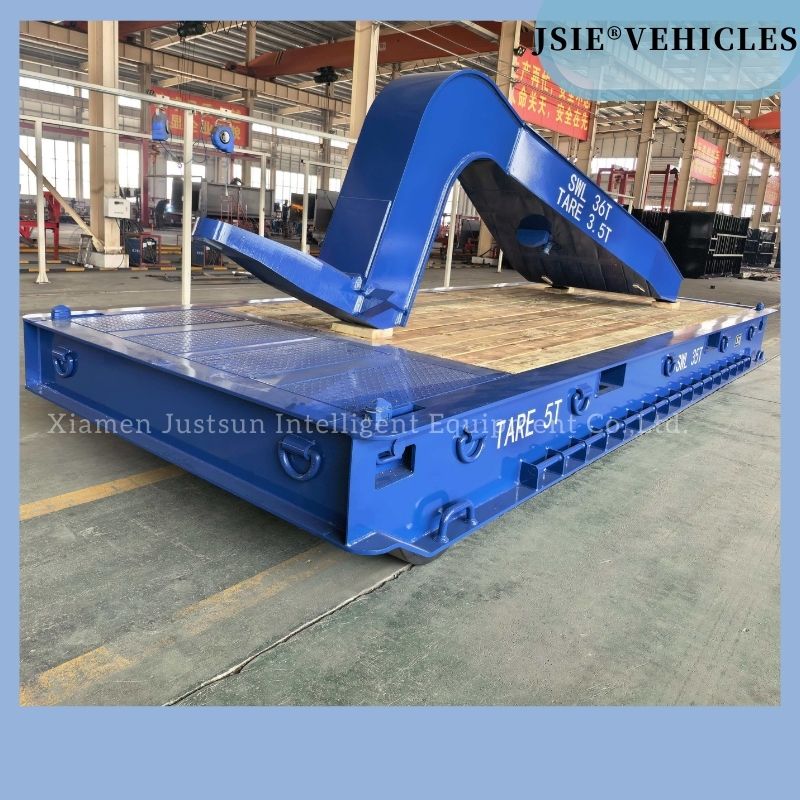
Skill cannot overcome substandard equipment. Heavy-haul operations demand specialized hardware engineered for concentrated loads. Operators must inspect and verify every piece of gear before loading.
You need heavy-duty steel coil racks to cradle the cylinder. These racks hold your wooden dunnage in place. Always select structural hardwood dunnage, such as oak or hickory. Softwoods like pine compress easily under the immense weight of steel coils. This compression loosens the chains during transit. Oak blocks resist compression and maintain consistent chain tension over long distances. Ensure lumber is free from severe cracks, rot, and structural defects.
Rubber friction mats act as the vital grip between different material surfaces. They are legally and practically required. You must place high-coefficient friction mats between the semi-trailer deck and the metal coil racks. You also need mats between the racks and the wooden dunnage. The rubber prevents base sliding during emergency braking. Skipping this step allows microscopic sliding, which eventually causes catastrophic chain slack.
Heavy coils demand superior chain grades. You should standardize Grade 80 or Grade 100 chains over older Grade 70 models. Higher grades maximize the WLL per tie-down, reducing the total number of chains required. This improves efficiency and safety.
When selecting binders, always choose ratchet binders over snap binders. Snap binders rely on leverage and store dangerous kinetic energy. They often cause severe jaw and facial injuries when they kick back. Ratchet binders allow controlled, gradual tensioning. They eliminate kickback risks and offer precise tightness control.
The following chart compares standard chain grades for heavy-haul compliance.
Chain Grade | Material Rating | Common WLL (3/8" size) | Recommended Use |
|---|---|---|---|
Grade 70 | Transport Carbon Steel | 6,600 lbs | General freight, light equipment |
Grade 80 | Alloy Steel | 7,100 lbs | Heavy machinery, medium coils |
Grade 100 | Premium Alloy Steel | 8,800 lbs | Heavy steel coils, specialized hauling |
Metal edges destroy chain links through friction and shearing forces. Heavy-duty synthetic or steel edge protectors are mandatory. They sit between the chain and the inner edge of the coil. These protectors prevent the sharp steel edge from cutting into your chains. They also protect the customer's freight from deep chain indentations. Without edge protection, a Grade 100 chain can fail well below its rated limit due to localized stress fractures.
Coils travel in three primary orientations. Each position requires a distinct, specialized approach to securement. Follow these procedures carefully.
This orientation is called "suicide" because if the coil breaks loose, it rolls forward into the truck cab. Despite the name, it is the most common loading method because it distributes weight effectively across the trailer axles.
Setup: Lay down your rubber friction mats on a clean deck. Position the metal coil racks on top of the mats. Place your structural hardwood dunnage inside the racks. Add another layer of friction mat on top of the wood before the crane lowers the cargo.
Routing: Route your chains directly through the open eye of the cylinder. You must create strong downward pressure to force the cylinder into the wooden cradle.
Execution: Execute an X-pattern with your chains. One chain pulls forward and down. The opposing chain pulls backward and down. This multi-directional tension prevents both forward and backward rolling.
In shotgun loading, the eye of the cylinder faces the front and rear of the trailer. If it breaks loose, it rolls off the side of the deck.
Force Management: You must make specific adjustments for forward and rearward force management on standard semi trailers. The cargo naturally wants to slide forward under heavy braking.
Angle Placement: Route chains through the eye and drop them at proper angles to the rub rail or spool pockets. Ensure chains pull equally to the left and right sides of the trailer. Cross the chains internally to provide lateral stability. Add horseshoe ties over the top for extra downward pressure.
This loading method places the cylinder flat on a pallet or deck, with the center hole pointing straight up. It presents unique challenges for downward pressure.
Cross-Chaining: You must route chains directly across the flat top of the cargo. Always use engineered edge protectors where the chains break over the outer lip. Cross the chains in an X-pattern across the top surface to secure it to the side rails.
Blocking and Bracing: The base requires intense blocking. Nail substantial hardwood blocks directly to the wooden deck around the base. This prevents the smooth bottom surface from sliding laterally during transit.
Even experienced operators make critical errors. Understanding common field failures helps you avoid DOT fines and prevent catastrophic accidents.
Chain angles matter immensely. The angle from the cargo to the deck anchor dictates effective downward pressure. If you place chains at angles less than 45 degrees, they lose significant downward force. Shallow angles pull laterally rather than pulling the cargo down into the dunnage. Always aim for a steep, direct angle to maximize the clamping effect.
DOT inspections focus heavily on equipment condition. If a chain or binder lacks a legible, factory-stamped WLL tag, inspectors downgrade it immediately. They will rate unmarked gear at the lowest possible tier for its size. This downgrade instantly ruins your aggregate WLL calculation. It leads directly to out-of-service violations. Inspect your tags daily.
Omitting friction mats is a dangerous oversight. Placing steel racks directly on a metal or wood deck creates a slippery surface. The extreme weight of the load causes microscopic shifts during transit. These tiny shifts accumulate, eventually causing the load to slide. This movement completely loosens the binders. Friction mats are the only reliable barrier against base sliding.
The cargo always settles into the wooden dunnage during the first few miles of transit. The immense weight compresses the wood fibers. This settling introduces slack into your chains. You must stop your truck within the first 50 miles of your trip to check and re-tension all binders. Failing to perform this mandatory safety check is a leading cause of highway accidents.
The following table outlines common violations and their immediate solutions.
Common Failure | Safety Risk | Corrective Action |
|---|---|---|
Missing WLL Tags | DOT out-of-service order | Replace undocumented chains/binders immediately. |
No Friction Mats | Cargo sliding forward | Install certified rubber mats under all racks. |
Snap Binders Kickback | Severe operator injury | Upgrade fleet to controlled ratchet binders. |
Shallow Chain Angles | Loss of downward pressure | Reposition anchor points closer to the cargo. |
Building a reliable inventory requires strategic procurement. Fleet managers must look beyond generic marketplace hardware. You need verifiable, high-grade equipment to protect your drivers and your cargo.
Diversity in securement gear causes dangerous confusion. Ensure every trailer in your fleet carries uniform, high-WLL gear. Standardizing your equipment eliminates driver guesswork. When every driver uses the same Grade 100 chains and identical ratchet binders, training becomes simple. Standardization ensures consistent WLL calculations across the entire company. It also streamlines inventory management and replacement protocols.
Never purchase load securement equipment from unverified online marketplaces. You must evaluate vendors based on strict safety criteria. Look for suppliers that provide certified, DOT-compliant load testing documentation. Reliable vendors supply metallurgical testing reports and clear traceability codes on all hooks and links. Demand proof of compliance before outfitting your fleet.
Chaining down steel coils remains an exact science. It relies entirely on applied physics and strict regulatory compliance, not driver intuition. Your securement strategy dictates the safety of the public highways. Every element matters, from the aggregate WLL calculations to the specific angles of your tie-downs.
Reliable, high-grade securement equipment serves as a vital liability shield. It protects drivers from injury, shields fleet managers from DOT penalties, and ensures cargo arrives intact. Do not compromise on friction mats, hardwood dunnage, or certified chains.
We urge you to audit your current tie-down inventory immediately. Discard chains with missing WLL tags. Replace dangerous snap binders with modern ratchet binders. Upgrade your fleet with certified coil securement kits to ensure absolute compliance on every single dispatch.
A: You must satisfy the 50% WLL rule. A 45,000 lb coil requires at least 22,500 lbs of aggregate WLL. The exact number of chains depends on their grade. If using Grade 80 chains rated at 7,100 lbs WLL each, you need at least four chains to safely exceed the minimum aggregate requirement.
A: Yes, you can transport coils on standard flatbeds. However, the deck must be structurally sound. You must use compliant coil racks, hardwood dunnage, and thick rubber friction mats. These components safely distribute the highly concentrated weight across the trailer's structural beams.
A: "Suicide" loading places the coil with the eye facing the sides of the trailer. "Shotgun" loading places the coil with the eye facing front-to-back. Suicide is the most common method because it distributes the heavy weight better across the axles and simplifies direct tie-down routing.
A: Yes. Friction mats are a regulatory and practical necessity. Rubber mats prevent the wooden dunnage and metal racks from sliding across the smooth trailer deck. Omitting them allows the load to shift during heavy braking, which dangerously loosens your securement chains.