Telephone/WhatsApp: +86-13950097655 E-mail: eric@justsuntrucks.com
Please Choose Your Language

- All
- Product Name
- Product Keyword
- Product Model
- Product Summary
- Product Description
- Multi Field Search
Views: 0 Author: Site Editor Publish Time: 2026-08-17 Origin: Site
Designing a custom semi trailer requires balancing tare weight optimization, maximum payload capacity, and strict regulatory compliance. Commercial stakes run incredibly high when hauling heavy freight. Off-the-shelf options often fail to accommodate specialized freight dimensions or unique loading and unloading operational workflows. Standardized designs force logistical compromises. These compromises ultimately harm overall fleet efficiency.
Fleet operators need tailored solutions to overcome complex hauling challenges. Custom engineering bridges the gap between standard specs and specific operational demands. This definitive guide covers everything you need to know. We explore requirement gathering, structural material selection, and digital prototyping using CAD and FEA. We also detail compliance inspection protocols and how to shortlist custom manufacturing partners. You will learn exactly how to engineer a durable, compliant trailer built for your exact operational needs.
Operational Scoping: Payload dimensions, route legislation (bridge laws), and cargo type dictate the baseline architecture before any digital design begins.
Material & Structural Trade-offs: The choice between high-tensile steel and aluminum alloys directly impacts fleet fuel efficiency, corrosion resistance, and total lifecycle cost.
Digital Prototyping is Mandatory: Utilizing specialized CAD environments (e.g., SolidWorks Weldments) combined with Finite Element Analysis (FEA) mitigates structural failure risks before physical manufacturing.
Rigorous Compliance: Final designs must align with regional transport authority standards (e.g., DOT, ADR) and pass stringent pre-production inspection frameworks.
Vendor Vetting: Selecting a manufacturing partner requires evaluating their engineering capabilities, QA protocols, and post-delivery support infrastructure.
Standardized trailers force severe logistical compromises. You cannot haul oversized industrial machinery using a generic flatbed without risking structural damage. Custom design begins by mapping your exact operational needs directly to structural possibilities. Engineers must translate daily freight challenges into precise mechanical requirements.
Before drawing a single line in a CAD program, you must define your weight parameters. Payload dictates the entire structural foundation of your custom build.
Define Maximum Gross Vehicle Weight Rating (GVWR): Calculate your target payload capacity. Subtract your estimated tare weight from the maximum allowable GVWR. This calculation reveals your actual hauling capability.
Analyze Load Distribution: You must distinguish between point loads and uniformly distributed loads. Hauling massive steel coils represents an extreme point load. This scenario requires concentrated structural reinforcement. Conversely, hauling pallets of consumer goods represents a uniformly distributed load.
Best Practice: Always design for your heaviest, most concentrated expected load. Never assume weight will remain perfectly distributed during transit.
Designing a structurally sound custom semi-trailer means nothing if it violates road laws. You must strictly adhere to regional regulations.
Factor in specific regional bridge formulas. The Federal Bridge Gross Weight Formula dictates how weight must spread across axles.
Identify maximum height and width restrictions for your primary routes.
Calculate necessary turning radius requirements for tight loading docks.
Determine the optimal axle configuration. Tandem, tridem, or spread axle setups depend entirely on local weight distribution laws.
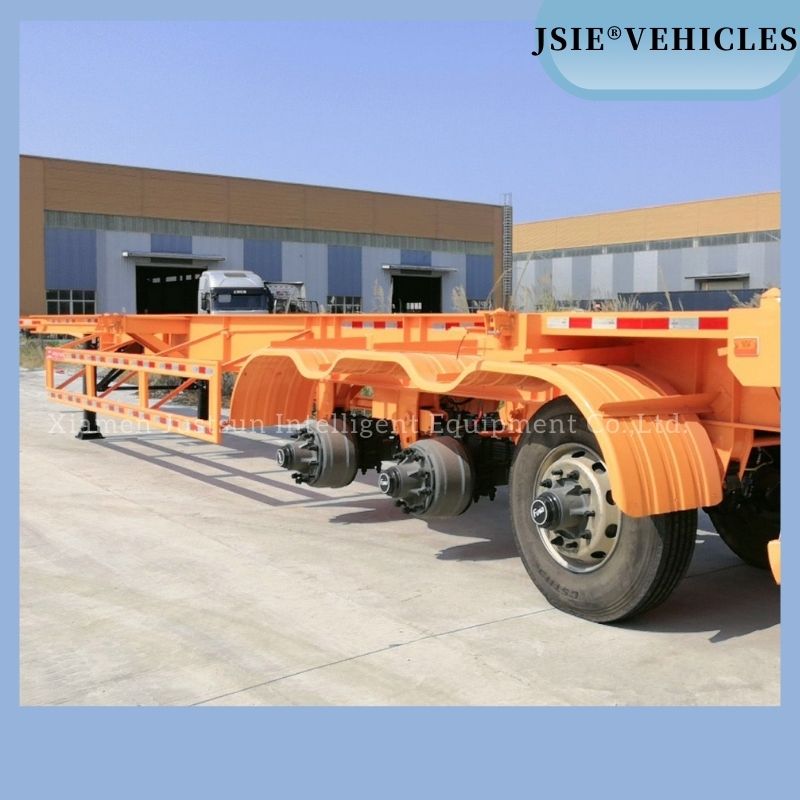
Material selection defines the performance, longevity, and efficiency of your trailer. You must weigh upfront investments against long-term operational durability.
The industry primarily relies on two distinct materials for chassis construction. Each material offers specific advantages and distinct drawbacks.
High-Tensile Steel: Steel provides superior yield strength. It remains the ideal choice for heavy-haul lowboys or heavy machinery flatbeds. However, steel incurs a significant tare weight penalty. A heavier empty trailer means less available payload.
Aluminum Alloys: Aluminum significantly reduces overall tare weight. Lighter trailers improve fleet fuel economy and allow for larger payloads. Aluminum naturally resists harsh corrosion. The downside involves a higher upfront cost. Aluminum also requires highly specialized welding techniques during manufacturing and repairs.
Material Type | Primary Advantage | Primary Disadvantage | Best Use Case |
|---|---|---|---|
High-Tensile Steel | Maximum yield strength and durability | Heavy tare weight, prone to rust | Heavy-haul lowboys, machinery transport |
Aluminum Alloys | Lightweight, highly corrosion-resistant | Higher initial cost, difficult to weld | Dry vans, reefers, standard flatbeds |
The skeleton of your trailer handles massive dynamic forces. Engineers meticulously design the main I-beams, cross-members, and side rails. These components provide crucial optimal torsion resistance. They prevent the deck from twisting on uneven roads.
Designers must carefully plan critical integration points. Landing gear, kingpin plates, and suspension hangers endure extreme localized stress. We reinforce these zones using thicker plating and advanced gusseting techniques.
Modern engineering relies entirely on digital validation. Building a physical prototype without extensive computer simulation guarantees expensive failures.
Engineers utilize powerful parametric 3D CAD platforms. Tools like SolidWorks, specifically its Weldments module, map out the entire assembly. These software environments generate incredibly precise Bills of Materials (BOM). Accurate BOMs ensure procurement teams order exact quantities of steel and aluminum.
Finite Element Analysis (FEA) visually highlights where structural failures might occur. Engineers run complex simulations on the digital model.
They simulate static load stresses to observe how gravity affects a fully loaded deck.
They simulate dynamic load stresses to mimic hard braking or severe road impacts.
They identify potential failure points around the highly stressed kingpin or suspension mounts.
Design teams engage in iterative refinement. They systematically shave off unnecessary weight without compromising the baseline safety factor. This digital process saves hundreds of hours in the real world.
Moving from a perfect CAD screen to actual shop-floor drawings presents distinct challenges. Welders cannot guess your intentions. Shop drawings must include accurate weld callouts. They must define precise tolerancing. When manufacturing custom semi trailers, ambiguous blueprints cause severe production bottlenecks.
A trailer offers massive blank real estate for fleet branding. Proper graphic design ensures long-lasting visual impact and brand recognition across highways.
You cannot design graphics without accurate structural blueprints. Graphic designers must source highly accurate vector templates. They typically use a 1:20 or 1:10 scale of the specific trailer model. A dry van requires a completely different template than an insulated reefer. Physical corrugations and rivet lines alter how graphics appear in reality.
Selecting the wrong vinyl guarantees premature peeling and cracking. You should specify cast vinyl over standard calendared vinyl. Cast vinyl stretches easily and conforms to complex rivet clusters. It offers superior longevity and excellent UV resistance. Calendared vinyl shrinks over time and peels away from uneven surfaces.
Keep your visual messaging incredibly clear. Ensure contact information remains highly visible from long distances. Align your overall brand messaging with actual fleet operations. Avoid placing complex logos or critical text across mechanical seams. Roll-up doors break up graphic elements, so plan your layout accordingly.
Common Mistake: Ignoring DOT reflective tape requirements when designing the wrap. Always leave clear channels for mandatory reflective safety strips.
Excellent engineering includes planning for quality control. You must establish inspection checkpoints long before manufacturing begins.
Designing for manufacturability means integrating quality assurance directly into the engineering phase. Engineers highlight critical welds on the blueprints. They mandate specific inspection methods for high-stress zones. This proactive approach prevents devastating structural failures on public highways.
Physical inspections follow strict, standardized criteria to validate the engineering.
Non-Destructive Testing (NDT): Inspectors use ultrasonic or magnetic particle testing. These methods check critical structural welds for internal cracking or dangerous porosity.
System Validation: Technicians meticulously validate air and electrical system routing. They ensure absolute compliance with Anti-lock Braking System (ABS) and Electronic Braking System (EBS) standards.
The final design specification must meet stringent governmental standards. Depending on your region, you must ensure compliance with DOT, NHTSA, or relevant international transport safety guidelines. You must finalize these approvals before the manufacturer cuts the first piece of steel for a prototype.
Brilliant engineering requires a highly capable manufacturer. Selecting the wrong fabrication partner ruins a perfect digital design.
You must critically evaluate potential vendors across three primary dimensions.
In-house Engineering: Evaluate their internal technical capacity. Do they blindly rely on your provided CAD files? The best partners offer full-service mechanical engineering and secondary FEA testing. They catch theoretical flaws before production.
Production Capabilities: Assess their shop floor realities. Review their specialized welding certifications. Check their tooling precision. If your design uses aluminum, verify they possess dedicated capacity for specialized aluminum fabrication. Contamination between steel and aluminum ruins weld integrity.
Prototyping to Scale: Evaluate their scalability. Can they efficiently transition from building a single custom prototype to scaled, continuous fleet production? You need a partner capable of growing alongside your fleet.
Request detailed case studies of similar custom builds. Demand to review their standard inspection report documentation. You need proof of their rigorous QA protocols. Once you identify strong candidates, initiate a non-disclosure agreement (NDA). Schedule an initial design consultation to discuss your specific operational framework.
Designing a custom hauling solution requires strict discipline. The trajectory moves from defining precise initial payload requirements to complex digital stress testing. Finalizing strict regulatory compliance ensures safety and legality. Every step builds upon the previous phase.
Investing heavily in the digital design and FEA testing phases dramatically reduces long-term financial exposure. It virtually eliminates catastrophic physical failure risks out on the highway. Digital prototyping reveals hidden structural flaws while changes remain inexpensive.
Now it is time to take action. Compile your operational specifications, weight parameters, and dimensional constraints. Reach out to vetted custom manufacturers for a preliminary engineering assessment. Proactive collaboration guarantees a final product perfectly tuned for your fleet.
A: Engineers primarily focus on parametric 3D CAD platforms. Industry standards include SolidWorks, specifically its Weldments module, and AutoCAD. Teams also rely heavily on specialized FEA (Finite Element Analysis) software like ANSYS or SolidWorks Simulation for accurate stress and dynamic load testing.
A: The timeline varies based on mechanical complexity. A standard custom design typically takes 4 to 8 weeks. This timeframe covers initial consultation, payload requirement gathering, 3D modeling, FEA simulation, and the delivery of final approved shop-floor drawings.
A: Aluminum alloys can reduce a trailer's tare weight by 15% to 20% compared to high-tensile steel. This massive weight savings translates directly into increased legal payload capacity. It significantly improves route fuel economy and boosts long-term return on investment.
A: Designers use strict best practices for scaling massive graphic files. They typically set up vector files at a 10% scale (1:10 ratio). To ensure crisp final output, designers must use high-resolution image assets at a minimum of 720 PPI at that 1/10th scale.