Telephone/WhatsApp: +86-13950097655 E-mail: eric@justsuntrucks.com
Please Choose Your Language

- All
- Product Name
- Product Keyword
- Product Model
- Product Summary
- Product Description
- Multi Field Search
Views: 0 Author: Site Editor Publish Time: 2026-08-23 Origin: Site
Getting freight from point A to point B safely requires more than just skilled driving. It demands a precise understanding of physics and mechanical limits. Proper weight distribution is not just a driving preference; it is a strict regulatory requirement and a critical safety protocol. Improperly loaded freight compromises vehicle handling, increases braking distances, and exposes fleets to significant Department of Transportation (DOT) fines.
Fleet managers and drivers must bridge the gap between dock-loading practices and on-the-road mechanical realities. You have to ensure every axle complies strictly with federal limits. Dock workers often load cargo based on space rather than weight balance, leaving drivers to manage the mechanical consequences.
We aim to provide a standardized, evidence-based approach to balancing loads. You will learn how to utilize mechanical adjustments effectively and verify compliance before hitting the highway. Mastering these techniques ensures your semi trailer operates safely while protecting your fleet from costly violations.
Federal limits generally restrict gross vehicle weight to 80,000 lbs, distributed across steer (12,000 lbs), drive (34,000 lbs), and trailer axles (34,000 lbs).
Effective load balancing starts at the dock by managing the center of gravity and utilizing correct pallet patterns.
Drivers can mechanically shift weight between axles by sliding the trailer tandems or adjusting the 5th wheel.
Immediate verification at a certified scale is mandatory to confirm legal distribution and avoid out-of-service (OOS) violations.
Ignoring weight distribution creates immediate operational risks for drivers and fleet managers. When you fail to balance cargo, you invite regulatory scrutiny, endanger public safety, and accelerate equipment degradation. Understanding these risks is the first step toward building a safer, more compliant trucking operation.
Overweight axles instantly trigger weigh-station flags. Scale houses use automated sensors to detect uneven loads long before a truck pulls up to the window. When an axle exceeds legal limits, officers issue expensive per-pound fines. Severe imbalances often result in immediate out-of-service (OOS) orders. An OOS order halts your truck until you correct the weight issue. This delays critical delivery windows, frustrates customers, and damages your carrier safety rating.
Improper weight placement alters how a vehicle interacts with the road. Tail-heavy setups suffer from "trailer sway" or fishtailing at highway speeds. A heavy rear end acts like a pendulum, magnifying minor steering corrections into dangerous swings. Conversely, nose-heavy configurations push too much mass forward. This can reduce steer axle traction. Without adequate grip on the front tires, steering becomes unresponsive. A nose-heavy rig significantly increases jackknife risks during hard braking scenarios.
Mechanical components fail faster under uneven stress. Uneven weight distribution accelerates tire wear, causing premature balding on overloaded axles. It stresses air suspension systems beyond their engineered limits. Pushing excessive weight onto a single axle also increases the likelihood of blown tires. Furthermore, overloaded axles suffer from brake fade on long downgrades. When brakes overheat trying to stop concentrated mass, they lose their stopping power entirely.
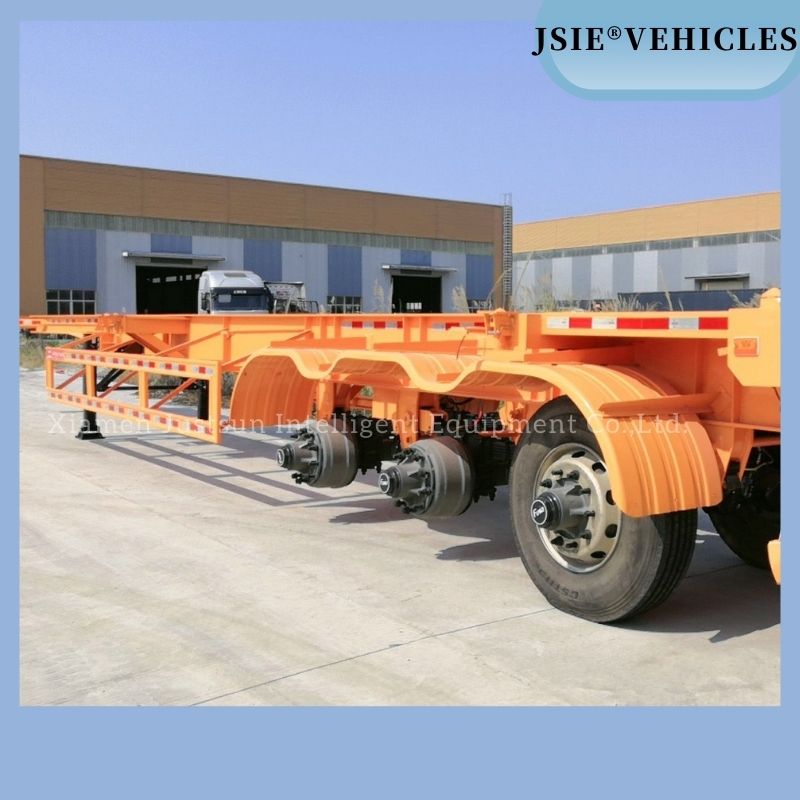
You cannot distribute weight accurately without knowing the legal boundaries. Federal standards dictate exactly how much mass each axle group can legally support on interstate highways. Drivers must memorize these numbers and understand the formulas behind them.
The standard federal weight target for a common 5-axle setup forms the foundation of legal load distribution. Federal law caps the gross vehicle weight (GVW) at 80,000 pounds. However, gross weight alone is not enough. You must distribute this mass correctly across three specific zones.
Axle Group | Maximum Allowable Weight (lbs) | Primary Function / Location |
|---|---|---|
Steer Axle | 12,000 | Front tractor axle; controls steering and handling. |
Drive Axles | 34,000 | Rear tractor axles; provides traction and power. |
Trailer Tandem Axles | 34,000 | Rear trailer axles; supports the bulk of the cargo. |
Sticking to these limits prevents fines. If you exceed 34,000 pounds on your drive axles, you are operating illegally, even if your gross weight is only 75,000 pounds.
The Federal Bridge Gross Weight Formula adds another layer of complexity. This mathematical formula dictates allowable weight based on the distance between axles. Highway bridges cannot support massive weight concentrated in a tiny area. Shorter distances between axles require lower weight limits to protect infrastructure. When you slide your tandems forward to fix an axle weight issue, you shorten the wheelbase. You must ensure you do not inadvertently violate the Bridge Formula by grouping the axles too closely together for the weight they carry.
Interstate highways strictly follow federal rules. However, local and state routes often feature their own specific bridge laws. During spring thaws, northern states implement "frost laws." These seasonal restrictions temporarily lower allowable axle weights to prevent heavy trucks from destroying fragile, thawing roadbeds. Drivers navigating off-interstate routes must consult local Department of Transportation guidelines to ensure alternative weight distributions remain compliant.
Effective load balancing starts on the shipping dock. Drivers cannot mechanically fix a disastrously loaded trailer. Proper placement of goods determines how the semi trailers will handle on the road. Fleet operators must train dock workers on fundamental physics.
The golden rule of freight loading is to manage the center of gravity. Heavy freight must be kept low to the floor. Stacking dense, heavy items near the ceiling raises the center of gravity, dramatically increasing rollover risks during cornering or high wind events. Additionally, you must center the cargo left-to-right. A load favoring the left side stresses the left tires and suspension, making the truck pull dangerously toward oncoming traffic.
Strategic pallet placement ensures a smooth ride and legal axle weights. Instead of loading straight down the middle, loaders should employ specific techniques to spread concentrated mass over a larger floor area.
Assess the Total Payload: Calculate the total weight and divide it by the available floor space.
Apply the 60/40 Rule: Aim to place approximately 60% of the payload's weight in the front half of the trailer. This keeps enough weight on the drive tires to maintain traction.
Taper Toward the Rear: The remaining 40% should taper off toward the rear doors to prevent tail-heavy trailer sway.
Use Alternating Patterns: Turn pallets sideways or use a staggered "chimney" loading pattern. This distributes mass evenly across the wooden deck and aluminum cross members.
Handling mixed freight requires extra vigilance. Shippers often mix lightweight consumer goods with dense industrial parts. When loading varying densities, never place high-density items in the unsupported middle of the trailer belly. Instead, secure heavy pallets directly over the strongest structural points. Place them directly over the drive axles or the trailer tandems. Securing dense freight over the axles prevents the trailer floor from bowing and ensures mechanical stability.
Cargo cannot always be reloaded. Sometimes shippers seal the doors, or dock workers refuse to rework a load. Mechanical adjustments are the industry standard for micro-adjusting axle weights on the fly. Drivers use two primary methods to shift mass.
Sliding the tandems is the most common method for fixing an overweight axle. This process involves moving the trailer's rear axles forward or backward along a set of rails.
Mechanism: By pulling a release pin, drivers can lock the trailer brakes and gently move the tractor. This slides the trailer body over the stationary rear axles, effectively shifting weight between the drive axles and the trailer axles.
The Rule of Thumb: Sliding the tandems one hole shifts approximately 250 to 400 lbs, depending on the hole spacing of that specific trailer model. Always check your manufacturer specifications, but 300 lbs per hole is a safe estimating baseline.
Directional Logic:
Sliding tandems forward transfers weight to the trailer axles. It takes weight off the drives.
Sliding tandems backward transfers weight to the drive axles. It takes weight off the trailer axles.
When adjusting tandems fails to resolve the issue, or when the steer axle is out of compliance, drivers must adjust the 5th wheel.
Mechanism: Sliding the 5th wheel shifts weight strictly between the steer axle and the drive axles on the tractor. It does not affect the trailer tandem weight. You unlock the 5th wheel pins and move the tractor frame under the stationary trailer.
The Rule of Thumb: Moving the 5th wheel one notch shifts roughly 500 lbs. Moving it forward shifts weight to the steer axle. Moving it backward shifts weight to the drives.
Execution Risk: 5th wheel adjustments are much less common than tandem slides. They require extreme caution. Moving the 5th wheel too far forward reduces clearance between the tractor cab and the nose of the trailer. A tight turn could crush the cab fairings or damage the trailer. Always verify swing clearance after making a 5th wheel adjustment.
Adjustment Type | Primary Purpose | Weight Shift Per Notch/Hole | Common Risks |
|---|---|---|---|
Trailer Tandems | Shift weight between Drives and Trailer Axles | ~250 - 400 lbs | Violating Bridge Law length restrictions |
5th Wheel | Shift weight between Steer and Drive Axles | ~500 lbs | Crushing tractor cab during tight turns |
You can use formulas and load plans all day, but nothing replaces hard data. Guessing your axle weights usually ends in a DOT violation. You must verify your adjustments using commercial weighing infrastructure.
Always route the truck to a certified commercial scale immediately after loading. Facilities like CAT scales offer guaranteed, highly accurate weight readings. Do not rely solely on the shipper's bill of lading (BOL). The BOL lists product weight, but it often omits pallet weight, dunnage, and packaging materials. Pull your rig onto the scale pads carefully, ensuring your steer, drive, and tandem axles rest on separate weighing platforms.
Once you receive your scale ticket, evaluate the printout against the 12/34/34 rule. Look for any axle group exceeding its specific maximum. If your ticket shows Steer: 11,500, Drives: 35,000, and Tandems: 31,500, your gross weight is 78,000 lbs. You are under the 80,000 lb gross limit. However, your drive axles are 1,000 lbs over the legal limit. You need to slide your tandems forward about three or four holes to shift that excess weight onto the trailer axles.
Sometimes mechanical adjustments cannot fix the problem. You must establish a clear threshold for when a driver should return to the shipper. If an axle is 2,000+ lbs overweight, you likely cannot slide the tandems enough to correct it without violating federal bridge laws. In these severe cases, the load must be physically reworked at the dock. Do not risk driving an unfixable semi-trailer on public roads. Return to the shipper and demand they reload the freight legally.
Effective weight distribution requires a combination of smart dock-loading, mechanical familiarity with tandem slides, and disciplined scale verification. Balancing freight correctly prevents dangerous handling scenarios, reduces maintenance costs, and keeps your fleet compliant with strict DOT regulations. Relying on guesswork is a massive operational risk.
Fleet operators must proactively train drivers on equipment-specific weight transfer ratios. Teach your team exactly how much weight moves per hole on your specific trailers. Furthermore, consider utilizing onboard load scales. These digital systems provide real-time weight estimates directly to the cab, streamlining the compliance process and saving valuable time at commercial scale houses.
A: You are still operating illegally. DOT officers issue citations based on individual axle limits as well as gross weight. Even if you are under 80,000 lbs gross, an overweight drive or tandem axle will result in fines and a potential out-of-service order until corrected.
A: It generally moves between 250 and 400 pounds per hole. The exact amount depends on the spacing between the holes on your specific trailer's slide rail. Moving them forward shifts weight to the trailer; moving them backward shifts weight to the drives.
A: The 12/34/34 axle limits remain the same across vehicle types. However, flatbeds often feature spread-axle configurations (axles spaced more than 10 feet apart). Spread axles can legally carry up to 40,000 pounds (20,000 pounds per axle) under federal rules.
A: Trailer sway, or fishtailing, usually occurs when the trailer is tail-heavy. Too much weight behind the rear axles acts like a pendulum. To fix this, you must rework the load to place approximately 60% of the weight in the front half of the trailer.