Telephone/WhatsApp: +86-13950097655 E-mail: eric@justsuntrucks.com
Please Choose Your Language

- All
- Product Name
- Product Keyword
- Product Model
- Product Summary
- Product Description
- Multi Field Search
Views: 0 Author: Site Editor Publish Time: 2026-08-13 Origin: Site
Selecting the right axle configuration remains a critical business decision for any fleet operation. Your choice directly affects payload capacity, route compliance, and routine maintenance budgets. The axle layout on a semi trailer dictates how freight weight distributes legally across the pavement. It also determines how safely and smoothly the rig handles on open highways or tight city streets. Operators often struggle to balance the need for heavier loads against the realities of urban maneuverability.
Fleet managers and owner-operators must evaluate these setups carefully before investing capital. We will explore the mechanics behind wide axle spacing and uncover hidden operational impacts. Ultimately, this guide will help you evaluate whether a widespread system truly aligns with your specific daily hauling requirements.
A spread axle (or split tandem) separates the trailer axles by at least 10 feet, changing how weight limits are calculated under the Federal Bridge Gross Weight Formula.
Spread axles allow up to 20,000 lbs per axle (40,000 lbs total), compared to 34,000 lbs for a standard closed tandem semi-trailer.
The primary operational trade-off is maneuverability; spread axles suffer from "tire scrub" during tight turns and are notoriously difficult to back up.
Installing a dump valve on the rear axle can mitigate tight-corner tire wear, but requires active driver management.
The choice between axle types depends heavily on the freight type (e.g., heavy machinery vs. standard dry goods) and typical delivery environments (open highways vs. tight urban docks).
A spread axle refers to a highly specific physical layout on the rear chassis. You will see two single axles spaced exactly 10 feet apart. Engineers measure this distance from the center of the front hub to the center of the rear hub. Some manufacturers intentionally extend this distance to 121 inches. This extra inch guarantees absolute compliance if inspectors measure the gap at a weigh station.
This deliberate spacing changes the legal standing of the axles. Under the US Federal Bridge Gross Weight Formula, this 10-foot distance matters immensely. The law no longer classifies them as a closed tandem group. Instead, federal regulators view them as two completely independent single axles. This distinction forms the foundation of modern heavy-haul logistics. Regulators designed the bridge formula to protect highway infrastructure from concentrated stress. By spreading the load over a wider section of pavement, the trailer exerts less localized downward force.
Consequently, you rarely see this setup on standard dry vans hauling palletized consumer goods. Consumer freight generally reaches physical volume limits long before it maxes out weight limits. Instead, heavy-duty applications rely heavily on this configuration. You will frequently find spread setups on flatbeds, step decks, drop decks, and specialized semi-trailer units. Operators moving lumber, massive steel coils, and dense industrial equipment need this exact spacing. It provides a distinct structural and legal advantage for heavy, indivisible loads.
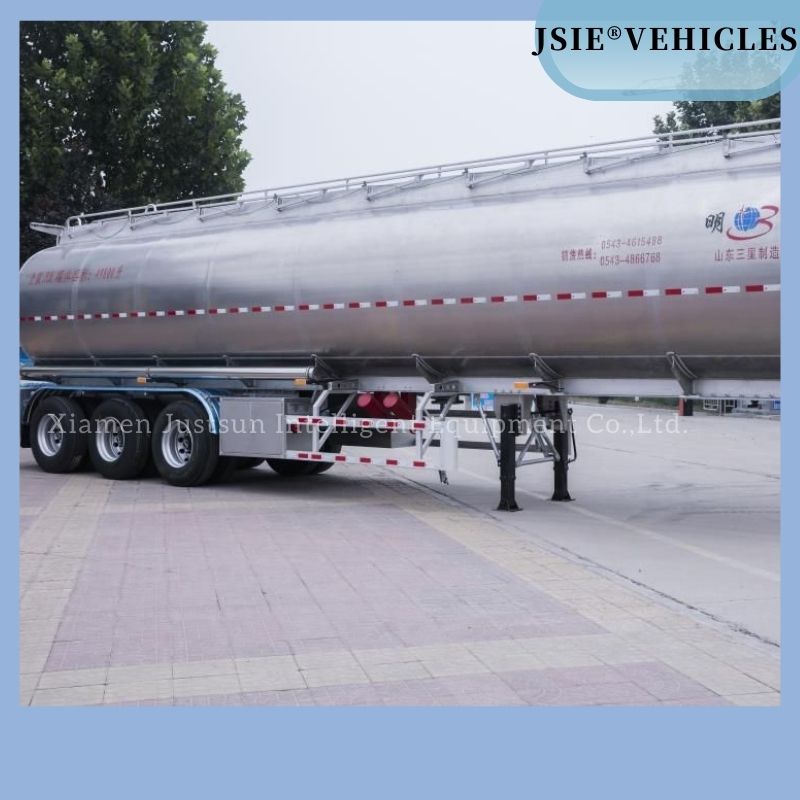
Operators choose this configuration primarily to maximize payload flexibility. A standard closed tandem setup limits you to 34,000 pounds across both axles combined. However, independent spacing changes the legal math completely. Each axle in a spread setup legally holds up to 20,000 pounds. This brings your combined weight allowance to 40,000 pounds on the rear. You immediately gain an extra 6,000 pounds of legal rear payload capacity. This advantage allows fleets to bid on heavier, more lucrative freight contracts.
This higher limit also provides a massive margin of error for load balancing. You might pick up irregular freight or execute complex multi-stop deliveries. Uneven load distribution happens frequently in these dynamic scenarios. Imagine dropping off half a load of steel piping at one site. The remaining weight shifts dramatically across the deck. A standard tandem might easily trigger overweight fines at the next weigh station. The 40,000-pound spread limit forgives these minor misplacements perfectly. You avoid costly citations and stressful reloading delays when hauling oddly shaped machinery.
Furthermore, the elongated wheelbase drastically improves overall ride quality. A wider physical footprint stabilizes the trailer platform on uneven highway surfaces. This expanded stance significantly reduces harsh trailer bounce. Drivers consistently report feeling much less "bucking" from the rear over rough bridge joints. A smoother ride actively protects sensitive cargo from transit damage. It also reduces physical fatigue for the driver managing the rig over cross-country distances. Stable tracking keeps the trailer firmly aligned behind the tractor during high crosswinds.
Despite the payload benefits, maneuverability suffers significantly when axles sit 10 feet apart. The system forces the chassis to pivot awkwardly during tight low-speed turns. The forward axle acts as the primary pivot point. The rear axle must therefore drag laterally across the pavement. Mechanics call this destructive phenomenon "tire scrub." Trucking forums frequently highlight rapid tire degradation as a primary drawback. The tires literally scrape horizontally across the asphalt, shaving off rubber rapidly. You will replace rear tires much faster on these setups.
Drivers also face immense friction when docking and backing. Maneuvering 53-foot semi trailers into older urban loading zones requires extreme skill. The wide pivot strongly resists tight reversing angles. Drivers often need vastly more lateral swing room to align the trailer correctly. You run a higher risk of clipping curbs or damaging property in congested yards. Some drivers actively avoid delivery routes featuring notoriously tight warehouse lots.
Additionally, operators encounter unexpected infrastructure impacts. Toll authorities sometimes classify widespread setups differently than standard closed tandems. You might face noticeably higher toll rates on specific eastern US turnpikes. Toll sensors occasionally register the wide gap as an entirely separate vehicle segment. This dynamic silently impacts route profitability over thousands of miles. Fleet dispatchers must calculate these hidden fees when pricing specialized freight lanes.
Finally, dragging an axle generates tremendous structural stress. Sharp turns apply intense lateral force to the trailer frame rails. Suspension components endure aggressive twisting motions they normally would not experience. Over several years, this repetitive stress can lead to cracked welds or worn pivot bushings. You must inspect suspension hangers and air ride components more frequently to prevent catastrophic road failures.
Engineers developed the dump valve specifically to combat severe tire scrub. This mechanism is essentially a simple pneumatic switch. Manufacturers usually locate it inside the tractor cab or directly on the trailer chassis. It allows the driver to temporarily deflate the air suspension bags on the rear axle. By exhausting the air, the suspension drops downward slightly.
Deflating the rear bags drops the load weight entirely onto the front axle. This effectively creates a single pivot point for the entire chassis. By lifting the downward pressure off the rear tires, they glide smoothly through slow, tight turns. You completely eliminate lateral scraping and preserve your expensive tire treads. This operational benefit makes maneuvering in tight industrial yards vastly easier. The trailer responds faster to steering inputs when reversing into narrow docks. Drivers consider this feature virtually mandatory for local heavy delivery routes.
However, operators must manage severe compliance and safety risks. Drivers should use this feature purely for low-speed yard maneuvering. You must remember to re-inflate the air bags immediately after completing the turn. Forgetting to hit the switch leaves up to 40,000 pounds sitting squarely on a single axle. Hitting a public highway in this state invites disastrous DOT interventions. Regulators will cite you aggressively for a massively overweight single axle. Extreme overloads can also blow out the front air bags or snap the suspension hangers. To mitigate this risk, fleet managers should train drivers rigorously on dump valve best practices. Many modern systems now feature automatic re-inflation switches tied to trailer speed.
Choosing the right setup requires analyzing your specific operational environment. There is no universally perfect choice for every fleet. You must weigh the realities of your freight against the limitations of your equipment.
You should opt for the 10-foot spread if your business model aligns closely with these criteria:
Hauling heavy, indivisible loads: Machinery, heavy steel coils, and dense lumber require maximized weight distribution. You cannot split a 38,000-pound generator into smaller pieces.
Operating primarily on interstate highways: Long, straight routes with wide-open delivery yards minimize damaging tight turns. You will experience excellent tracking and stability.
Needing forgiving load placement: LTL flatbed routes often feature diminishing loads. As you remove freight at various stops, the remaining weight shifts unpredictably. The wider margin prevents axle weight violations.
Standard closed configurations perform much better in completely different scenarios. Watch out for these specific operational constraints:
Navigating tight city streets: Standard warehouse docks demand the shorter pivot radius of a closed tandem. You avoid property damage and frustrating reversing maneuvers.
Hauling predictable, easily palletized freight: Dry vans and refrigerated units usually hit cubic volume limits before hitting weight limits. The extra 6,000-pound capacity remains unused.
Prioritizing lower maintenance budgets: Closed setups prevent aggressive lateral tire scrub. You will extend rubber lifespan considerably and reduce suspension joint wear.
Below is a high-level technical breakdown comparing the two dominant setups. This overview summarizes the core differences operators face daily.
Configuration Feature | 10-Foot Spread Axle | Standard Closed Tandem |
|---|---|---|
Axle Spacing | 120 inches (10 feet) or more | Typically 48 to 60 inches |
Combined Legal Weight | Up to 40,000 lbs (20,000 lbs per axle) | Up to 34,000 lbs total |
Maneuverability | Poor; experiences heavy tire scrub | Excellent; pivots smoothly |
Ride Stability | High; smooth tracking over bumps | Moderate; susceptible to bouncing |
Primary Application | Flatbeds, step decks, heavy haul | Dry vans, reefers, standard freight |
Spread axles remain highly specialized tools engineered for payload maximization and highway stability. They certainly are not universal solutions suitable for every freight application. You willingly sacrifice low-speed maneuverability to gain a massive legal weight advantage. This trade-off works perfectly for flatbed operators moving industrial steel, but fails miserably for city delivery drivers.
Before making a final purchasing or specification decision, thoroughly audit your historical routing data. Review your most frequent delivery locations to ensure they accommodate wide-swing maneuvers safely. Analyze your past weigh station histories to see if you actually struggle with individual axle weight limits. Finally, project your annual tire replacement budgets. Comparing these real-world metrics will guide you toward the safest and most efficient axle configuration for your fleet operations.
A: Yes. Many manufacturers offer a "sliding spread" configuration. This setup allows the front axle to slide backward, closing the 10-foot gap to create a standard tandem. Drivers use this feature to comply with strict state regulations, such as California's 40-foot kingpin-to-rear-axle law. It provides the heavy-haul benefits of a spread alongside the legal maneuverability of a closed tandem.
A: Tire lifespan depends heavily on your route type. On straight interstate runs, wear remains comparable to standard tandems. However, frequent local deliveries requiring tight turns can destroy rear tires 30% to 50% faster due to intense lateral scrub. Utilizing a pneumatic dump valve properly during low-speed maneuvers drastically extends rubber longevity.
A: They are legal, but heavily regulated based on overall length. States like California impose strict kingpin-to-rear-axle distance limits (usually 40 feet). A fixed spread axle on a 53-foot trailer often violates this rule. Additionally, Canadian provinces have entirely different infrastructure formulas, often negating the 40,000-pound weight advantage entirely. Always verify local bridge laws.