Telephone/WhatsApp: +86-13950097655 E-mail: eric@justsuntrucks.com
Please Choose Your Language

- All
- Product Name
- Product Keyword
- Product Model
- Product Summary
- Product Description
- Multi Field Search
Views: 0 Author: Site Editor Publish Time: 2026-08-05 Origin: Site
Look at the front end of any uncoupled commercial trailer, and you will see two sturdy metal posts holding it up. People outside the transportation sector casually call them "legs," but they represent a highly engineered mechanical system. These crucial components bear immense static weight. They keep heavy-duty equipment safely upright during routine drop-and-hook operations. Failing to specify or maintain the right support structure inevitably leads to dropped trailers, serious compliance failures, and costly fleet downtime. We created this comprehensive guide to clear up confusing industry terminology. It helps fleet managers and owner-operators make highly informed maintenance decisions. You will learn how to evaluate, specify, and troubleshoot these vital components for new builds or aftermarket replacements. Investing time in understanding these systems reduces long-term maintenance headaches. A properly specified leg set guarantees seamless operations across diverse climates.
The legs on a semi-trailer are called landing gear, though "dolly legs," "support legs," and "drop legs" are common colloquialisms.
Landing gear is evaluated on two distinct metrics: static capacity (weight it can hold while stationary) and lift capacity (weight it can crank upward).
Specifying the right landing gear requires balancing payload realities with material weight (steel vs. aluminum) and environmental factors (corrosion resistance).
Preventative maintenance on the two-speed gearbox and cross-shaft is the most cost-effective way to prevent premature replacement.
The official industry standard term is "landing gear." Manufacturers, diesel mechanics, and regulatory bodies exclusively use this specific nomenclature. If you review a technical specification sheet for a modern semi trailer, you will spot this exact term immediately. Original Equipment Manufacturers (OEMs) design these systems to handle massive industrial payloads. They never refer to them simply as legs.
However, regional yard jargon varies widely across the country. You might hear seasoned drivers call them support legs or dolly legs. Drop legs and trailer jacks also serve as popular colloquialisms on the loading dock. While everyone generally knows what these slang terms mean, they lack necessary technical precision.
Using correct OEM terminology matters significantly for several operational reasons. You need precise language to order correct aftermarket replacement parts. Mechanics rely on standardized names to verify ratings from the Truck Trailer Manufacturers Association (TTMA). Proper terminology also ensures your warranty claims remain fully compliant.
Mixing up terms can easily lead to buying incompatible mounting brackets. It might cause a mechanic to order undersized crank handles. We recommend training all fleet personnel to use the proper technical vocabulary. This simple practice prevents costly communication breakdowns between drivers and maintenance shops.
Here are common mistakes fleets make regarding terminology:
Using "jacks" when ordering parts, causing suppliers to send hydraulic lift components instead of mechanical gears.
Assuming "dolly legs" implies a universal fit across all trailer configurations.
Failing to specify the gear ratio when ordering replacement cranks.
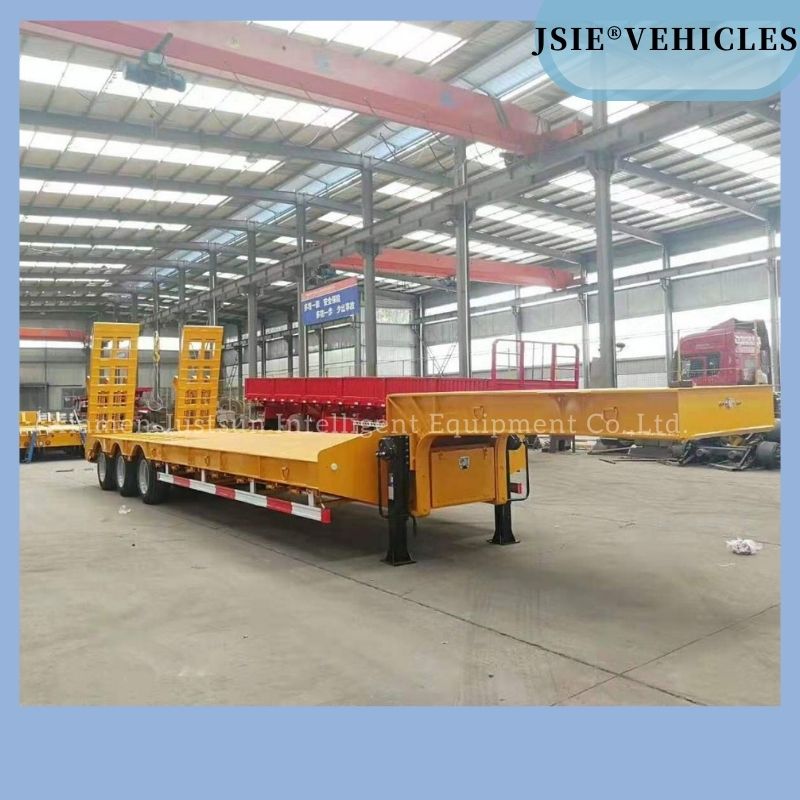
Not all trailers require the exact same support structure. Selecting the wrong type risks severe structural failure. It can also cause fleet owners to overspend on unnecessary mechanical capabilities. You must match the hardware to your daily operational reality.
Two-speed manual crank landing gear remains the dominant industry standard. It features a robust internal gearbox driven by a manual handle. Operators use high gear to drop or retract the pads rapidly. This high-speed function saves time when the trailer is completely empty. Conversely, low gear delivers immense mechanical advantage. It provides the heavy lifting power necessary to detach a fully loaded semi-trailer safely.
Drop-leg systems offer a much simpler, pin-based alternative. They usually appear on lighter equipment or specialized flatbeds. Drivers manually pull a locking pin and drop the inner tube to the ground. These setups do not contain complex internal gears. They work perfectly for applications where mechanical lifting under a heavy payload is not routinely required.
Automated or pneumatic landing gear represents a rapidly emerging premium category. Fleets evaluate these advanced systems to improve driver retention. They drastically reduce the physical strain of manual hand-cranking. They also enable faster drop-and-hook operations in incredibly busy logistics yards. However, they carry higher initial implementation costs.
Below is a chart summarizing these primary solution categories:
Equipment Type | Primary Mechanism | Best Operational Use Case |
|---|---|---|
Two-Speed Manual | Internal gearbox and hand crank | Standard freight, heavy dry vans, reefers |
Drop-Leg System | Locking pin and sliding inner tube | Light loads, specialized chassis, flatbeds |
Automated / Pneumatic | Air pressure or electric motor | High-frequency drop-and-hook operations |
Fleet managers must carefully specify components during the procurement process. Two distinct metrics define the overall performance of these systems. You must evaluate them based on your specific freight environment.
First, you must understand the critical difference between lift capacity and static load capacity. A 160,000-pound static rating indicates stationary holding power. It reflects how much weight the legs can support while parked. It absolutely does not equal a 160,000-pound lift rating. In reality, maximum lift capacity often hovers between 40,000 and 60,000 pounds. Buyers must evaluate hardware based on actual drop-and-hook payload weights. Furthermore, you must account for dynamic shock loads. When a heavy forklift drives into a parked trailer, it creates immense downward force. High static ratings prevent the legs from collapsing during this loading process.
Material selection directly impacts both structural weight and fuel efficiency. Manufacturers typically offer two primary construction materials.
Standard Steel: Provides excellent durability and lower upfront costs. However, steel adds significant weight to the chassis. This extra weight slightly reduces your maximum legal payload capacity.
Aluminum/Composite: Offers massive weight savings. It boosts fuel efficiency and increases your overall payload revenue. You must accept a higher initial capital expenditure to gain these benefits.
Corrosion resistance plays a massive role in long-term durability. We strongly advise evaluating galvanized versus powder-coated options. Galvanized steel excels for fleets operating in harsh northern regions. Heavy winter road salt and marine environments destroy standard paint quickly. Powder-coated setups work fine for dry, mild climates. Specifying a galvanized finish prevents premature rust and extends the lifespan of the equipment.
Maintenance neglect carries massive hidden operational risks. Minor structural damage degrades internal gearing steadily over time. For example, dropping a chassis on an uneven gravel yard can easily bend the cross-shaft. The cross-shaft connects the driver-side crank to the passenger-side leg. A slight bend forces the gears to grind completely out of alignment. This misalignment requires drivers to exert dangerous amounts of physical force to turn the crank.
Proper lubrication presents another major operational challenge. Mechanics must maintain low-temperature grease inside the gearbox. Using standard multi-purpose grease risks disaster. Standard grease hardens quickly in extreme winter climates. It causes the crank mechanism to seize entirely. Routine regreasing prevents catastrophic internal gear failures. We recommend adding landing gear lubrication to your standard preventative maintenance schedule.
Driver operation errors cause a surprising amount of expensive damage. Improper cranking techniques put undue stress on internal components. Forcing the handle when gears bind will shear the internal pins. Furthermore, dropping a trailer too high off the fifth wheel creates a severe shock load. This aggressive impact stresses the mounting brackets. It can even warp the structural cross-members underneath standard semi trailers. Fleets must train operators on proper uncoupling procedures to prevent this abuse.
Watch out for these common maintenance red flags:
Excessive grinding noises when shifting between high and low gears.
Visible rust bleeding from the mounting bracket weld points.
A crank handle that springs back violently when released under tension.
Uneven extension between the left and right support legs.
Eventually, every support leg faces damage or excessive wear. Mechanics must decide whether to repair the unit or fully replace it. Making the wrong choice wastes valuable labor hours.
Clear diagnostic criteria help simplify this complex decision. You can usually salvage a unit if the damage remains strictly external. Replacing a sheared crank handle takes only a few minutes. Swapping out a broken shear pin requires minimal physical effort. Replacing a damaged sand shoe is also a straightforward, inexpensive fix. We recommend keeping these minor replacement parts stocked in your shop.
However, structural compromise demands immediate component replacement. A bent internal lifting screw cannot safely bear heavy loads. Warped outer tubing prevents the inner legs from retracting smoothly. Attempting to rebuild a severely damaged two-speed gearbox rarely makes sense. The intensive labor required to reconstruct broken gears heavily outweighs the efficiency of a direct swap. Installing a pre-assembled, OEM-warrantied replacement leg set ensures immediate structural integrity.
Use a strict vendor selection checklist when sourcing new components. Demand these specific qualifications from your chosen supplier:
Verified AAR (Association of American Railroads) and TTMA compliance certifications.
A generous, clearly defined warranty duration spanning multiple years.
Readily available local replacement parts to minimize future downtime.
Verified technical compatibility with your specific chassis model.
Checking these boxes ensures you install reliable, compliant hardware. Never compromise on load-bearing safety components.
While casually called "legs" by many people, landing gear acts as a highly engineered foundation. Proper terminology matters for accurate maintenance and parts ordering. Matching static and lift capacities to your specific payload ensures daily operational safety. Furthermore, prioritizing preventative maintenance keeps your fleet moving efficiently.
We recommend taking immediate action. Audit your current fleet's maintenance logs today. Look closely for recurring gearbox issues or bent cross-shafts. Consult a heavy-duty parts specialist to verify your current weight capacities. Upgrading weak components now prevents disastrous yard accidents tomorrow. A proactive approach to these critical support systems keeps drivers safe and freight moving.
A: Mechanics differentiate between static loads and lifting loads. A standard commercial unit handles static loads of up to 160,000 pounds while stationary. However, the active lifting load typically ranges between 30,000 and 60,000 pounds. Always check the manufacturer specification plate before uncoupling a fully loaded trailer.
A: The two-speed gearbox provides a crucial mechanical advantage. Operators use high gear for speed when lowering empty legs rapidly to the ground. They shift into low gear for the maximum torque required to lift a fully loaded trailer off a tractor's fifth wheel safely.
A: No, they are not universal. Mounting patterns are generally standardized by the TTMA. However, leg lengths, gear ratios, and shoe types vary heavily. A flatbed might use different leg lengths than a specialized refrigerated unit. You must match the specific application requirements.