Telephone/WhatsApp: +86-13950097655 E-mail: eric@justsuntrucks.com
Please Choose Your Language

- All
- Product Name
- Product Keyword
- Product Model
- Product Summary
- Product Description
- Multi Field Search
Views: 0 Author: Site Editor Publish Time: 2026-07-30 Origin: Site
Choosing between standard dual wheels and super wide singles represents a critical risk-management calculation. You are not just making a simple technical preference. Fleet managers and owner-operators constantly face a core dilemma. You must balance fuel efficiency and weight savings against operational redundancy and maintenance realities. Making the wrong choice leaves expensive equipment stranded and drivers frustrated.
Understanding exactly what dual wheels prevent forms the foundation of smart fleet planning. This knowledge helps you specify a semi trailer perfectly aligned to your specific routing, payload, and compliance needs. By the end of this guide, you will know how standard wheel configurations safeguard your daily operations. You will learn to mitigate catastrophic downtime, navigate strict road regulations, and maintain steady freight movement regardless of unexpected highway hazards.
Redundancy over Stranding: Dual wheels primarily prevent catastrophic downtime by allowing a semi-trailer to limp to a service station after a single blowout.
Lateral Stability: They prevent trailer sway and mitigate rollover risks in high-wind conditions or during evasive maneuvers.
Infrastructure Compliance: Dual setups prevent localized pavement damage, ensuring compliance with strict per-axle weight distribution regulations.
Standardized Maintenance: They prevent inventory complexities by utilizing industry-standard tire sizes that are universally available at remote service centers.
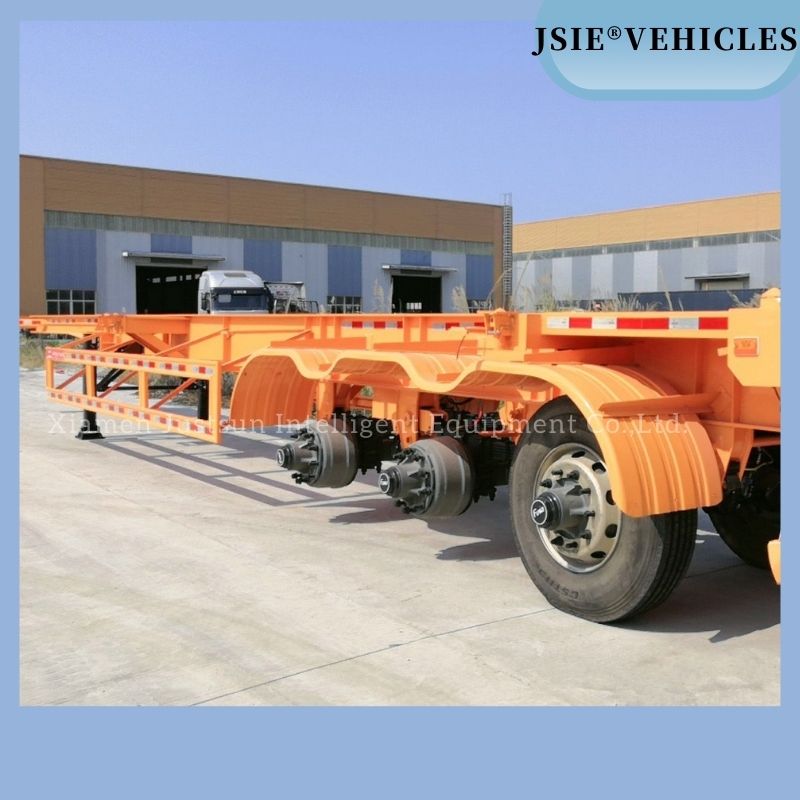
The primary advantage of a standard dual wheel setup lies in mechanical redundancy. If one tire fails on the highway, the adjacent tire temporarily supports the axle load. This redundancy prevents immediate immobility. Drivers can safely reduce their speed and navigate to the nearest highway exit or service center. You avoid stranding your asset on a dangerous shoulder.
Contrast this directly with a super wide single configuration. A blowout on a wide-base single causes immediate catastrophic failure. The axle drops entirely. The vehicle becomes instantly immobile. You must call an emergency roadside service, forcing your driver to wait hours on the side of a busy interstate. Duals prevent this exact scenario, transforming a major roadside crisis into a manageable maintenance stop.
Lateral stability is crucial for commercial hauling. Dual setups provide a significantly wider track and a broader footprint. Four sidewalls per axle end offer robust resistance against lateral forces. They keep the chassis planted firmly on the pavement.
This wide stance effectively prevents dangerous trailer sway. When high winds hit a tall box trailer, the broader footprint resists the tipping motion. High-center-of-gravity loads, like stacked lumber or heavy machinery, require this stable foundation. Narrower single configurations simply cannot match the sidewall stiffness and wide-track stability provided by standard dual setups during sudden evasive maneuvers.
Federal and state transportation departments strictly monitor axle weights. Dual wheels distribute heavy loads over a much larger surface area. This broad weight distribution prevents aggressive pavement rutting. Asphalt roads suffer less localized damage when heavy loads spread evenly across four tires per axle rather than two.
By preventing excessive road wear, dual configurations align perfectly with federal axle-weight compliance metrics. Highway enforcement agencies regularly check weight-per-inch of tire width. A standard dual setup spreads the load widely enough to satisfy these regulations. You avoid costly overweight citations at weigh stations.
We must acknowledge the transparent benefits of wide-base singles to make an informed decision. Super wide tires offer undeniable advantages for specific operations. By eliminating the inner steel or aluminum wheel rim, you save roughly 400 pounds per tandem axle. This weight reduction directly translates to increased payload capacity for weigh-out fleets.
Additionally, wide-base singles provide a lower rolling resistance. Two tire sidewalls flex less than four. This reduced friction generates a measurable 2-3% gain in fuel efficiency over long distances. For fleets operating on razor-thin margins, this fuel savings presents a compelling argument against traditional dual setups.
Despite the fuel savings, wide singles introduce severe hidden operational costs. Duals prevent the cascading damage associated with single-tire blowouts. When a wide-base single blows, the axle immediately drops to the asphalt. This violent drop almost always destroys the expensive wheel rim. It can also damage the brake components and suspension.
Duals prevent these secondary damages. Furthermore, you must evaluate towing costs and off-route downtime. If a wide single blows in a remote area, local shops rarely stock non-standard replacements. You might wait days for a specialized tire delivery. Duals utilize standard sizes, keeping replacement downtime measured in hours rather than days.
The following chart illustrates the operational differences between the two configurations:
Evaluation Metric | Standard Dual Wheels | Super Wide Singles |
|---|---|---|
Blowout Result | Limp to nearest safe service area. | Immediate immobility. Axle drops. |
Rim Damage Risk | Low. Adjacent tire supports rim. | Extremely High. Grinds on pavement. |
Replacement Availability | Universally stocked at all truck stops. | Often requires special order in rural areas. |
Weight per Axle | Standard baseline weight. | Saves ~400 lbs per tandem axle. |
While standard setups provide excellent redundancy, they are not perfect. You must maintain strict tire management protocols. Duals require precise air pressure monitoring to prevent mismatched circumferences. If one tire runs at a lower pressure, its diameter shrinks.
When bolted together, the larger tire carries more weight and forces the smaller tire to drag along the pavement. The industry calls this dragging effect "tire scrubbing." Scrubbing causes rapid, irregular wear. It destroys treads prematurely and reduces fuel efficiency. To prevent this, maintenance teams must measure circumferences carefully. They must ensure both paired tires match exactly before sending the rig back on the road.
Managing tire inventory poses a major challenge for growing fleets. Standard setups prevent massive inventory complexities. A standard 295/75R22.5 tire fits almost every piece of equipment in a traditional yard. You can swap tires freely between different units. You only need to stock a few standardized SKUs in your warehouse.
Consider the reality of remote breakdowns. A driver can source a standard dual replacement at any rural truck stop or agricultural co-op. You cannot say the same for a specific wide-base single. Mixing wheel configurations across a single fleet creates a logistical nightmare. Standardized duals scale effortlessly as your operation grows.
Every commercial hauler must navigate strict federal axle weight regulations. Standard tandem axles generally allow a 34,000-pound maximum limit. However, the Department of Transportation also regulates the weight per inch of tread width. They want to ensure the road surface can actually support the concentrated load.
Duals safely clear these regulatory thresholds. They provide ample tread width to legally support maximum payload capacities. Heavy-haul operators rely on semi trailers equipped with multiple dual axles to distribute extreme weights. Standard dual configurations prevent compliance violations without requiring specialized overweight permits for standard heavy freight.
Highway operations only tell half the story. Many fleets operate in challenging vocational environments. Dual configurations prevent severe traction loss in mud, deep snow, and loose gravel. The gap between the two tires provides a channel for mud and snow to escape, allowing the biting edges of the tread to grip the hard surface below.
If you haul agricultural goods, timber, or construction materials, wide singles act like snowboards. They float over mud and lose traction easily. Duals dig in. This aggressive traction makes them absolutely mandatory for vocational or agricultural semi-trailer applications. You cannot risk a fully loaded rig getting stuck on a soft construction site.
You should default to standard configurations under several specific operational conditions. Review your routes and freight types carefully.
Remote Routing: Spec duals for long-haul routes crossing remote geographic areas. The limp-home capability prevents expensive rural towing bills.
Vocational Use: Choose duals for flatbed, logging, or heavy-haul operations requiring maximum lateral stability and off-road traction.
Standardized Fleet: Select duals if you prioritize straightforward maintenance. They require less specialized tire inventory and simplify technician training.
High-Center Gravity: Spec them when hauling swinging meat, liquids in non-baffled tanks, or stacked machinery.
While standard setups dominate the industry, specific business models thrive on super wide singles. You should evaluate alternatives if your operation fits strict criteria.
Hub-and-Spoke Routes: Consider wide singles for short regional runs. If your trucks stay within a 100-mile radius of your terminal, rapid service access mitigates blowout risks.
Weigh-Out Freight: Evaluate singles for bulk liquid haulers or dry bulk pneumatic operations. In these sectors, saving 400 pounds directly translates to billable payload.
High-Mileage Contract Cruisers: Large corporate fleets running dedicated coast-to-coast interstate routes often leverage the 2-3% fuel savings, banking on massive volume to offset the occasional towing bill.
Specifying dual wheels serves fundamentally as a robust insurance policy against unpredictable downtime, lateral instability, and complex compliance issues. While super wide singles offer tempting weight savings and minor fuel efficiency gains, they introduce severe operational vulnerabilities. A single blowout on a wide tire paralyzes your equipment instantly.
Before finalizing your next order, take actionable steps to audit your operations. Review your historical blowout occurrences and geographical routing. Analyze your typical payload types and terminal capabilities. By aligning your wheel specification with your true operational environment, you ensure maximum uptime, optimal safety, and consistent profitability for years to come.
A: These terms describe different components. "Tandems" refers to the two physical axles placed close together at the rear of the trailer chassis. "Duals" refers to the specific wheel configuration, meaning two individual tires bolted together on each end of those axles. A standard tandem setup uses dual wheels, totaling eight tires across the two axles.
A: Yes. While they do not inherently change the maximum legal axle weight limit set by the government, they provide the necessary surface area. This broader footprint safely carries maximum payloads without violating weight-per-inch road regulations, keeping you compliant during heavy hauls.
A: The risk of stranding often outweighs the fuel savings. If a fleet operates in remote areas, a wide-base blowout grounds the vehicle immediately. The cost of a single heavy-duty tow, rapid roadside repair, and a replacement rim easily negates years of minor fuel savings.
A: A blown dual tire allows the adjacent intact tire to hold the axle off the ground. The driver can safely pull over or slowly drive to the nearest exit. A blown super single instantly drops the axle, grinding the metal rim directly into the pavement and immobilizing the truck.