Telephone/WhatsApp: +86-13950097655 E-mail: eric@justsuntrucks.com
Please Choose Your Language

- All
- Product Name
- Product Keyword
- Product Model
- Product Summary
- Product Description
- Multi Field Search
Views: 0 Author: Site Editor Publish Time: 2026-07-31 Origin: Site
Fleet managers, owner-operators, and body builders face constant pressure to maintain safe equipment. You likely know the sheer frustration of a roadside delay over a simple burnt-out bulb. Commercial vehicle enforcement heavily zeroes in on lighting simply because it directly impacts highway safety at night. Ensuring strict DOT and FMVSS compliance is completely mandatory for your entire fleet. Falling out of compliance triggers hefty fines, CSA point deductions, and dreaded vehicle out-of-service (OOS) orders. These enforcement penalties disrupt delivery schedules, hurt fleet reputation, and severely impact profitability.
This guide serves as your comprehensive decision-making tool for navigating these strict regulations. We will thoroughly break down essential lighting requirements, evaluate modern component upgrades, and provide standard audit procedures. You will learn exactly how to standardize your maintenance routine effectively. This knowledge will keep your fleet on the road legally and safely, protecting your drivers and your bottom line.
Every commercial semi trailer over 80 inches wide is subject to strict FMVSS 108 regulations regarding light type, color, and placement.
Essential lighting zones include rear (tail, stop, turn, clearance), side (marker, turn signals), and front (clearance).
Lighting violations remain one of the most common triggers for roadside DOT inspections and subsequent CSA penalties.
Federal Motor Vehicle Safety Standard (FMVSS) No. 108 establishes the ultimate legal baseline. The National Highway Traffic Safety Administration (NHTSA) developed these comprehensive rules. They dictate exactly how manufacturers and operators must illuminate commercial vehicles. You must view FMVSS 108 as the foundational text for highway safety. It standardizes light placement to ensure universal vehicle recognition across all states.
You must clearly understand the "Over 80 Inches" rule. A standard semi trailer typically exceeds 80 inches in overall width. Most commercial units also surpass 10,000 lbs in Gross Vehicle Weight Rating (GVWR). These specific physical dimensions automatically trigger maximum visibility requirements. The law demands specific marker lights to define the entire vehicle footprint clearly. Other drivers must accurately judge your vehicle size in complete darkness.
Enforcement happens daily across North America highways. State troopers aggressively monitor these exact standards. The Texas Department of Public Safety (DPS) provides rigid lighting charts for inspectors. Federal officers use these precise criteria during weigh station audits. They perform random roadside checks to ensure strict public safety. You simply cannot afford to ignore these enforcement realities.
Commercial transport regulations evolve constantly to address modern safety concerns. However, the foundational lighting principles remain incredibly stable. The DOT wants every commercial vehicle to act as a highly visible rectangle on the highway. Drivers in passenger cars must easily recognize your trailer dimensions from hundreds of feet away. Proper lighting prevents catastrophic side-impact and rear-end collisions during adverse weather conditions.
You must understand the distinct lighting zones across your equipment. Each structural area demands specific colors, quantities, and exact placements. You must position every lamp according to precise geometric rules. Inspectors carry tape measures to verify compliant light spacing during intense audits. Let us break down the required lighting checklist comprehensively.
Commercial Vehicle Lighting Specifications Chart
Zone | Light Type | Required Color | Location and Function |
|---|---|---|---|
Rear | Tail, Stop, Turn | Red | Indicates braking and turning intentions clearly to trailing drivers. |
Rear | Clearance Lights | Red | Indicates the uppermost and outermost vehicle width. |
Rear | Identification Lamps | Red | Top center cluster of three lights spaced 6 to 12 inches apart. |
Rear | License Plate Lamp | White | Illuminates the registration plate for easy identification. |
Side | Marker Lights | Amber (Front/Mid), Red (Rear) | Indicates the overall length of the vehicle along the sides. |
Side | Intermediate Turn Signals | Amber | Required for vehicles over 30 feet to signal lane changes. |
Front | Clearance Lights | Amber | Indicates the top outermost edges of the forward-facing structure. |
Rear zone requirements strictly demand red light emissions. You need functional tail lights, stop lamps, and turn signals. Rear clearance lights must clearly indicate the uppermost vehicle width. You also need identification lamps installed correctly. This specific cluster of three sits exactly in the top rear center. Finally, a clear white light must vividly illuminate your license plate.
Side zone requirements mix both amber and red colors strategically. You must install amber side marker lights at the front and middle sections. You need red marker lights positioned at the extreme rear side. If your semi-trailer exceeds 30 feet in overall length, additional lights apply. You must add intermediate side turn signals to improve lane-change safety.
Front zone requirements remain relatively straightforward and simple. You only need amber front clearance lights installed securely. They indicate the top outermost edges of the bulk structure.
Active lighting only solves half the overall visibility equation. DOT reflective tape requirements act as a complementary necessity. You must apply alternating red and white conspicuity tape. Install it evenly along the sides and rear doors. This reflective material maximizes visibility when active lights fail or power drops.
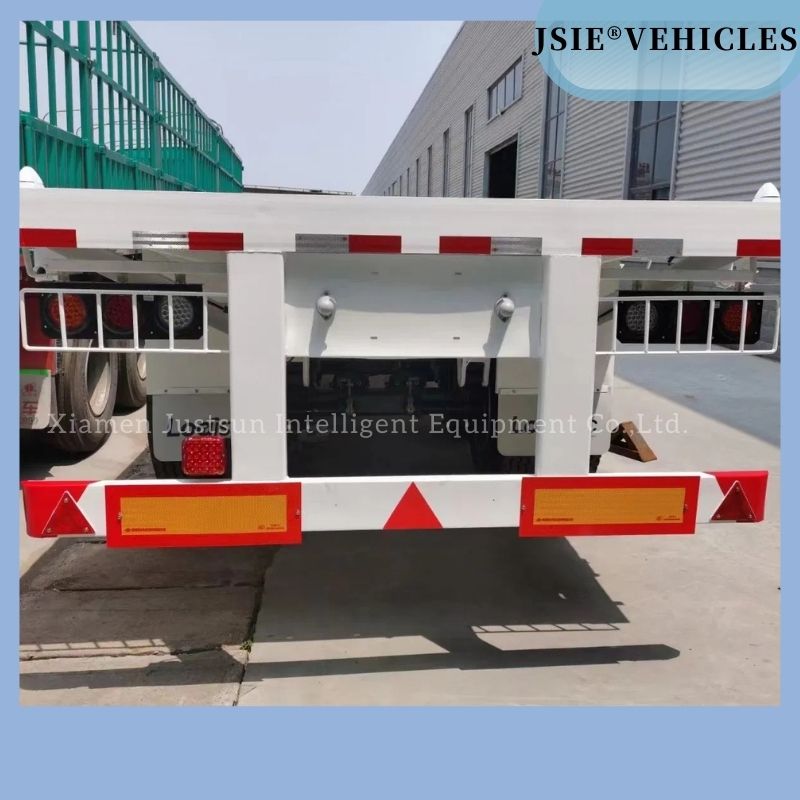
DOT inspectors target lighting failures constantly during highway roadside checks. They consider these highly visible issues extremely low-hanging fruit. A single burnt-out marker light attracts immediate law enforcement attention. It gives officers probable cause for a complete Level I inspection. You certainly want to avoid this extensive audit scenario entirely. Level I inspections consume hours of valuable driving time.
Accumulated lighting violations heavily damage your overall carrier safety record. They negatively impact your Compliance, Safety, Accountability (CSA) score quickly. Poor CSA scores trigger significantly higher commercial insurance premiums. They can also cost you incredibly lucrative freight contracts. Shippers vet logistics carriers heavily based on public safety data. You lose competitive bids when your fleet shows systemic maintenance neglect.
Downtime costs severely hurt your daily logistics operations. Compare the minor expense of a premium replacement bulb against a grounded truck. An out-of-service (OOS) order stops freight movement completely on the shoulder. Your driver waits endlessly on the highway for mobile service. Repair vendors charge massive emergency rates for simple roadside bulb replacements. Late deliveries upset loyal customers and ruin your professional reputation. Preventative maintenance always remains far cheaper than emergency roadside repairs.
You face an important choice when replacing damaged fleet bulbs. You can buy traditional incandescent fixtures or install modern LED units. LED technology absolutely dominates the commercial transport industry today. The performance gap between these two technologies continues to widen rapidly.
Let us evaluate these two solutions across three critical performance dimensions:
Lifespan and Durability: LEDs powerfully resist severe mechanical vibration. Commercial delivery routes subject equipment to constant, brutal shock. Incandescent filaments break very easily under these harsh physical conditions. Solid-state LED components survive millions of road miles without failing once. They eliminate fragile glass and gas-filled chambers entirely.
Power Draw Management: LEDs reduce the electrical load significantly. They draw a mere fraction of the amperage required by older bulbs. This massive reduction extends the lifespan of the tractor alternator. It also reduces heat generation across the entire wiring system. Lower amperage prevents delicate wires from melting during continuous operation.
Visibility and Safety Profile: LEDs offer incredibly fast visual illumination times. They light up microseconds faster than traditional incandescent bulbs. This instantaneous speed gives trailing vehicles critical extra reaction time. Faster braking responses prevent catastrophic rear-end collisions on busy highways. The crisp light output easily pierces heavy rain and dense fog.
Many fleet managers mistakenly believe all LEDs perform identically. You must source sealed units with high-quality epoxy potting. This potting completely encapsulates the delicate internal circuit board. It physically blocks moisture and prevents destructive vibrations from severing vital solder joints. Cheap imported lights often lack this critical protective layer. They fail rapidly despite utilizing modern LED technology.
Buying premium lights remains useless if moisture enters the electrical system. The underlying wiring harness acts as your most critical component. Road salts and magnesium chloride destroy exposed wiring incredibly quickly. These aggressive winter chemicals cause rapid, irreversible copper corrosion. We strongly advocate for sealed, highly modular harness systems. They actively prevent moisture wicking and keep your lighting fully operational. You must protect the connections just as fiercely as the bulbs.
You need a highly proactive and structured maintenance strategy. Regular component audits prevent roadside violations and keep your semi trailers moving safely. Fleet managers must treat lighting inspections as mandatory weekly rituals.
Follow these practical steps to audit and upgrade your fleet lighting carefully:
Step 1: Visual and Voltage Audit
Routinely check all primary pigtails, grounds, and junction boxes. Look closely for signs of green wire disease. This specific copper corrosion destroys electrical conductivity incredibly rapidly. Use a digital multimeter to verify proper voltage reaching every single lamp. Low voltage indicates a failing ground connection or a pinched wire. You must clean all ground terminals to bare metal annually.
Step 2: Component Standardization
You should strictly standardize fleet lighting components across all yards. Choose universally sized 2-inch or 2.5-inch grommet-mount lights exclusively. This smart strategy vastly simplifies parts inventory management for mechanics. Technicians spend significantly less time searching for correct replacement parts. Standardized plugs eliminate dangerous wire splicing and electrical taping.
Step 3: Supplier Vetting
Shortlist your component suppliers very carefully and methodically. They must offer fully DOT-certified, FMVSS-compliant components exclusively. Demand clear, verifiable warranties on all purchased electrical parts. Look for plug-and-play harness ecosystems designed specifically for commercial use. These integrated systems make roadside repairs exceptionally fast and foolproof. A strong supplier acts as a reliable partner in fleet safety.
We highly recommend creating a standardized maintenance checklist document. Hand this document to every active fleet mechanic. Require them to sign off on lighting checks during every scheduled preventative maintenance interval. Accountability ensures your lighting systems remain legally compliant year-round.
Commercial trailer lighting maintenance sits strictly at the intersection of legal compliance and roadside safety. You cannot treat electrical system upkeep as an afterthought. Investing in high-quality, fully compliant components actively prevents expensive operational disruptions. Your deliberate choice of sealed harnesses remains just as crucial as the high-performance bulbs themselves.
We highly encourage you to audit your current fleet inventory immediately. Review your recent CSA data to identify any recurring lighting violations dragging down your safety scores. Consult a trusted commercial lighting catalog to source robust, FMVSS-approved component upgrades. Taking proactive steps today firmly protects your operations tomorrow.
A: The legal requirement depends entirely on specific vehicle dimensions. Standard units over 80 inches wide require amber front and mid-side markers. You also rigidly need red rear side markers. Vehicles exceeding 30 feet in length demand extra intermediate side turn signals. Always refer directly to official FMVSS 108 charts to determine exact quantities based on your specific width and length measurements.
A: No, FMVSS regulations strictly forbid amber lights on the rear. All rear-facing lamps must emit solid red light. This legal requirement includes tail lights, stop lamps, turn signals, and clearance lights. Amber remains legally restricted to front and mid-side marker placements. This strict color separation ensures standardized driver communication and prevents highway confusion at night.
A: LED lights are not legally required by current DOT standards. Legality depends entirely on meeting specific performance and visibility metrics, not the internal bulb technology. However, LEDs represent the modern undisputed industry standard. They meet strict brightness and durability specifications far more reliably than older incandescent options. Most fleets transition to LEDs voluntarily to ensure easier compliance and superior longevity.
A: The three red identification lamps must mount exactly at the top rear center. You must position them as high as physically and practically possible. They must sit perfectly horizontally. You must space them no less than 6 inches apart. You also cannot space them more than 12 inches apart from their direct centers. This specific cluster identifies wider commercial vehicles instantly.