Telephone/WhatsApp: +86-13950097655 E-mail: eric@justsuntrucks.com
Please Choose Your Language

- All
- Product Name
- Product Keyword
- Product Model
- Product Summary
- Product Description
- Multi Field Search
Views: 0 Author: Site Editor Publish Time: 2026-08-09 Origin: Site
Underestimating concentrated weight does not just damage cargo. It permanently compromises your structural integrity. You also introduce severe legal liability into your operations. Hauling palletized consumer goods spreads weight uniformly across the deck. However, transporting heavy, dense freight creates massive point loads. Think of steel coils or heavy machinery pressing down on a tiny footprint. Choosing the correct semi trailer requires deep understanding. You must know how point loads interact alongside floor ratings. Crossmember spacing and compliance limits also play huge roles. Mastering these technical details ensures safe, profitable hauling. We will explore how to properly specify your hauling equipment. You will learn to prevent catastrophic deck failures. We will also show you how to avoid expensive DOT penalties. By the end, you will know exactly how to evaluate deck strength for dense cargo.
A point load is weight concentrated over a highly restricted footprint (e.g., steel coils, forklift tires), requiring specific trailer floor ratings to prevent structural failure.
Standard semi trailers are built for uniformly distributed loads; high-point-load applications require specialized deck specs (e.g., closer crossmembers, thicker flooring).
Industry standard floor ratings are typically based on the maximum allowable forklift front axle weight during loading.
Procurement teams must evaluate payload density, loading methods, and specific load distribution equipment (like dunnage) before finalizing semi-trailer specifications.
You must understand the core difference between payload types. A distributed payload covers vast surface areas uniformly. Typical dry vans haul pallets of consumer goods easily. The deck shares the physical burden equally across its entire length. Point loads act completely differently. They concentrate massive downward force. They focus this pressure into heavily restricted zones. This drastically increases the pounds per square inch applied to the floorboards.
We see these frequent operational realities daily. Common point load scenarios include:
40,000-lb steel coils resting on a tiny contact patch.
Tracked excavators pressing heavy metal treads into localized floorboards.
Heavy paper rolls standing on end.
Large industrial transformers resting on narrow metal feet.
People often forget the dynamic loading process. The most violent dynamic point load is not the freight. It is the forklift moving the freight. A loaded forklift carries its unladen weight plus the heavy payload. It places almost all this combined weight over the front drive tires. Hard rubber forklift tires do not deform easily. When the forklift accelerates, brakes, or turns sharply, it creates immense dynamic stress. The front wheels twist the wood fibers violently.
Specifying the wrong structural setup creates cascading business failures. You will experience sudden deck punch-throughs. The forklift could fall right through the floorboards. The under-floor crossmembers will warp permanently. Total floor failure stops your operations completely. It traps your cargo and ruins your delivery schedules. These structural failures destroy profit margins rapidly.
How do we measure floor strength accurately? The industry relies on standardized metric evaluations. The Truck Trailer Manufacturers Association provides these vital guidelines. TTMA tests evaluate the maximum allowable forklift front axle weight. They measure this capacity during active, dynamic loading scenarios. Standard dry vans usually carry a 16,000-lb TTMA rating. Heavy-duty applications often demand a 20,000-lb rating. This rating acts as your absolute structural limit.
Crossmember spacing directly dictates this point load capacity. Floorboards do not hold heavy weight alone. The metal I-beams underneath perform the real work. Standard manufacturing places these beams 12 inches apart. This spacing works fine for palletized consumer goods. High point loads require serious heavy-duty engineering. You need tighter spacing between the supports.
12-inch spacing: Standard industry application. Suitable for uniform loads and lighter forklift traffic.
8-inch spacing: Intermediate heavy-duty application. Handles heavier forklifts and dense freight better.
4-inch spacing: Extreme heavy-duty application. Provides maximum protection against floor yielding and snapping.
Placing beams closer together increases capacity drastically. It shortens the unsupported span of the wood. Material science also matters heavily here. Let us compare standard flooring materials.
Hardwood like Apitong or Oak remains the traditional standard. These woods offer excellent natural elasticity. They absorb impacts incredibly well. They are heavy but undeniably reliable. Aluminum offers a distinct alternative. It is highly lightweight. This maximizes your legal payload capacity. However, aluminum is rigid. It is highly prone to metal fatigue under improper point loading. It strictly demands proper crossmember support underneath. Composite and steel options represent the top tier. They provide extreme durability. They resist severe impacts easily. A properly built semi-trailer uses the exact right combination of beam spacing and deck material.
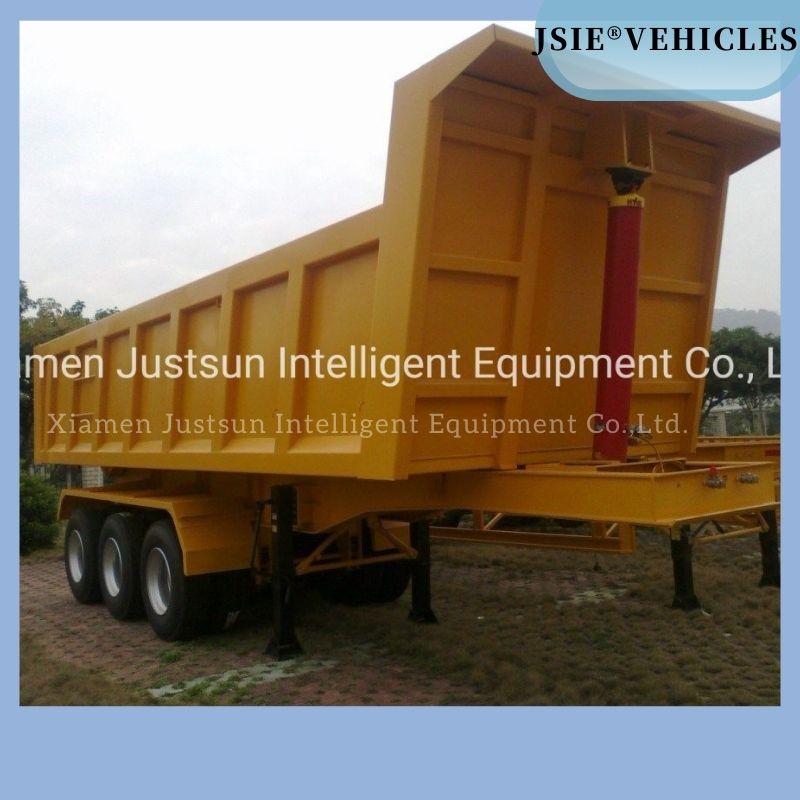
You must understand a crucial engineering paradox. Your equipment can remain legally under its Gross Vehicle Weight Rating. However, you might simultaneously overload one specific square foot structurally. Imagine hauling a single 45,000-lb steel block. The overall axles might carry the total weight safely. But the small floor section underneath will simply crush. You cannot ignore localized zones.
Improper load distribution creates severe legal liabilities. Concentrated weight often forces one axle group over its legal limit. The Federal Bridge Gross Weight Formula governs these restrictions. It dictates exactly how weight must spread across axle groups. Violating these bridge laws triggers immediate consequences. DOT officers will issue massive financial fines. They will place your equipment completely out of service. You cannot move until you redistribute the cargo legally.
Structural risks become fatal at highway speeds. A warped floorboard can cause dense cargo to shift suddenly. Load shifts throw the entire rig off balance. Total floor collapse while moving causes catastrophic accidents. You must demand an evidence-oriented approach to loading. Never allow dock crews to just estimate the weight distribution. Require them to calculate the exact structural stress. They must map out every loading zone carefully. Use proper scales and engineering data to verify everything.
How do you manage these extreme forces safely? You use specific tools and intentional design upgrades. Dunnage and cribbing serve as mandatory operational requirements. You cannot simply drop dense cargo onto bare wood. You must use heavy timbers to build a supportive crib. This artificial structure spreads the point load footprint widely. It forces the intense pressure across multiple under-floor crossmembers. This technique lowers the pressure on any single floorboard. It prevents immediate punch-throughs.
Coil packages represent a critical structural upgrade. Flatbeds need these structural upgrades to haul steel safely. A coil package involves reinforcing the floor deeply. Manufacturers weld extra crossmembers tightly together in specific deck zones. They also install specialized securement points. These points tie directly into the main frame beams. This upgrade handles the extreme forces of steel coils safely.
Sometimes, upgrading a standard flatbed is not enough. You must evaluate when to step up to specialized equipment. Extreme concentrated weights demand heavy haulers. Below is a comparison of different solution categories to guide your evaluation.
Equipment Type | Best Suited For | Structural Characteristics |
|---|---|---|
Reinforced Standard Flatbed | Pallets, lumber, general building materials. | 12-inch or 8-inch crossmembers. Apitong or aluminum deck. Good for moderate point loads. |
Coil-Packaged Flatbed | Steel coils, heavy wire rolls, dense localized freight. | Reinforced center deck sections. Extra closely spaced I-beams. Specialized chain tie-downs. |
Heavy-Haul Lowboy | Tracked excavators, massive transformers, extreme machinery. | Steel plate decking. Multi-axle configurations. Extremely low center of gravity for stability. |
Lowboys drop the deck close to the pavement. Step decks offer lower center of gravity profiles. Multi-axle setups spread extreme weights across dozens of tires. Some dense loads simply require these specialized semi trailers to remain legally and physically safe.
You must assess your exact operational needs rigorously. Prompt your procurement buyers to audit your heaviest freight. Identify your most concentrated cargo footprints. Measure the exact contact area of these dense items. Next, audit your loading equipment carefully. Find the maximum weight of the forklifts used. You must combine the forklift unladen weight with its maximum payload. This combined number gives you the true dynamic force hitting your deck.
Cost-benefit analysis guides smart procurement decisions. Closer crossmember spacing costs more upfront. Premium hardwood or composite flooring increases the initial purchase price. You must weigh this against the lifecycle expenses of standard floors. Standard floors break under dense freight constantly. Replacing broken floors requires massive labor costs. It causes days of severe operational downtime. Upfront structural investments always cost less than repeated emergency repairs.
You need to ask your manufacturer or dealer specific questions. Use this checklist during your procurement process:
"What is the specific floor point load rating of this unit?"
"Is the floor rating certified for dynamic loading or just static loading?"
"What coil package options or cross-member reinforcements are available?"
"How does the chosen deck material resist long-term metal fatigue?"
Asking these questions prevents expensive mistakes. It ensures you buy equipment matched to your actual freight profile.
Your hauling equipment is only as strong as its weakest structural point. Properly accounting for point loads remains absolutely non-negotiable. It dictates fleet safety and long-term equipment longevity. Ignoring these physics will result in catastrophic deck failures.
Encourage your buyers to move from rough estimation to exact mathematical calculation. Stop guessing the floor limits. Measure the downward pressure. Map the under-floor crossmembers carefully. You must know exactly what your deck can handle before loading dense freight.
Consult your engineering or sales team immediately. Review your specific freight profiles together. Custom-spec a build tailored specifically for your exact point load requirements. This proactive step guarantees operational safety. It protects your cargo, your drivers, and your business reputation.
A: Floor ratings differ entirely from the Gross Vehicle Weight Rating. A standard floor typically holds a 16,000 to 20,000-lb forklift axle rating. This rating evaluates the dynamic force of a forklift driving onto the deck. Exceeding this rating causes floorboards to snap.
A: You use a basic formula concept. Divide the total object weight by the square footage of the contact area. If a 10,000-lb machine rests on a two-square-foot footprint, the point load is 5,000 lbs per square foot.
A: You generally cannot do this safely. You strictly require a specific coil package or heavy-haul spec. Steel coils focus massive weight onto a tiny contact area. Without reinforced crossmembers, the floor and frame will likely suffer catastrophic failure.
A: The dynamic forces will destroy the deck structure. You will see bowing floors immediately. Under-floor crossmembers will warp or snap entirely. The forklift tires can punch straight through the decking. This completely compromises the equipment lifespan and safety.