Telephone/WhatsApp: +86-13950097655 E-mail: eric@justsuntrucks.com
Please Choose Your Language

- All
- Product Name
- Product Keyword
- Product Model
- Product Summary
- Product Description
- Multi Field Search
Views: 0 Author: Site Editor Publish Time: 2026-07-04 Origin: Site
Selecting the wrong bed materials leads to accelerated wear. It causes frequent weld repairs. It directly reduces payload profitability. This operational problem hurts fleet margins daily. Hauling aggressive materials requires extremely tough equipment. For heavy-duty applications, the debate is not between aluminum and steel. Operations hauling demolition debris, large aggregates, or mined minerals need heavy steel. Aluminum simply fails under high-impact stress. You must select the exact grade and thickness. You need to balance extreme durability against restrictive tare weights. This guide provides an objective, spec-by-spec comparison. We evaluate standard and premium steel materials available today. You will learn how to specify the exact right build. This ensures your fleet matches its precise operating environment perfectly. We help managers and owner-operators maximize their payload revenue.
Aluminum offers excellent weight savings for highway haulers. However, we must quickly dismiss aluminum for bottom-of-funnel buyers. Hauling abrasive or high-impact materials destroys aluminum fast. Materials like rip-rap, hot asphalt, and demolition debris require ultimate rigidity. Aluminum fails predictably under high-point-load impacts. When a large excavator drops jagged rock, aluminum tears. Steel absorbs the kinetic energy.
You must define what constitutes a "heavy load" for your specific operation. A standard heavy load involves severe material density. For example, solid concrete rubble often exceeds 4,000 pounds per cubic yard. Drop heights also matter immensely. Excavators loading from above generate massive downward force. A 3-ton boulder dropping six feet creates an intense focal point of pressure. Only steel can withstand this repeated daily abuse.
Establishing clear success criteria helps buyers narrow their choices. A successful material choice must resist two distinct forces. First, it must resist impact damage from large, heavy objects. Second, it must resist sliding abrasion. Flowing sand and gravel act like sandpaper during the dump cycle. Finally, the material must maximize the chassis Gross Vehicle Weight Rating (GVWR). Thinner, stronger steel allows you to haul more paying cargo. This structural balance separates average fleets from highly profitable ones.
Understanding metallurgy basics simplifies the buying process. Manufacturers primarily use two categories of steel. You can choose standard high-tensile steel or advanced abrasion-resistant steel. Each serves a distinct operational purpose.
Standard mild steel remains the historical backbone of the industry. Grade 50 steel is highly malleable and widely available. It carries a significantly lower upfront cost. Fabricators love working with mild steel. Any standard welding shop can patch it quickly. You do not need specialized pre-heating protocols.
However, mild steel presents strict limitations. It features a lower Brinell hardness rating. You must use thicker plates to withstand basic impact. Thicker plates naturally result in a heavier overall structure. Extra body weight directly lowers your legal payload capacity. Mild steel is best for general construction. Use it for topsoil, sand, and non-abrasive hauling.
Abrasion-Resistant (AR) steel transforms heavy-duty hauling. Mills heat-treat AR steel to achieve extreme hardness. This tempering process creates incredible toughness. The high Brinell rating allows for thinner plate construction. A 1/4-inch AR450 plate often outperforms a 3/8-inch mild steel plate. You gain massive impact resistance while shedding thousands of pounds.
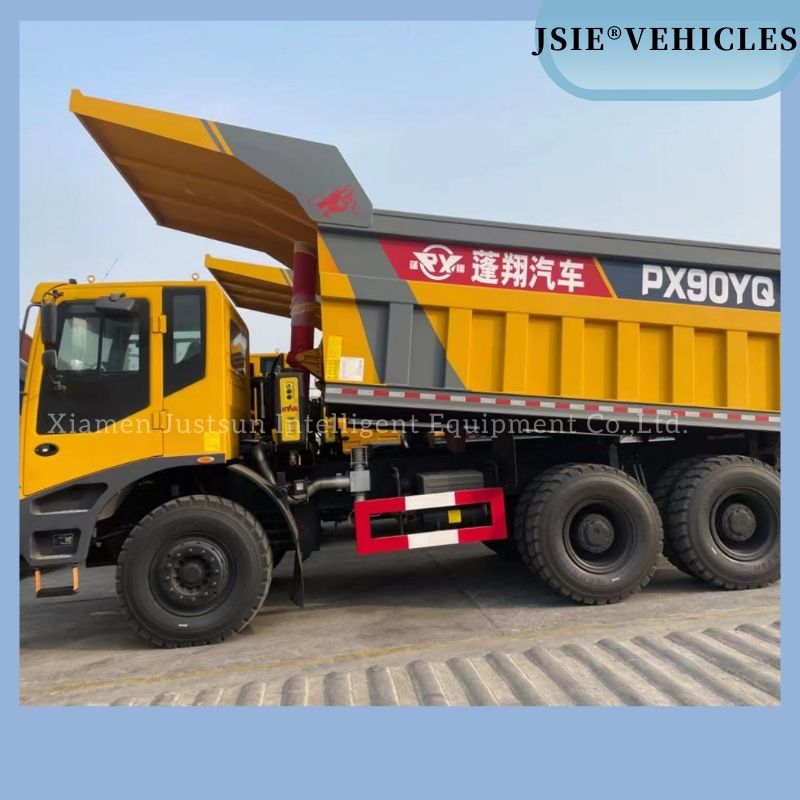
This implementation reality matters for harsh environments. It is absolutely essential when designing a reinforced dump body. Premium AR steel serves as the unquestioned industry standard for a heavy-duty mining tipper truck. The ability to deflect large rocks prevents catastrophic body failures.
AR steel does introduce specific trade-offs. The initial purchase price is notably higher. Maintenance also requires strict adherence to specialized procedures. Welders must pre-heat the metal before patching. They must use specific low-hydrogen welding rods. Failing to follow these steps causes the hard steel to crack along the weld line.
| Steel Grade | Brinell Hardness | Primary Benefit | Common Application | Maintenance Difficulty |
|---|---|---|---|---|
| A36 Mild Steel | 120 - 150 | Low cost, easy repairs | Topsoil, fine sand | Low |
| Grade 50 | 160 - 200 | Good structural balance | General construction | Low |
| AR400 | 360 - 440 | High abrasion resistance | Gravel, small rocks | Medium |
| AR450 / Hardox 450 | 425 - 475 | Extreme impact survival | Demolition, rip-rap | High |
Your local climate drastically influences steel performance. Fleet managers must account for severe winter operating conditions. Sub-zero temperatures create unique structural vulnerabilities. Lower-grade mild steels change on a molecular level in freezing weather. They become surprisingly brittle. A moderate impact in July causes a small dent. That exact same impact in January causes a massive brittle fracture. Premium AR steels retain their molecular toughness. They resist cracking even in extreme arctic conditions.
Weather also affects the dumping cycle itself. Material hang-up poses a dangerous daily threat. Gouges and dents create microscopic shelves on the bed floor. Wet clay and freezing aggregates cling to these rough spots. When steel surface degradation worsens, material sticking becomes guaranteed.
Stuck material creates an unbalanced load during elevation. If one side of the bed empties while the other remains frozen solid, the center of gravity shifts violently. This directly increases the risk of a dangerous rollover. Premium steel resists gouging, keeping the floor smooth. A smooth floor allows frozen loads to slide out evenly. Operators in northern climates should also consider heated underbody exhaust routings. These systems use engine exhaust to warm the floor.
Buyers must look past the initial invoice price. Assessing the lifecycle financial impact requires a broader perspective. You need a framework to calculate your exact payload advantage. Every pound saved in body weight becomes a pound of billable cargo.
Consider a standard calculation for payload ROI. Suppose upgrading to an AR450 steel body saves you 1,500 pounds of tare weight. That equals 0.75 tons of extra aggregate per trip.
This extra revenue dwarfts the premium upfront cost of AR steel. Furthermore, longevity impacts the overall resale value. Premium steel bodies maintain superior structural integrity over time. They look better and perform better after years of abuse. This translates directly to higher resale values for the whole dump truck. Alternatively, you can easily remount an intact AR450 body onto a brand new chassis.
Downtime metrics represent another hidden financial factor. You must weigh the true cost of unexpected mid-season repairs. Taking a truck offline for two days to patch a torn mild steel floor costs thousands in lost revenue. A correctly specified AR steel body provides uninterrupted uptime. Keeping the wheels turning is the ultimate metric for fleet profitability.
Building the perfect workhorse requires granular decision-making. You do not have to use the same material thickness everywhere. Smart buyers recommend staggered specifications based on established wear patterns. The floor takes the heaviest impact and the highest sliding friction. The tailgate experiences massive outbound pressure. The side walls primarily act as containment barriers.
A smart build uses a thicker AR450 plate for the floor. You might select a 1/4-inch AR plate for the bottom. Then, you can use a slightly thinner high-tensile steel for the side walls. This hybrid approach saves significant weight and money. It puts the armor exactly where you need it most.
Material strength directly affects body architecture. High-strength steel allows manufacturers to build crossmemberless designs. Traditional bodies use horizontal steel beams underneath for support. Crossmembers create rigid points. Heavy impacts above a rigid point often cause stress cracks. A crossmemberless design relies on an elliptical folded structure. The high-strength steel flexes slightly under impact. It acts like a hammock to absorb shock perfectly. It also sheds the dead weight of the heavy support beams.
Selecting the right steel is the most crucial decision for heavy haulers. Over-specifying your rig adds unnecessary dead weight. It needlessly cuts into your daily fuel economy and legal payload. Conversely, under-specifying guarantees premature structural failure. The "best" steel is simply the one aligning perfectly with your aggregate size. You must match the metal to your delivery volume and climate.
Take proactive next steps before signing a purchase order. Request a detailed material spec sheet from your dealer. Run the payload ROI calculation based on your local hauling rates. Discuss staggered thickness options to optimize the final weight. By matching high-quality steel to your exact operational reality, you guarantee a profitable lifecycle.
A: Yes, in almost all heavy-duty scenarios. The premium price is offset rapidly by payload gains. AR450 allows for thinner plates, reducing overall body weight. This lets you legally haul more cargo per trip. Furthermore, its extreme hardness prevents deep gouging, extending the lifespan significantly. You save money through increased daily revenue and reduced mid-season repair downtime.
A: Field repairs are possible but require strict protocols. Unlike mild steel, you cannot simply apply a standard stick weld. AR steel requires proper pre-heating to prevent thermal shock. Welders must use specific low-hydrogen welding rods. Failing to follow these exact procedures causes the metal to become brittle. The weld will crack under the next heavy load.
A: Thickness depends heavily on the rock size. For standard medium-aggregate operations, a 1/4-inch to 5/16-inch AR450 floor is standard. For extreme mining environments hauling massive boulders, floors often utilize 3/8-inch or even 1/2-inch Hardox 500 steel. Always match the thickness to the maximum drop height and density of the loaded material.
A: Absolutely. Softer steels dent and gouge easily under heavy impact. These gouges create rough, jagged microscopic shelves. Wet clay and moisture pool in these areas. When temperatures drop, the material freezes solid to the rough surface. Harder AR steels resist gouging, maintaining a much smoother surface. A smooth surface prevents hang-ups and allows frozen material to slide out.