Telephone/WhatsApp: +86-13950097655 E-mail: eric@justsuntrucks.com
Please Choose Your Language

- All
- Product Name
- Product Keyword
- Product Model
- Product Summary
- Product Description
- Multi Field Search
Views: 0 Author: Site Editor Publish Time: 2026-07-03 Origin: Site
Aggregate and quarry hauling represent incredibly high-stakes industrial operations. Massive capital expenditures meet brutal, unforgiving environments daily. These harsh conditions easily destroy weak machinery. You face a critical business challenge here. You must select equipment balancing maximum payload with long-term structural survivability. Making the wrong choice leads to catastrophic equipment failures. It directly causes staggering financial losses and delayed production schedules. Our purpose is to give you a clear, evidence-based framework today. We will help you evaluate, shortlist, and select heavy-duty hauling machinery confidently. You will learn how to tailor these specific choices to your unique site conditions. We show you exactly how to match the right machine to your exact daily demands. This specialized approach maximizes both daily output and mechanical lifespan safely. These machines transport tons of abrasive rock constantly. You need high uptime to keep profits steady. This guide breaks down chassis requirements, payload logic, and essential material wear factors thoroughly.
Many operators try using a standard commercial dump truck for severe aggregate hauling. This strategy almost always fails rapidly. Standard highway chassis simply cannot handle continuous off-road shock. They suffer premature frame cracking easily under massive loads. Their standard hydraulic cylinders blow out under uneven stress. Heavy-duty applications require specialized engineering from the ground up. You need reinforced cross-members and robust suspension mounts. Extreme payload impacts will literally tear standard frames apart if you ignore these upgrades.
Equipment failure hurts continuous-flow operations deeply. A quarry relies entirely on constant material movement. If a hauler breaks down unexpectedly, the primary crusher starves. Delayed processing creates a massive ripple effect across the site. Production stops entirely, and you lose thousands of dollars per hour. Unplanned downtime drains profit margins incredibly fast. It forces expensive emergency repairs and halts overall site productivity. You cannot afford unpredictable mechanical breakdowns.
You must define clear success criteria early in your buying process. The right truck minimizes your cost-per-ton transported over its lifetime. It also maximizes mechanical availability under high-impact loading. It must survive aggressive shovel drops daily without buckling. It must climb steep grades repeatedly without overheating the transmission. Success means predictable performance and minimal emergency shop visits. A smart equipment choice stabilizes your daily operating margins effectively.
You have two primary equipment categories to consider. Each fits specific geological profiles and site layouts perfectly. Choosing correctly prevents rapid asset depreciation and boosts daily tonnage.
These massive machines dominate large-scale mining operations globally. They feature a single, solid chassis frame built for extreme weight.
These versatile trucks feature a flexible hinge between the cab and the dump box. They bend and twist over brutal obstacles seamlessly.
| Equipment Feature | Rigid Frame Models | Articulated Models (ADT) |
|---|---|---|
| Payload Capacity limits | Extremely High (up to 400 tons) | Moderate (usually up to 60 tons) |
| Ideal Terrain Preference | Hard-packed, smooth, maintained | Muddy, uneven, deeply rutted |
| Maneuverability / Turning | Requires wide open spaces | Tight, flexible, handles corners well |
| Adverse Weather Tolerance | Poor in heavy rain or deep mud | Excellent all-weather capability |
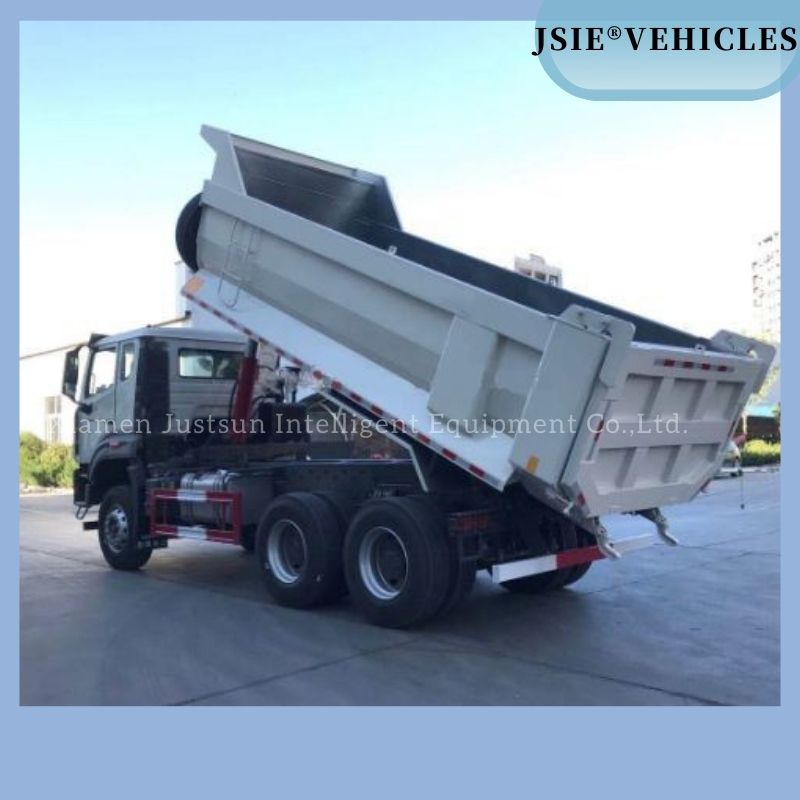
You must evaluate specific mechanical components strictly before purchasing. A true mineral dump truck requires heavy-duty upgrades everywhere. Standard highway specs will leave you stranded in a rocky pit.
Material science plays a critical role in bed construction. Standard mild steel fails instantly under heavy rock drops. You need high-grade AR (Abrasion Resistant) steel plates. AR400 or AR500 steel handles extreme friction perfectly. It withstands the continuous impact of blasted rock easily. It prevents deep gouging and tearing during rapid, heavy unloading.
Bed design matters just as much as the steel grade. You must choose between V-bottom and flat-bottom dump bodies carefully. V-bottom bodies excel at ejecting sticky, wet materials quickly. They channel the load perfectly during the dumping sequence. Conversely, flat-bottom bodies absorb massive shovel drops better. They distribute the heavy shock evenly across the entire chassis. Your material type should dictate your bed shape directly.
The drivetrain must translate engine power into raw pulling force efficiently. You need planetary hubs installed on the drive axles. Deep gear reduction at the wheel ends proves highly critical. It creates massive off-road torque necessary for steep climbs. It also protects the main driveline from brutal shock loads. It moves the highest stress points out to the wheels safely.
Transmission specifications dictate your grade climbing ability directly. Automated manual transmissions offer great fuel efficiency on flat runs. However, fully automatic transmissions provide seamless, uninterrupted power shifts. Automatics maintain forward momentum perfectly on steep quarry inclines. They prevent dangerous rollback during heavy load climbs. We highly recommend fully automatic units for deep pit operations.
Heavy payload shock destroys operators and frames alike. Traditional leaf springs snap quickly under quarry conditions. Hydropneumatic suspensions solve this massive problem effectively. They use high-pressure nitrogen gas and hydraulic oil chambers. They absorb extreme impacts effortlessly during loading. They protect the chassis structure and reduce operator fatigue significantly.
Braking systems save lives on steep, loaded descents. Standard service brakes vaporize quickly under huge quarry loads. You need powerful hydraulic retarders and robust engine brakes. They slow the massive vehicle using hydraulic or internal engine resistance. They handle the downhill speed safely and consistently. They keep the wheel brakes cool for genuine emergency stopping.
Buying the equipment only starts your financial journey. Daily operating expenses drain resources rapidly if ignored. You must manage several critical ongoing risks to stay profitable. Poor planning here ruins your expected equipment return on investment.
Off-the-road (OTR) tires represent a massive recurring expense. They often cost more than engine replacements over a decade. You must evaluate your tire selection rigorously. Deep treads improve fuel efficiency in muddy conditions greatly. Specialized rubber compounds resist severe cuts in sharp gravel environments. Buying cheap tires leads to frequent, dangerous blowouts. It ruins your overall hauling budget quickly. Proper tire pressure monitoring extends rubber life dramatically. You should install automated tire sensors immediately.
Bringing huge machines to your site requires serious logistical planning. Massive rigid haulers cannot drive on standard public highways. They require complete disassembly for specialized flatbed transport. You must hire specialized heavy-haul logistics companies for this. You also need dedicated on-site assembly teams waiting at the quarry. They use giant cranes to attach the dump box locally. This process adds significant upfront costs and lengthy time delays. You must factor this assembly period into your production timeline.
Specialized machines increase your daily maintenance burden significantly. Dusty, highly abrasive environments attack sensitive hydraulic systems constantly. Articulation joints require frequent, intensive greasing schedules to survive. Complex hydropneumatic suspensions need specialized diagnostic tools for repairs. You must discuss these harsh realities transparently with your service team. If your mechanics lack specific technical training, downtime spikes immediately. You need a dedicated, proactive preventative maintenance schedule. Ignoring daily inspections leads to catastrophic mid-shift failures.
You cannot guess when buying heavy machinery for a quarry. You must follow a strict, data-driven shortlisting process. This guarantees you select the most efficient hauler possible.
You should request live field demonstrations immediately. Force manufacturers to bring trial machines directly to your quarry. Require OEMs to provide customized lifecycle modeling based on data. Base these models strictly on your specific quarry telemetry data. Real-world testing exposes weak equipment quickly. It separates marketing claims from actual dirt-moving performance.
Common Mistakes to Avoid During Shortlisting:
There is no universal "best" machine for aggregate hauling. You only find the most profitable match for your specific geological profile. Every quarry demands unique operational strategies and precise equipment sizing. A truck failing in mud might dominate a hard-rock site perfectly.
We recommend prioritizing dealer support networks over basic technical specifications. Rapid parts availability prevents disastrous, month-long downtimes effectively. A great machine becomes useless if you cannot find replacement filters locally. Always check the dealer's emergency response time in your region.
You must engage with a dedicated equipment specialist now. Audit your site's haul roads and loading machines before any procurement. Measure your grades, weigh your loader buckets, and analyze your stone. A thorough site audit guarantees a highly profitable equipment investment. It transforms unpredictable expenses into controlled, steady profit margins.
A: A standard commercial version uses a single rigid chassis, making it suitable for paved roads and light dirt. An articulated model features a pivoting joint between the cab and the dump box. This joint allows it to twist over severe, uneven terrain. Articulated models excel in deep mud but are rarely highway legal due to their massive size.
A: No. Rigid quarry haulers exceed strict Department of Transportation (DOT) size and weight regulations completely. They destroy standard asphalt easily. You must transport these oversized assets on specialized flatbed trailers. Massive models even require complete disassembly for highway transit, needing expert reassembly directly at the quarry site.
A: The ideal capacity depends entirely on your loading equipment. You must use the "pass-match" strategy. Your excavator should fill the hauler in exactly three to five passes. Furthermore, the payload must match your primary crusher's hopper capacity. Oversized trucks will bottleneck your crusher and waste significant fuel daily.
A: Lifespan varies based on material hardness and loader drop height. A body made of high-tensile AR500 steel can last several years under intense daily use. Operators extend this lifespan significantly by installing replaceable steel wear liners inside the bed. Liners absorb the extreme friction and are swapped easily when worn.