Telephone/WhatsApp: +86-13950097655 E-mail: eric@justsuntrucks.com
Please Choose Your Language

- All
- Product Name
- Product Keyword
- Product Model
- Product Summary
- Product Description
- Multi Field Search
Views: 0 Author: Site Editor Publish Time: 2026-06-29 Origin: Site
Purchasing a semi trailer represents a high-stakes capital investment. Over-specifying wastes upfront capital immediately. Under-specifying leads to accelerated wear and dangerous structural stress. It also risks severe compliance fines and lost freight opportunities. Relying strictly on manufacturer-rated capacity often backfires. Generic specifications rarely tell the whole story. They create a distinct mismatch between physical equipment capabilities and federal or state weight regulations.
Many buyers ignore these nuances completely. They focus entirely on a simple brochure maximum weight limit. Navigating these choices requires careful attention to detail. This guide provides a functional framework for evaluating your configurations. We base our approach on true payload capability, strict regulatory compliance, and long-term asset durability. You will learn to parse tare weights accurately. We will help you ensure an optimized procurement decision. You can protect your operational margins effectively.
A frequent error during fleet procurement involves misunderstanding capacity labels. You must draw a firm line between structural capacity and legal payload capacity. Structural capacity defines what the chassis physically handles without failing. Engineers test this limit in controlled environments. Legal payload capacity dictates what regulations allow you to haul on public roads safely. A trailer might structurally support 80,000 pounds. However, highway regulations will never permit that singular weight profile.
Tare weight plays a crucial role in these calculations. Tare weight represents the unladen weight of the empty trailer. Every single pound of tare weight subtracts directly from your revenue-generating payload. Lighter equipment allows you to haul more freight legally. Heavy equipment consumes your legal weight limits rapidly. Fleet managers must scrutinize tare weight aggressively.
Calculating your real-world payload requires a strict mathematical approach. Rely on this standard calculation formula to determine operational limits:
You must also evaluate volumetric constraints against weight constraints. We call volumetric limits "cubing out." This happens when light freight fills the physical trailer space before hitting weight limits. We call weight limits "weighing out." This occurs when dense freight reaches the maximum legal scale weight before filling the trailer. Knowing whether your typical freight cubes out or weighs out determines your optimal trailer dimensions.
Best Practice: Always weigh new equipment on certified scales before deploying it. Manufacturer spec sheets often estimate tare weights. Factory variations change the final weight significantly.
When coupling a tractor to a semi trailer, axle configurations dictate your legal operational limits. The Gross Axle Weight Rating (GAWR) stands as a non-negotiable metric. GAWR defines the maximum distributed weight an individual axle supports safely. Respecting your GAWR prevents localized structural fatigue. It keeps the suspension components intact over rough terrain. More importantly, it ensures you remain compliant with Department of Transportation (DOT) standards. Violating GAWR invites immediate out-of-service orders at scale houses.
Buyers generally choose between tandem and spread axle setups. Each configuration serves specific routing and freight requirements.
You cannot finalize axle placement without consulting the Federal Bridge Gross Weight Formula. This DOT formula protects highway bridges from catastrophic damage. It evaluates axle spacing in relation to total vehicle weight. A longer distance between extreme axles allows a higher gross weight. You must evaluate this spacing against your intended operational routes. State-by-state variations complicate this formula. Some states offer exemptions. Others enforce the bridge laws aggressively.
Common Mistake: Specifying a spread axle for primarily urban delivery routes. Drivers will destroy tires rapidly while navigating tight city intersections.
Material choices dictate longevity and daily profitability. You typically select between all-steel, all-aluminum, or composite designs. Your decision heavily impacts your initial acquisition cost. It also shifts your fuel-to-payload ratios over a standard ten-year lifecycle.
All-steel construction provides maximum structural rigidity. Buyers appreciate the significantly lower initial acquisition cost. Steel trailers flex predictably under extreme loads. Technicians weld and repair steel easily in standard shops. However, steel features severe drawbacks. It carries the heaviest tare weight. Heavy tare weight constantly penalizes your legal payload. Steel remains highly susceptible to rust. Winter road salts destroy steel frames quickly. This corrosion destroys your residual resale value.
All-aluminum construction offers a compelling alternative. Aluminum delivers superior natural corrosion resistance. It features a significantly lower tare weight. This weight savings maximizes your legal payload capacity. Aluminum trailers also retain higher residual values at auction. The downsides include a steep initial premium. Aluminum also proves prone to stress fractures. Constant twisting loads snap aluminum welds over time. Repairing these fractures requires specialized facilities and certified aluminum welders.
Combo or composite trailers blend these materials effectively. They balance cost and weight intelligently. A combo unit utilizes steel main beams for core structural strength. It then integrates aluminum cross-members and decking for significant weight reduction. We consider composite models the optimal choice for diverse fleet standardization. They offer durability without extreme payload penalties.
Material Comparison Chart
| Material Type | Primary Advantage | Primary Disadvantage | Ideal Fleet Application |
|---|---|---|---|
| All-Steel | Low initial cost, easy repairs | Heavy tare weight, fast corrosion | Budget-conscious regional hauling |
| All-Aluminum | Maximum payload, rust resistant | High cost, fracture risk | Max-weight long haul operations |
| Combo (Composite) | Balances strength and weight | Galvanic corrosion risks at joints | Mixed-freight standardized fleets |
You must align the trailer geometry strictly to your primary freight profile. Generic purchasing leads to inefficient loading docks and wasted space.
Standard flatbeds and dry vans dominate general freight markets. They work best for palletized loads. Dry vans protect weather-sensitive goods perfectly. Standard flatbeds handle standard-dimension building materials well. In these categories, volumetric efficiency acts as your primary performance metric. You want maximum internal dimensions to avoid cubing out prematurely.
High-density freight destroys standard flatbeds quickly. You need specialized architecture here. A proper heavy duty semi trailer handles localized weight extremes safely. We evaluate structural reinforcements carefully. Engineers specify thicker web and flange materials for the main beams. They group cross-members tighter together. Heavy duty models frequently require multi-axle setups. You need these configurations for localized high-density loads. Hauling steel coils, concrete barriers, or heavy aggregates demands this reinforced strength. Standard frames will bow and permanently deform under localized coil weight.
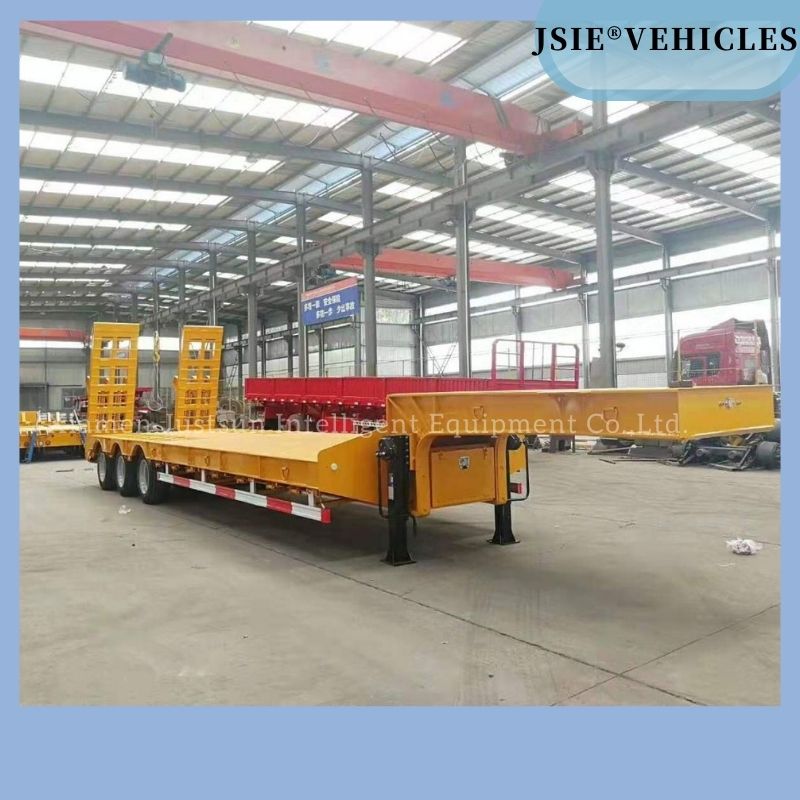
Moving extremely tall or oversized freight requires completely different geometry. Over-dimensional (OD) freight relies heavily on a lowbed semi trailer. These lowboy models drop the deck height significantly below standard trailer axles. You focus entirely on deck height evaluation during procurement. A low deck clears restrictive highway bridges safely. It also lowers the center of gravity drastically. This lower center stabilizes heavy machinery during transport. Excavators and industrial generators sit securely on lowbeds without risking rollover incidents.
Finalizing a purchase demands a rigorous shortlisting process. Buyers face a constant battle between standardization and specialization. Customizing a trailer precisely for one dedicated freight lane seems smart initially. However, over-customizing carries hidden risks. Highly specialized units limit usability across different drivers. They struggle to find backhaul freight on return trips. Standardized equipment moves easily across your entire network. Evaluate whether the dedicated lane revenue justifies a highly specialized unit.
You must evaluate lifecycle durability considerations beyond the initial invoice price. Do not let upfront costs blind your strategy. Evaluate warranty coverage closely on critical structural components. Look specifically at suspension systems and wheel ends. These wear items drain maintenance budgets quickly.
Factor in your long-term preventative maintenance requirements. Material choice alters maintenance schedules. Steel requires frequent paint touch-ups and rust mitigation. Axle complexity also impacts your shop time. Spread axles destroy tires faster, increasing your rubber budget. Multi-axle configurations add brakes and airbags to your maintenance checklist.
Establish clear next-step actions before contacting a dealer. Create a rigorous pilot testing criteria for new trailer models. Build a formal request-for-quote (RFQ) framework. Your RFQ should require manufacturers to provide CAD-based weight distribution simulations. Review these simulations prior to finalizing the purchase. This proves the trailer handles your specific load profiles legally and safely.
Procuring the exact right semi trailer requires diligent balancing. You must balance low tare weight against long-term structural durability. You must weigh manufacturer structural ratings heavily against strict legal road compliance. Every specification choice ripples through your operational efficiency.
We recommend prioritizing specific lane requirements over generalized manufacturer brochures. Let your distinct load characteristics dictate the axle spacing and material choices. Never buy off the lot simply for convenience if the specs miss your required payload metrics. Evaluate your routine routes against state bridge laws thoroughly.
Take action on these strategies immediately. Schedule a comprehensive fleet assessment with your operations team today. Review past scale tickets to see if you frequently cube out or weigh out. Request a detailed specification sheet from a qualified sales engineering team to match your true capacity needs.
A: The difference relies entirely on weight distribution. Semi trailers rest a large portion of their gross weight directly on the tractor's fifth wheel. Full trailers support their total weight entirely on their own front and rear axles. They connect to the towing vehicle via a drawbar.
A: You must calculate your specific load density and strictly adhere to the federal bridge formula. Extremely dense freight often requires sliding tandems or specialized drop axles. This ensures weight distributes evenly and legally across all axle groupings on your chosen routes.
A: Upgrading only pays off if your freight routinely maxes out legal weight limits. Aluminum saves tare weight. However, if your fleet typically "cubes out" physically before "weighing out," you gain nothing. The heavy aluminum premium cannot be recovered through payload gains in low-density applications.
A: Manufacturer capacity ratings are generally based on weight distributed evenly over the entire deck. Highly concentrated loads, like heavy machine tracks, require specific structural point-ratings. You must verify point-load capacity to prevent severe beam deflection or permanent frame damage.