Telephone/WhatsApp: +86-13950097655 E-mail: eric@justsuntrucks.com
Please Choose Your Language

- All
- Product Name
- Product Keyword
- Product Model
- Product Summary
- Product Description
- Multi Field Search
Views: 0 Author: Site Editor Publish Time: 2026-07-01 Origin: Site
Selecting the wrong heavy-duty transport unit triggers massive regulatory fines. It accelerates equipment wear and guarantees severe project delays. Every logistics manager knows this operational pain. Optimal selection requires careful alignment across multiple factors. You must balance cargo dimensions, job site terrain, and fleet towing capacities against specific engineering parameters. Ignorance of these variables leads to coupling failures and damaged machinery.
This article provides a technical and financial decision framework. We designed it for logistics and construction procurement teams evaluating heavy-duty transport solutions. You will learn how to assess critical hauling parameters and compliance rules. We will categorize various transport units and explore their engineering realities. Finally, you will discover a logical method to shortlist vendors and optimize your fleet investments.
Transporting heavy materials demands strict attention to physical limits. You must evaluate the cargo profile before looking at trailer specifications. Cargo dimensions and weight distribution dictate every engineering requirement. We must differentiate between distributed loads and concentrated loads. Distributed loads spread weight evenly across the entire deck. Think of palletized building materials or stacked lumber. These loads disperse stress safely.
Concentrated loads pose a much harder challenge. Excavators, bulldozers, and cranes concentrate immense weight onto small footprint areas. A 40-ton excavator might rest entirely on a ten-foot section of the deck. This intense pressure stresses specific cross members and main beams. You cannot simply rely on the gross vehicle weight rating (GVWR). A trailer might hold 80,000 pounds overall but fail if you place 60,000 pounds in a concentrated center spot. Always verify the concentrated load rating for your specific machinery.
Regulatory and compliance realities heavily influence your final decision. You must evaluate Federal Bridge Gross Weight Formula requirements. This formula dictates how weight must spread across vehicle axles to prevent infrastructure damage. Short axle spacings limit the total legal weight you can carry. Longer spacings allow higher payloads. You must also track oversize and overweight permit thresholds. State-specific axle limitations vary wildly. A legal configuration in one state might trigger hefty fines just across the border. Planning your standard routes helps determine the necessary axle configurations.
Tractor and fleet compatibility remains equally vital. Procurement teams often buy a semi trailer without checking the existing tractor fleet. This mistake causes immediate coupling failures. You must match the trailer’s kingpin setting to your truck. The swing clearance must provide enough room for the tractor to turn without smashing into the trailer bulkheads. Furthermore, fifth-wheel height dictates the final deck height. Mismatched heights alter the center of gravity and compromise load stability. Always measure your current fleet before authorizing a purchase.
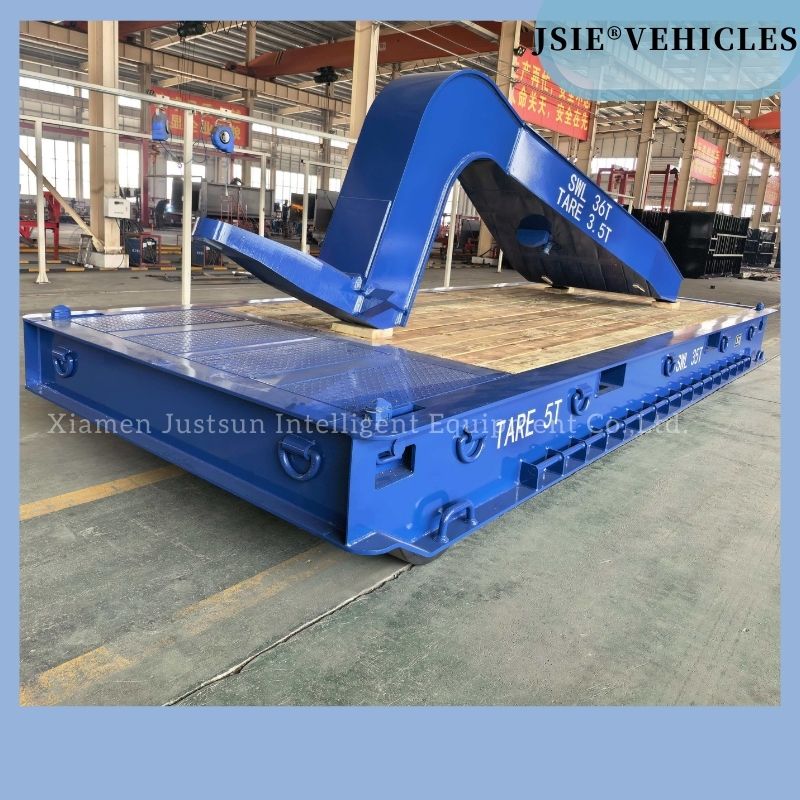
Construction companies frequently rely on specialized transport to move massive earthmoving equipment. The gooseneck semi trailer excels in these demanding environments. It handles oversized, tall, and exceptionally heavy machinery. Wheel loaders, large excavators, and crawler cranes fit perfectly here. The design lowers the primary deck, allowing you to transport tall cargo while clearing highway overpasses.
Detachable goosenecks (RGN) provide distinct operational advantages. They detach from the tractor, dropping the front of the trailer to the ground. This creates a secure, low-angle ramp. Operators can drive heavy machinery directly onto the front of the deck. Front loading completely mitigates the severe safety risks associated with steep rear ramps. When evaluating an RGN, you must choose between hydraulic and mechanical detachment mechanisms. Hydraulic systems act fast and simplify the detachment process. However, they require careful maintenance of hoses and valves. Mechanical systems weigh less and reduce maintenance burdens but demand more effort to detach and reattach.
Logistics providers often prioritize broad versatility over extreme specialization. The platform semi trailer offers incredible utility for daily freight. Flatbeds serve as the backbone for general logistics. They easily handle palletized building materials, steel coils, and moderately sized machinery. Their open design allows forklifts and cranes to load cargo from any angle.
Step decks represent a vital variation within this category. They feature a lowered rear deck section. This drop lowers the cargo's center of gravity and provides crucial overhead clearance for taller loads. When buying these units, evaluate your tie-down configurations carefully. You need robust chain ties for securing heavy metal components. Strap winches work better for palletized or fragile goods. A well-configured deck includes sliding winch tracks to maximize securement flexibility.
Extreme tonnage requires extreme engineering. Lowboys handle specialized infrastructure transport and monumental payloads. They sit incredibly low to the ground. This extreme drop depth accommodates the tallest construction equipment without violating bridge height restrictions.
You must evaluate multi-axle scalability when reviewing heavy haulers. Moving a 100-ton transformer requires multiple axles to distribute the extreme weight legally. You can add flip axles or booster assemblies to scale the capacity. However, adding axles creates a strict trade-off. You gain immense payload capacity but lose route maneuverability. Extended multi-axle configurations struggle to navigate tight corners and narrow job site entrances. Planners must balance payload needs against physical route limitations.
Your material selection dictates the operational limits of the equipment. Manufacturers typically use steel, aluminum, or a combination of both. Each material offers distinct advantages and drawbacks.
Steel provides a remarkably high strength-to-cost ratio. It represents the industry standard for extreme heavy hauling. Steel frames absorb severe punishment and resist torsional twisting under concentrated loads. However, steel carries a heavy tare weight. It also rusts when exposed to road salts and harsh weather. Aluminum offers a much lighter tare weight. This weight reduction allows you to legally carry higher payload capacities. Aluminum naturally resists corrosion, keeping the unit looking newer for longer. Yet, aluminum lacks the point-load strength of steel and requires highly specialized repair expertise if cracked. Composite or "combo" units attempt to blend both. They typically use a steel main frame for strength and aluminum decking to save weight.
| Material Type | Strength & Durability | Tare Weight | Corrosion Resistance |
|---|---|---|---|
| All-Steel | Exceptional for heavy point loads | Heaviest | Low (Requires frequent painting/galvanizing) |
| Aluminum | Moderate (Susceptible to stress cracks) | Lightest | High |
| Combo (Steel/Alum) | Strong main frame, lighter deck | Moderate | Moderate to High |
Suspension and axle configurations determine ride quality and component longevity. Air-ride suspensions utilize pneumatic bags to cushion the ride. They offer superior load protection for sensitive cargo. They also allow operators to adjust the deck height slightly during loading. Conversely, mechanical or spring suspensions thrive in brutal conditions. They provide unmatched durability in harsh, off-road construction environments where air bags might puncture.
You must also evaluate axle groupings. Tandem axles handle standard freight efficiently. Tridem setups distribute heavier loads across three axles. Spread-axle configurations distance the axles to maximize legal weight allowances on certain highways, though they increase tire scrub during sharp turns.
Decking materials directly impact loading safety and longevity. Apitong wood remains the premium choice for heavy machinery. It is incredibly durable and provides excellent traction for tracked machinery like bulldozers. Steel plating offers raw strength but becomes dangerously slick when wet. Aluminum plating saves weight but easily gouges under steel tracks.
Paper specifications often clash with real-world job sites. Job site accessibility stands out as a major operational risk. Low-clearance designs perform beautifully on paved highways. However, they struggle immensely on unpaved or graded construction sites. A deep-drop lowboy has minimal ground clearance. It will easily high-center or bottom out when navigating uneven dirt roads or steep site entrances. You must carefully analyze the turning radius and ground clearance limitations before deploying these units off-road.
Maintenance and operational expenses act as silent profit killers. Specialized equipment demands rigorous upkeep. Hydraulic systems on detachable goosenecks introduce hidden expenses. You must regularly inspect cylinders, replace degraded hydraulic fluid, and swap out leaky hoses. Dust and grit from construction sites accelerate seal wear rapidly. Before buying, verify the availability of OEM replacement parts. Relying on obscure manufacturers leads to lengthy downtime when proprietary parts break.
Finally, smart procurement requires residual value and used market considerations. Asset depreciation significantly impacts your financial returns. Standardized platform configurations usually retain higher cross-industry resale value. A standard flatbed appeals to lumber yards, steel mills, and general freight companies. Highly specialized heavy haulers have a much narrower secondary market. You will likely wait longer and negotiate harder to sell a custom 13-axle heavy hauler.
Procurement teams need a structured approach to finalize their choices. Start by defining your exact success criteria. Build a scoring matrix that prioritizes your operational goals. Common matrix priorities include:
Vendor vetting separates premium manufacturers from unreliable suppliers. Evaluate manufacturers based on their warranty terms. A strong warranty indicates confidence in the structural welds. Assess their custom engineering capabilities. Can they provide custom axle spacing to meet your specific state laws? Look for structural testing transparency. Top-tier vendors openly share their stress-test data and engineering models.
Use a final pre-purchase checklist to prevent costly mistakes. Do not sign a purchase order without verifying these elements:
Selecting the right heavy transport equipment secures your operational efficiency and protects your profit margins. The decision-making sequence is straightforward but requires diligent execution. First, define the exact load dimensions and pinpoint the concentrated load parameters. Next, navigate the local legal constraints and bridge laws. Then, select the appropriate transport category, whether that is a specialized detachable unit or a versatile step deck. Finally, optimize the engineering specs, materials, and suspension to maximize your long-term financial returns.
Do not leave this process to guesswork. We encourage logistics and procurement teams to conduct a comprehensive fleet audit. Review your current tractors, analyze your standard routes, and measure your typical cargo. Consult with an engineering specialist to request a customized spec sheet and a detailed quote. A well-engineered transport unit pays for itself through safety, compliance, and relentless reliability.
A: A platform unit features a standard deck height. It offers immense versatility for general logistics, palletized freight, and standard materials. A lowboy features a deep-drop deck that sits very close to the ground. This deep drop provides the necessary clearance to haul excessively tall construction equipment legally under bridges.
A: Total payload capacity measures the maximum weight distributed across the entire deck. Concentrated load rating measures how much weight a specific small section can handle safely. A trailer rated for 40 tons overall might structurally fail if you concentrate all 40 tons of an excavator onto a 10-foot section.
A: It depends on your operation. Hydraulic systems detach faster and easier. They are ideal for operators who load and unload equipment multiple times daily. Mechanical systems weigh less and avoid hydraulic leaks, making them highly reliable and easier to maintain in harsh, remote environments.
A: Tare weight and legal payload have an inverse relationship. Federal laws cap the total gross weight of your truck, trailer, and cargo. If your trailer has a high empty (tare) weight, you must carry less cargo to stay legal. Lighter trailers allow you to haul and bill for heavier cargo.