Telephone/WhatsApp: +86-13950097655 E-mail: eric@justsuntrucks.com
Please Choose Your Language

- All
- Product Name
- Product Keyword
- Product Model
- Product Summary
- Product Description
- Multi Field Search
Views: 0 Author: Site Editor Publish Time: 2026-07-02 Origin: Site
Acquiring heavy equipment demands massive capital expenditure. The operational stakes for industrial projects run incredibly high. Choosing the wrong vehicle rapidly destroys project margins. You face mismatched cycle times and excessive maintenance downtime. These operational inefficiencies cascade through your entire daily workflow. A single poorly specified hauling asset creates severe loading bottlenecks. It burns idle fuel while frustrating your operators. You need a pragmatic, spec-to-outcome framework to evaluate your options before procurement. We will guide you through assessing critical terrain parameters accurately. We will also explore essential payload and capacity requirements. This ensures you align equipment capabilities directly to site realities. You will learn how to match vehicle architecture to specific ground conditions. We will unpack critical dimensions like material density, engine power, and cycle matching. Proper evaluation guarantees optimal field performance from day one. It completely safeguards your long-term fleet investment against premature failure.
Begin your evaluation by looking closely at the ground. Site conditions heavily dictate your ultimate chassis choice. You must assess the terrain accurately before speaking to dealers. Unpaved construction sites present extremely high rolling resistance. Deep mud, sharp rocks, and steep, uneven grades demand specific suspension types. Vehicles sink easily when traversing soft, saturated topsoil. Conversely, graded mining haul roads offer compacted, stable surfaces. These maintained roads allow for completely different vehicle architectures. You cannot treat both environments equally during procurement. A machine built for pavement will destroy its suspension off-road. A specialized off-road machine wastes fuel on flat highways. You must audit the exact routes your fleet will travel daily.
Next, analyze your material density and volume thoroughly. Do not rely solely on simple cubic yardage estimates. You must calculate the exact weight-to-volume ratio accurately. Different materials impose drastically different structural stresses. Overburden weighs differently than freshly blasted rock. Wet dirt creates different stress points than dry aggregate. One cubic meter of dry clay weighs roughly 1,600 kilograms. The same volume of wet gravel easily exceeds 2,000 kilograms. These variations dictate the required hauling capacity directly. If you ignore moisture content, you will overload the suspension. Overloading voids warranties and causes catastrophic frame cracking. You must sample the material under its worst-case environmental conditions.
You must also practice precise pass matching. This connects your loading equipment directly to your hauling fleet. Industry standards strongly recommend the 3-to-5 pass rule. Your excavator should fill the hauler in three to five buckets. A mismatched dump truck creates severe site bottlenecks. If loaders need seven passes, your cycle times plummet completely. The loader spends too much time filling one single unit. If they need only two passes, you risk severe suspension damage from heavy impacts. Improper matching burns idle fuel rapidly across the entire fleet. It also leaves loaders waiting endlessly for return trips. You must synchronize the bucket capacities perfectly.
These machines feature an oscillating hinge between the cab and bed. They deliver exceptional all-wheel-drive capabilities across brutal landscapes. You will find them ideal for soft underfoot conditions. They climb steep inclines and navigate deep ruts effortlessly. Early-phase construction sites benefit immensely from their unmatched agility. Operators rarely get them stuck in deep, viscous mud. The unique articulation keeps all tires planted firmly on uneven ground. However, they carry distinct operational limitations. ADTs max out at much lower top speeds. They also offer smaller overall payload ceilings compared to rigid alternatives. Rigid frames easily outpace them on flat, dry terrain. You choose an ADT for traction, not outright speed.
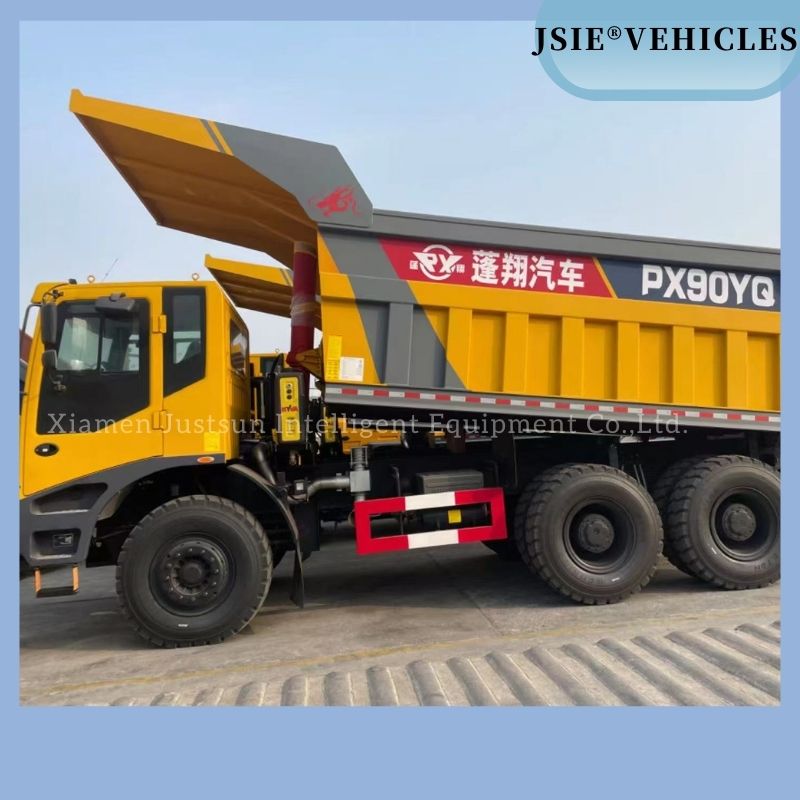
These colossal machines dominate large-scale open-pit operations. They transport massive loads efficiently over long distances. You should deploy them for high-volume, long-term mineral extraction. They perform best on established, exceptionally wide haul roads. A rigid mining dump truck requires substantial site infrastructure. It cannot maneuver through tight, congested construction corners. It also demands perfectly graded surfaces to operate safely at speed. Deep ruts can cause severe frame stress and tire blowouts. You must dedicate graders and water trucks specifically to road maintenance. When conditions remain perfect, their operational metrics are unbeatable.
These vehicles handle traditional highway-legal transport duties. They deliver aggregate to urban sites and highway projects daily. You see them navigating tight city streets efficiently. A standard or heavy duty dump truck offers excellent logistical versatility. They move seamlessly between quarries and commercial developments. However, strict on-road weight regulations limit them severely. Federal and local axle limits dictate their maximum legal capacity. You must configure them carefully to avoid massive highway fines. Their rigid suspensions also struggle heavily in deep mud. You should keep them primarily on pavement or hard-packed gravel.
Let us translate technical specifications into actual field outcomes. You must understand Gross Vehicle Weight (GVW) completely. GVW represents the absolute maximum safe operating weight. It includes the chassis, body, fuel, operator, and the payload itself. Many first-time buyers confuse GVW for actual hauling capacity. Real payload represents the legal and safe carrying limit. You calculate it by subtracting the empty vehicle weight from the GVW. Exceeding this figure risks severe mechanical failure instantly. It also invites hefty regulatory fines and liability issues.
Engine power and axle configurations dictate your climbing ability. Torque matters significantly more than sheer horsepower figures. High torque ratings ensure steady momentum on steep, loaded gradients. Gear ratios determine how effectively the truck applies this rotational force. You must match the powertrain perfectly to your site's steepest incline. Heavy configurations often require specialized drop axles. Also known as lift axles, they distribute weight across the chassis safely. You can lower them electronically when fully loaded. This action ensures strict compliance across varying local municipal regulations.
Dump body selection significantly impacts your daily operations. Your choice directly affects long-term payload optimization. High-tensile steel provides extreme impact resistance against harsh materials. It survives constant battering from boulders and highly abrasive ores. You must specify steel for demanding quarry environments. Conversely, aluminum bodies offer massive, immediate weight savings. Lighter beds allow you to haul more payload legally on highways. However, aluminum strictly suits non-abrasive materials like washed sand. It will dent and tear quickly under heavy rock impacts.
Consider these crucial bed options during your evaluation:
Material Application Comparison
| Body Material | Primary Advantage | Best Use Case | Key Limitation |
|---|---|---|---|
| High-Tensile Steel | Maximum impact resistance | Blasted rock, abrasive ores, demolition debris | Heavier tare weight reduces legal highway payload |
| Aluminum | Significant weight savings | Washed sand, smooth gravel, asphalt | Dents and tears easily under heavy boulder impacts |
You should also seriously consider heated beds. Exhaust-heated beds route engine gases directly through the body frame. This prevents wet material from freezing solid during harsh winter shifts. It also stops sticky clay from adhering stubbornly to the corners. Clean dumping ensures you do not carry useless carryback weight. Carryback steals valuable payload capacity on every single subsequent trip.
Long-term operations present complex, unpredictable implementation challenges. You must monitor fleet fuel efficiency rigorously every month. Operating hours translate directly to strict preventative maintenance schedules. Fleet managers should track engine idle time versus active hauling time. Excessive idling drains fuel resources and accelerates premature engine wear. You also face significant risks in remote, isolated regions. Poor dealer support leaves expensive assets completely stranded. You must secure robust parts availability before signing any purchase contract. Missing critical components can halt an entire project for weeks.
Regulatory compliance introduces further mechanical complexity to your fleet. Tier 4 Final and Stage V emissions standards remain incredibly strict. They mandate highly advanced exhaust aftertreatment systems. Diesel Exhaust Fluid (DEF) requires careful handling and climate-controlled storage. Contaminated DEF destroys sensitive engine sensors almost instantly. You must also adhere strictly to complex highway weight limits. The Department of Transportation enforces these rules heavily via weigh stations. Overloaded vehicles face immediate impoundment and massive financial penalties. You cannot risk your company's operational license over poor loading practices.
Operator ergonomics directly influence daily site productivity. Uncomfortable drivers fatigue quickly and make dangerous operational mistakes. Modern cabs feature sophisticated air-suspended seats and automatic climate control. They also integrate essential safety technologies directly into the dashboard. Payload weighing systems prevent dangerous overloading scenarios at the loading face. Rollover protection structures (ROPS) save lives during catastrophic accidents. Collision mitigation systems use radar to detect unseen obstacles. These features impact your commercial insurance premiums favorably. They also protect your site safety records perfectly. You should prioritize them heavily during the procurement process.
You must align your procurement method directly to project timelines. Different project duration thresholds require distinctly different financial strategies. Let us establish a clear baseline framework for your decisions.
Fleet managers must weigh upfront capital allocation carefully. Purchasing requires massive initial capital expenditures immediately. Renting preserves crucial cash flow through predictable operational expenses. Leasing allows you to test new vehicle brands safely in the field. It transfers the heavy depreciation risk directly back to the equipment dealer. You should avoid locking up capital aggressively in uncertain local markets.
Take specific, actionable next steps for your procurement. Demand physical, on-site assessments from your prospective dealers. They should analyze your haul roads and loading equipment in person. Review comprehensive Service Level Agreements thoroughly. Ensure the contract strictly guarantees rapid parts delivery times. Finally, conduct comprehensive, multi-day operator trial runs. Your drivers will identify hidden visibility and ergonomic issues immediately. Their honest feedback prevents costly long-term acquisition regrets.
Purchasing heavy hauling equipment requires meticulous, proactive risk mitigation. It remains an essential exercise in perfect workflow synchronization. Successful procurement aligns technical specifications directly to your hardest operational constraints. You must match the vehicle architecture explicitly to your specific ground conditions. Careful payload matching prevents disastrous loading bottlenecks entirely. Prioritize long-term serviceability and ergonomics over the initial purchase price. Audit your current fleet cycle times rigorously this week. Consult specialized dealers to conduct thorough payload and route analyses. Do not guess when sizing your next critical hauling asset.
A: A standard model uses a rigid frame. It performs best on paved roads or hard, flat surfaces. An articulated model features a pivot joint between the cab and the dump bed. This hinge provides exceptional flexibility and keeps all wheels grounded. It dominates rough, muddy, and uneven terrain. Articulated models also utilize true all-wheel drive for superior off-road traction.
A: You must match the truck capacity to your loader bucket size. Use the 3-to-5 pass rule. Multiply your loader's bucket capacity by the specific material weight per cubic yard. Then, multiply that figure by four passes. This determines your ideal target payload. Proper calculation ensures smooth cycle times and prevents fleet bottlenecks.
A: Highway weight limits depend entirely on local regulations and the Federal Bridge Formula. The formula restricts weight based on axle count and the distance between them. A standard tandem-axle setup generally maxes out around 34,000 pounds legally. You must often add drop axles to increase legal payload without violating strict Department of Transportation rules.
A: These machines operate in brutal environments. Their lifespan heavily depends on proactive maintenance and frame hours. A well-maintained unit often surpasses 40,000 operating hours. However, engines usually require major rebuilds every 15,000 to 20,000 hours. High-quality dealer support and strict adherence to service intervals directly dictate the vehicle's ultimate longevity.