Telephone/WhatsApp: +86-13950097655 E-mail: eric@justsuntrucks.com
Please Choose Your Language

- All
- Product Name
- Product Keyword
- Product Model
- Product Summary
- Product Description
- Multi Field Search
Views: 0 Author: Site Editor Publish Time: 2026-07-07 Origin: Site
Heavy-duty port logistics demand immense precision and speed. Equipment failure under a massive load creates immediate operational bottlenecks. It also introduces severe safety liabilities for ground personnel. Fleet managers constantly balance conflicting priorities. They need maximum lifting capacity alongside rapid operational cycle speeds. They also require uncompromised long-term structural integrity. You cannot afford shortcuts when handling multi-ton shipping containers. This guide provides procurement teams an objective framework. We outline technical standards for vetting suppliers of high-capacity sidelifter trailers. Readers will discover how to align equipment specifications directly with port throughput demands. We break down core structural benchmarks necessary for continuous terminal operations. You will also learn to evaluate critical safety systems. These integrated features ensure operators remain protected during high-risk lifting cycles. Making an informed purchase requires deeper analysis than simply reading a basic spec sheet. Let us explore the engineering essentials.
Terminal operators must match equipment capacity to realistic cargo weights. A standard fully loaded 40-foot container often weighs up to 30.48 tons. Heavy machinery packed into 20-foot units routinely hits similar weight limits. A 37-ton capacity creates an essential operational sweet spot. It provides a crucial safety margin. This buffer absorbs dynamic shock loads generated during the lifting motion. Equipment pushed to its absolute maximum limit degrades quickly. A 37-ton rating prevents structural fatigue when handling standard heavy shipping containers. It allows continuous daily operation without overstressing the crane booms or chassis beams. Procurement teams should always prioritize this protective capacity margin.
Port profitability relies entirely on rapid turnaround times. Every minute spent lifting a container impacts the entire logistics chain. You must evaluate how sidelifter equipment accelerates or delays terminal flow. Industry benchmarks suggest a complete lifting cycle should take between three to five minutes. Faster cycle times allow operators to move more units per hour. You should investigate the hydraulic flow rates supporting these cycle speeds. Sluggish hydraulic responses create massive bottlenecks during peak operating hours. High-performance systems synchronize the crane arms perfectly. This synchronization keeps cargo moving swiftly from the ground onto the trailer deck.
Port terminals contain incredibly high-density storage areas. Drivers navigate narrow aisles and tight corner radiuses constantly. Terrain adaptability dictates how well the equipment performs in crowded yards. You must consider the turning radius of the entire vehicle combination. Axle configurations play a massive role here. Tri-axle setups distribute heavy payloads more evenly across the ground. Air suspension systems offer superior shock absorption compared to traditional mechanical leaf springs. They glide over uneven terminal surfaces easily. This adaptability prevents cargo damage. It also reduces excessive wear on the trailer tires and suspension components.
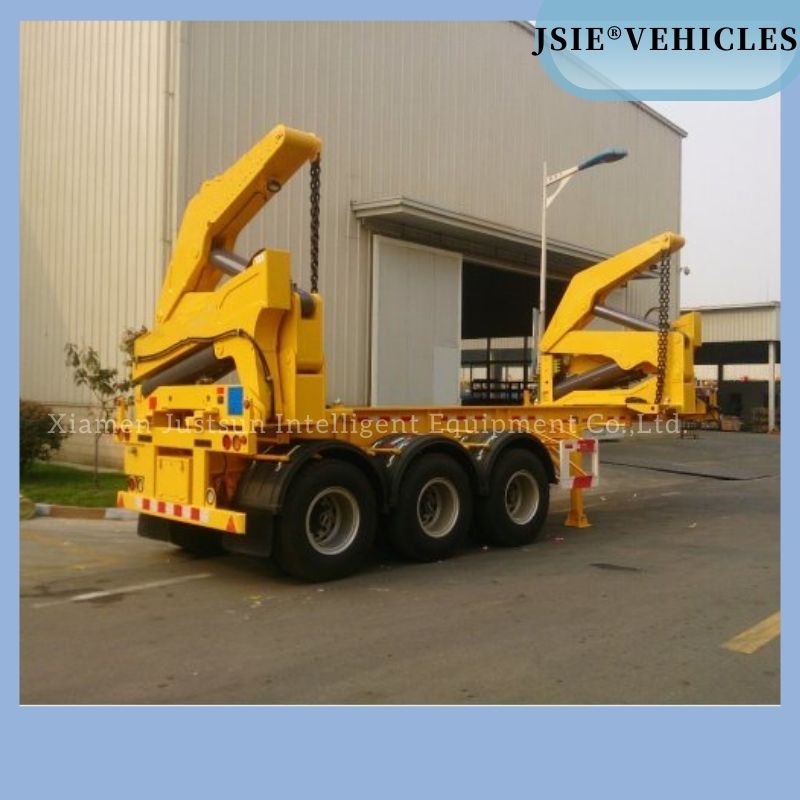
The hydraulic power source acts as the heart of the lifting mechanism. Buyers must choose between a Power Take-Off (PTO) system and an independent auxiliary engine. PTO setups draw power directly from the truck tractor engine. They typically cost less upfront and reduce overall trailer weight. However, they require the truck engine to run continuously during lifts. Independent diesel engines mount directly onto the trailer chassis. They operate the hydraulic pumps autonomously. This setup burns significantly less fuel during extended stationary loading. Autonomous engines also allow the trailer to operate independently from specific tractor units. You must assess your terminal operations to determine the best power source.
The following chart compares power source configurations:
| Power Source Type | Fuel Efficiency | Tractor Dependency | Ideal Operational Scenario |
|---|---|---|---|
| Power Take-Off (PTO) | Lower (Truck engine idles) | High (Requires modified truck) | Short hauls, infrequent lifting cycles |
| Independent Diesel Engine | Higher (Optimized RPM) | None (Self-powered trailer) | High-frequency terminal lifting, varied fleets |
Beyond the power source, valve precision dictates operational smoothness. You should require proportional hydraulic valves for your equipment. Standard on-off valves create jerky movements. Proportional valves allow operators to make microscopic adjustments mid-lift. Smooth transitions reduce dangerous container sway. They also minimize the shock loads transferred into the crane structure. Finding a 37 ton lifting semi trailer with precise valve timing is absolutely essential.
Lifting 37 tons places immense asymmetrical stress on a trailer frame. The steel quality used in construction determines the equipment lifespan. You must mandate high-yield, high-tensile steel for the main beams and crane arms. T700 steel or its equivalent remains the industry gold standard. High-tensile materials prevent micro-fractures from forming under repetitive load stresses. Standard carbon steel will flex and permanently deform over time.
Welding standards represent another critical evaluation point. Even premium steel fails if the weld joints remain weak. Verify manufacturer welding protocols during the vetting process. Submerged arc welding (SAW) offers deep, uniform penetration along the main chassis beams. Manufacturers must provide Non-Destructive Testing (NDT) certifications for all critical stress points. Ultrasonic or X-ray testing guarantees no hidden internal air pockets exist within the welds.
Lifting heavy shipping containers sideways fundamentally shifts the vehicle center of gravity. Stabilization mechanics remain non-negotiable for operator safety. You must assess the physical footprint of the hydraulic outriggers. A wider extension span provides a stronger base against tipping forces. When the crane reaches its maximum outward extension, the outrigger must firmly anchor the trailer to the ground. Uneven port surfaces demand outriggers with articulated footpads. These pivoting pads adjust to ground contours automatically. They distribute the massive compressive forces safely into the pavement.
Human error causes most terminal accidents. Smart equipment engineering mitigates these operator mistakes. Ensure your chosen equipment features comprehensive safety interlock systems. Overload protection valves act as a primary defense line. Hydraulic pressure transducers monitor cylinder loads in real time. If the system detects a load exceeding 37 tons, it freezes the lifting operation automatically. Tilt sensors provide another layer of defense. They monitor the chassis angle continuously. If the trailer breaches safe tilt thresholds, automated locking mechanisms activate immediately. These fail-safes prevent catastrophic rollovers.
Keeping personnel away from active lifting zones saves lives. You should prioritize wireless remote-control systems for all new equipment. Traditional tethered controls force operators to stand uncomfortably close to the crush zone. Wireless controllers allow operators to walk freely around the site. They can maintain a safe 360-degree vantage point. This mobility lets them monitor the container alignment and ground clearance simultaneously. Encrypted radio frequencies prevent signal interference from nearby port scanners or ship radios. Reliable wireless integration defines modern port safety standards.
Fleet managers must choose the right chassis base for their operational needs. The two primary configurations offer distinctly different utility profiles.
Evaluate your primary cargo mix. If you only move standardized shipping boxes, the skeleton frame maximizes highway payloads. If your terminal handles mixed freight, the flatbed design ensures the asset never sits idle. Both designs integrate seamlessly into a quality container lifting and transport semi trailer.
Handling a 37-ton payload alongside heavy crane equipment requires robust running gear. You must evaluate the axle weight ratings carefully. Heavy-duty axles from globally recognized brands like BPW or FUWA are highly recommended. Look for 13T or 16T axle configurations to handle the intense side-loading forces safely. Braking systems carry equal importance. You need reliable stopping power for these massive combinations. Standard ABS (Anti-lock Braking System) or EBS (Electronic Braking System) pneumatic configurations are mandatory. EBS provides faster brake response times than traditional pneumatic valves. It prevents trailer swing during emergency stops on wet terminal surfaces.
Equipment downtime ruins port schedules. Fast repairs rely entirely on parts availability. You should favor manufacturers who utilize standardized, globally recognized components. Proprietary hydraulic valves or obscure engine brands cause nightmare delays during breakdowns. Look for hydraulic systems built with Parker or Danfoss components. Specify auxiliary engines from established names like Cummins or Kubota. Standardized parts ensure your local mechanics can source replacements overnight. This strategy keeps your fleet operational and minimizes catastrophic delays.
Routine service keeps heavy machinery running smoothly. Poor design makes maintenance frustrating and expensive. You must inspect the equipment layout for accessibility. Mechanics need straightforward access to daily service points. Centralized grease banks represent a massive advantage. They allow technicians to lubricate multiple moving joints from one convenient location. Hydraulic fluid reservoirs must feature clear sight glasses for instant level checks. Diagnostic testing ports should sit conveniently on the hydraulic manifold. These small design choices reduce routine maintenance times dramatically.
A supplier's warranty reflects their confidence in the engineering. Demand crystal-clear warranty terms before signing any contracts. Structural steel elements, like the main chassis beams, should carry multi-year guarantees. Moving components, including hydraulic pumps and cylinders, typically warrant distinct coverage terms. Always verify the manufacturer holds relevant quality certifications. ISO 9001 compliance demonstrates strict factory quality control. CE or DOT certifications ensure the design meets strict regional road safety regulations. Partnering with certified manufacturers guarantees you receive a reliable port container trailer ready for rigorous duty.
A successful procurement decision requires strict verification of structural data. You must never blindly accept stated weight capacities on a marketing brochure. True equipment capability emerges from superior steel grades, precise hydraulic systems, and robust engineering. We strongly recommend drafting a comprehensive Request for Proposal (RFP) for your next purchase. Your RFP must demand load-test certifications and detailed hydraulic component manifests. It should also outline clear warranty expectations for both chassis and crane components. Encourage your team to shortlist suppliers offering transparent, engineering-led consultations. Avoid vendors relying on aggressive sales pitches without backing up their technical claims. Rigorous evaluation ensures your port terminal receives equipment capable of performing safely for decades.
A: Lifting capacity naturally decreases as the crane's outreach extends further from the chassis. A 37-ton rating usually applies when the crane lifts near the trailer edge. Always review the manufacturer's specific load chart. This chart details exact safe weight limits at varying outreach distances.
A: Yes, provided the chassis incorporates middle twist locks and the crane features a twin-lift configuration. Structural reinforcements must support the concentrated middle weight. Specialized crane spreaders are required to lock onto both 20-foot units safely during the simultaneous lifting cycle.
A: Operators must perform daily visual checks for fluid leaks and frayed hoses before shifts. A comprehensive hydraulic service is typically required every 500 operating hours. This major service includes replacing hydraulic filters, checking valve pressure settings, and inspecting cylinder seals.
A: It depends on the power configuration. Trailers with independent auxiliary engines work with any standard truck matching the fifth-wheel height requirements. Trailers relying on a Power Take-Off (PTO) system require a specifically modified truck tractor equipped with matching hydraulic outputs.