Telephone/WhatsApp: +86-13950097655 E-mail: eric@justsuntrucks.com
Please Choose Your Language

- All
- Product Name
- Product Keyword
- Product Model
- Product Summary
- Product Description
- Multi Field Search
Views: 0 Author: Site Editor Publish Time: 2026-07-04 Origin: Site
Selecting the right axle configuration directly drives a fleet’s cost-per-ton efficiency. Choosing the wrong setup risks bottlenecking payload capacity or causing expensive downtime due to poor jobsite maneuverability. Every contract demands specific equipment to stay profitable. For procurement officers and fleet managers, deciding between a 6x4 and an 8x4 dump truck extends beyond raw size. This crucial choice dictates daily cycle times, maintenance overhead, and strict legal road compliance. Buying a vehicle poorly matched to local terrain quickly drains profit margins. This guide breaks down the operational realities, hidden costs, and decision frameworks you need. We will help you align your truck configuration with specific contract requirements. You will learn exactly how to balance legal payload limits against jobsite agility for maximum returns.
Fleet operators face a constant battle between hauling capacity and vehicle agility. You must balance the desire to haul more dirt against the reality of navigating tight jobsite corners. We can break this problem down into three core business constraints.
The 6x4 setup remains the industry standard for rugged, unpredictable terrain. It provides an optimal balance between carrying capacity and jobsite nimbleness.
When operations move to paved highways and long haul routes, payload becomes the ultimate priority. The 8x4 setup exists to maximize every single trip.
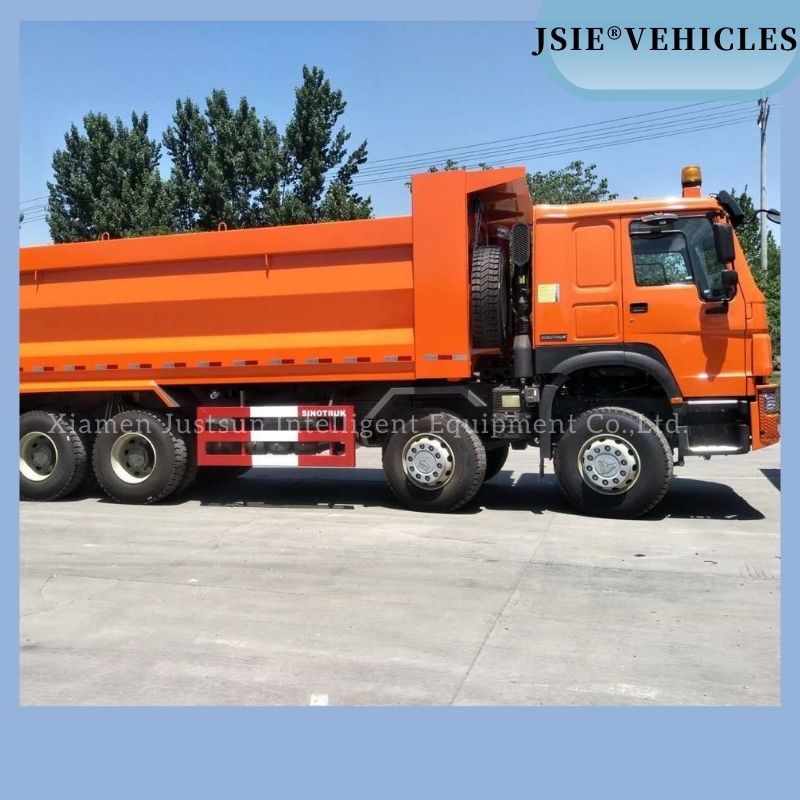
Procurement teams cannot rely on gut feeling. You must evaluate these vehicles using a rigid, data-driven framework. We recommend analyzing your fleet needs across four specific pillars.
Cost-per-Ton Analysis: You must model the upfront purchase price against increased revenue. The 8x4 costs more initially. However, its higher capacity generates more revenue per trip. Calculate this difference over a standard five-year lifecycle. If your routes are long and paved, the extra payload easily pays for the higher sticker price.
Terrain & Cycle Times: A high-capacity 8x4 quickly loses its profitability if it requires constant reversing or multiple point-turns. It becomes a financial burden if it requires towing assistance on a confined site. Conversely, a 6x4 construction dump truck often completes faster cycle times in tight quarters. Shorter cycle times can result in more daily trips, offsetting the smaller payload.
Brand Ecosystem & Fleet Standardization: Evaluate the distinct benefits of sourcing from a single OEM ecosystem. For example, deploying a Sinotruk dump truck fleet utilizing both 6x4 and 8x4 chassis ensures massive operational overlaps. You benefit from shared engine components, cab familiarity, and unified diagnostic tools. This strategy dramatically reduces overall maintenance overhead and simplifies inventory management.
Compliance & Weigh Stations: Map your local bridge formulas and gross vehicle weight regulations. Ensure the extra axle on the 8x4 actually translates to allowable payload in your specific jurisdiction. Some regional laws do not grant proportional weight bonuses for four-axle vehicles.
Chassis Configuration Comparison Summary
| Feature Area | 6x4 Configuration | 8x4 Configuration |
|---|---|---|
| Axle / Wheel Layout | 3 Axles / 10 Wheels | 4 Axles / 12 Wheels |
| Turning Radius | Tight and highly maneuverable | Wide and restrictive |
| Off-Road Traction | Excellent (concentrated drive weight) | Moderate (prone to chassis binding) |
| Legal Highway Payload | Standard capacity | Maximum capacity |
| Ideal Application | Urban sites, deep mud, steep grades | Highway hauling, paved quarries |
Fleet operators often overlook the hidden expenses tied to upgrading vehicle size. A larger truck introduces unique mechanical stresses. You must anticipate these implementation risks to protect your maintenance budget.
Tire Scrub and Wear: The 8x4 trucks experience significant lateral tire scrub on the front steer axles during tight maneuvers. Because the two front axles turn at slightly different arcs, they drag sideways against the pavement. This friction accelerates tire replacement schedules compared to simpler 6x4 models. You must budget for more frequent front-end tire swaps.
Maintenance Overhead: An additional steering axle introduces many more moving parts. You must maintain extra tie rods, secondary steering boxes, and complex suspension components. This mechanical density requires increased preventative maintenance. Mechanics will spend more hours aligning front ends and greasing extra fittings.
Driver Training: Operating an 8x4 requires advanced spatial awareness. The wider turning arc changes how the vehicle navigates intersections. Furthermore, handling characteristics shift dramatically under heavy loads. Drivers require specific upskilling to avoid curbing tires, striking barriers, or tipping the truck during uneven dumping operations.
Jobsite Preparation: Transitioning your operations to an 8x4 fleet may require upfront investment in jobsite infrastructure. You might need to pay for proactive jobsite grading. Supervisors often must build reinforced access roads and widened turning pads. Without these preparations, you risk constant vehicle recovery operations when heavy trucks sink into unprepared ground.
Making the final decision requires matching vehicle capabilities to your dominant contract types. Use the following logic to shortlist your next fleet purchase.
Next Steps: Audit your historical cycle times and maintenance logs carefully. You should request customized lifecycle projections from manufacturers based on your exact average haul distance. Hard data always outshines assumption when buying heavy equipment.
There is no universal "better" truck in the heavy transport industry. The 6x4 easily wins on maneuverability and rugged terrain capability. It keeps operations moving when mud and tight corners stall larger vehicles. Meanwhile, the 8x4 dominates in scaled, high-volume highway payloads. It generates maximum revenue on paved, long-haul routes where weight limits dictate profitability.
You must evaluate your site access, average route conditions, and local weight laws before signing a purchase order. Protect your margins by aligning chassis design with your daily environmental realities. Contact our heavy-duty truck specialists today to run a payload-to-profit analysis for your specific jobsite conditions. We can help you explore targeted fleet solutions designed to maximize your operational uptime.
A: Yes, generally. Weight distribution and the dual-steer front axles make the 8x4 prone to sinking in deep mud. The rigid, longer chassis struggles with extreme articulation on uneven ground. A 6x4 concentrates its weight strictly over the rear drive axles. This focused pressure allows the tires to bite into mud and maintain traction.
A: An 8x4 generally hauls an additional 4 to 6 tons of payload compared to a standard 6x4. However, actual industry numbers depend heavily on local road weight regulations, specific bridge formulas, and the exact dimensions of your dump box.
A: Yes. Having fewer tires, one less steering axle, and a simpler suspension setup typically results in lower annual preventative maintenance costs. You replace fewer tires due to reduced lateral scrub and spend less time servicing complex secondary steering linkage systems.